Home

Main menu

  • About ETI
    • Our members
      • Public reporting performance
    • Who we are
      • ETI's origins
    • What we do
    • Global presence
    • Governance
    • Our team
      • ETI Board members
    • Our Strategy
  • Home
  • Why ETI
    • Why join ETI
  • ETI Base Code
    • Base Code overview
    • Base Code clause 1: Employment is freely chosen
    • Base Code clause 2: Freedom of association
    • Base Code clause 3: Working conditions are safe and hygienic
    • Base Code clause 4: Child labour shall not be used
    • Base Code clause 5: Living wages are paid
    • Base Code clause 6: Working hours are not excessive
    • Base Code clause 7: No discrimination is practiced
    • Base Code clause 8: Regular employment is provided
    • Base Code clause 9: No harsh or inhumane treatment is allowed
  • Our approach
    • Membership
    • Programmes
    • Transparency
    • Meaningful stakeholder engagement (MSE)
  • Our expertise
    • Climate change & Just transitions
    • Crisis response
    • Gender equity in supply chains
    • Worker representation
    • Forced labour & modern slavery
    • Responsible purchasing practices
      • RPP in manufacturing
    • Human rights due diligence
      • HRDD legislation tracker
  • Resources
    • Guidance & reports
    • Blog
      • Blog series: Tackling gender-based violence through GRACE
    • Issues
      • Human rights due diligence (HRDD): a complete guide for business
        • What is human rights due diligence?
        • Human rights due diligence legislation and regulatory requirements
        • How to implement human rights due diligence in your company
        • HRDD risk assessment for supply chains
        • Supplier engagement and human rights due diligence
      • Forced labour & modern slavery: a complete guide for business
        • What is modern slavery? Definitions, forms and scale
        • How to identify forced labour in your supply chain
        • Remediation: what to do when forced labour is found
        • Modern slavery legislation: what businesses need to know
        • EU Forced Labour Regulation: what it means for your business
        • How to write a modern slavery statement
        • High-risk sectors and sourcing regions for forced labour
        • Forced labour and migrant workers in supply chains
      • Responsible purchasing practices: what they are and why they matter
        • How to implement responsible purchasing practices
        • Responsible purchasing practices and legislation: what companies need to know
        • Responsible purchasing practices by sector
    • Case studies
    • Training
    • Events
      • ETI Insights series
    • Impact report 2024-25

Breadcrumb

  1. Home
  2. blog

Delivering the Sustainable Development Goals through ethical trade

  • Share on Facebook
  • Share on Twitter
  • Share on LinkedIn
  • 13 January 2017
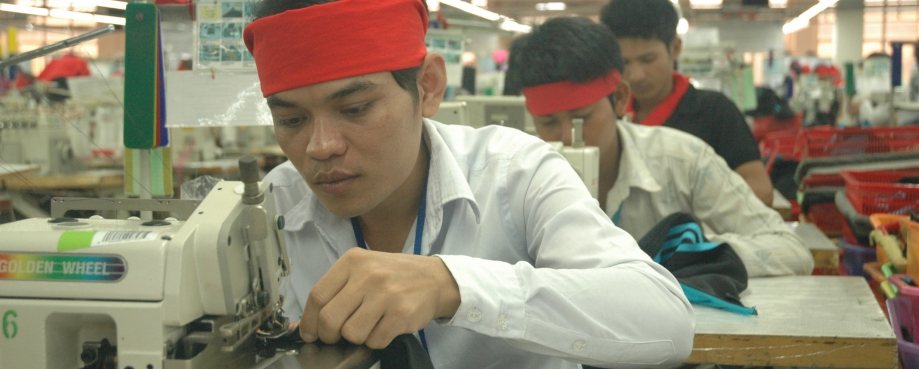
Cambodian male garment workers © ILO

ETI’s newest guide on ethical trade and the SDGs shows how the Sustainable Development Goals (SDGs) are relevant to ethical trade and workers’ rights, particularly SDG8 on decent work and sustainable development, as well as other key goals. It also sets out the relationship between the SDGs, the UN Guiding Principles on Business and Human Rights (UNGPs) and ETI’s ongoing project work.

ETI's free SDG guide for companies, Realise the Potential of your Ethical Trade Programme, can be downloaded here.

The UN’s Sustainable Development Goals (SDGs) are a universal call to action to end poverty, protect the planet and ensure that all people enjoy peace and prosperity.

The SDGs vision? To “leave no-one behind”.

All countries and all stakeholders, acting in collaborative partnership, are expected to implement the goals. That very definitely includes business. Why? Because the focus is on ending poverty by building global prosperity through equitable and sustainable means.

So, while national governments have been tasked with tracking and reporting on progress, the SDGs highlight the important role that the private sector must also play in delivering the goals.

ETI’s guide, Realise the Potential of Your Ethical Trade Programme therefore sets out some very practical steps on how businesses can contribute through promoting ethical trade and workers’ rights.

And it sets out the relationship between the SDGs, the UN Guiding Principles on Business and Human Rights (UNGPs), and ETI’s programme work.

Acknowledging that business has work to do

We must acknowledge that business can create adverse outcomes in relation to human rights, working conditions and the environment.

However, business can deliver very positive impacts and contribute to sustainable development (and therefore SDG targets) through various means – job creation for example.

Providing decent work, helping to ensure that people are paid a living wage, protecting people’s right to organize and bargain collectively, all contribute to economic and social progress and development.

Essentially, empowering workers and driving respect for human rights across global value chains is one of the most effective way for businesses to accelerate ethical trade and to contribute to development – in a way that is both sustainable and equitable in the long term.

An environment where businesses can flourish

The SDGs are effectively a blueprint for society to create an environment where businesses can flourish, create decent jobs and stimulate equitable economic growth, but to do so within the natural boundaries set by our planet.

This is ETI’s vision too.

Every day, we see ETI member companies demonstrating how to make powerful connections between their own sustainability plans and the SDGs.

That’s why our guide highlights the various ways in which ETI and its membership are contributing to achieving the SDGs through existing programmes, partnerships and country platforms.

Furthermore, we show how companies should work to embed respect for human rights at the heart of their business operations, rather than cherry-picking certain SDGs to focus on at the expense of others. Because, this is how businesses can best contribute to the people-part of sustainable development.

Using the SDGs to demonstrate progress

It’s important therefore that ETI members and other companies use the SDGs as a means of demonstrating progress on how they are successfully integrating UNGP-based due diligence processes into their business models.

This will help to advance the SDGs while delivering positive outcomes for employees working in supply chains. It’ll also help their families too.

For more information on the SDGs, see the resources section at the back of the ETI guide, or consult the United Nations Development Programme SDG page here.

ETI’s free SDG guide for companies, Realise the Potential of Your Ethical Trade Programme, can be dowloaded here.

ETI's blog covers issues at the intersection of business and human rights. We feature posts by, for and from our members and allies; we do not accept or offer payment for posts or publish content outside of these criteria. We welcome a range of insights and opinions from our guest bloggers, though don't necessarily agree with everything they say.

Stay up to date

Stay up to date with the latest from ETI via the following channels:
  • Email
  • Twitter
  • LinkedIn
  • Blog RSS

Related content

  • The Leadership Series: Where business meets human rights
  • The future of human rights due diligence in supply chains
  • Vulnerable employment is on the rise
  • Protect, Respect and Remedy: what does Ruggie's framework mean for ethical trade in 2017?
  • Litigation, business and human rights: if you’re not at the table, you’re on the menu
  • Business and the Sustainable Development Goals: time to make the human rights connections

Get the latest

Subscribe to our email newsletters and stay up to speed on responsible business.
Subscribe

ETI elsewhere

  • Twitter
  • LinkedIn
  • YouTube

Footer

  • ETI Community
  • Accessibility
  • Contact
  • FAQ
  • Jobs at ETI
  • Press resources
  • Security & privacy
Other ETIs: Bangladesh, Denmark, Norway, Sweden
Ethical Trading Initiative | Registered No. 3578127