Home

Main menu

  • About ETI
    • Our members
      • Public reporting performance
    • Who we are
      • ETI's origins
    • What we do
    • Global presence
    • Governance
    • Our team
      • ETI Board members
    • Our Strategy
  • Home
  • Why ETI
    • Why join ETI
  • ETI Base Code
    • Base Code overview
    • Base Code clause 1: Employment is freely chosen
    • Base Code clause 2: Freedom of association
    • Base Code clause 3: Working conditions are safe and hygienic
    • Base Code clause 4: Child labour shall not be used
    • Base Code clause 5: Living wages are paid
    • Base Code clause 6: Working hours are not excessive
    • Base Code clause 7: No discrimination is practiced
    • Base Code clause 8: Regular employment is provided
    • Base Code clause 9: No harsh or inhumane treatment is allowed
  • Our approach
    • Membership
    • Programmes
    • Transparency
    • Meaningful stakeholder engagement (MSE)
  • Our expertise
    • Climate change & Just transitions
    • Crisis response
    • Gender equity in supply chains
    • Worker representation
    • Forced labour & modern slavery
    • Responsible purchasing practices
      • RPP in manufacturing
    • Human rights due diligence
      • HRDD legislation tracker
  • Resources
    • Guidance & reports
    • Blog
      • Blog series: Tackling gender-based violence through GRACE
    • Issues
      • Human rights due diligence (HRDD): a complete guide for business
        • What is human rights due diligence?
        • Human rights due diligence legislation and regulatory requirements
        • How to implement human rights due diligence in your company
        • HRDD risk assessment for supply chains
        • Supplier engagement and human rights due diligence
      • Forced labour & modern slavery: a complete guide for business
        • What is modern slavery? Definitions, forms and scale
        • How to identify forced labour in your supply chain
        • Remediation: what to do when forced labour is found
        • Modern slavery legislation: what businesses need to know
        • EU Forced Labour Regulation: what it means for your business
        • How to write a modern slavery statement
        • High-risk sectors and sourcing regions for forced labour
        • Forced labour and migrant workers in supply chains
      • Responsible purchasing practices: what they are and why they matter
        • How to implement responsible purchasing practices
        • Responsible purchasing practices and legislation: what companies need to know
        • Responsible purchasing practices by sector
    • Case studies
    • Training
    • Events
      • ETI Insights series
    • Impact report 2024-25

Breadcrumb

  1. Home
  2. blog

REVISION - Given the release of jailed trade unionists ETI will now attend Dhaka Apparel Summit 2017

  • Share on Facebook
  • Share on Twitter
  • Share on LinkedIn
  • Jane Moyo - ETI
  • 20 February 2017

Amidst growing international concerns around Bangladesh’s clampdown on trade unions in the country’s garment sector, and following discussions with its member companies, the Ethical Trading Initiative (ETI) originally withdrew from the Dhaka Apparel Summit taking place on 25th February. But, following the release of the jailed trade unionists on 24 February will now be speaking at the summit. 

THIS STATEMENT WAS UPDATED AT 10:45 AM GMT SATURDAY FEBRUARY 25

Given the news that the 35 Bangladeshi unionists and garment workers arrested since December last year have now been released, ETI representatives are attending the Dhaka Apparel Summit and our Executive Director will be speaking at the event.

Original statement follows below 

ETI and its members have watched with increasing concern the series of arrests and worker lockouts in Dhaka’s Ashulia industrial area in December 2016 and the more recent arrests in Chittagong.

Now, following what appears to be an increasingly hard-line response by the authorities and some industry members, ETI feels it has no choice but to withdraw from the Dhaka Apparel Summit 2017. ETI members C&A, H&M, Inditex, Next and Tchibo have also confirmed that they will not attend.

Additionally, ETI members have been pressing government contacts and industry representatives to withdraw charges against wrongly jailed unionists.

Peter McAllister, ETI’s Executive Director said: “ETI recognises the importance of the Apparel Summit to the future of the ready-made garment sector in Bangladesh. Unfortunately, the current intimidation of workers and their representatives is at odds with a progressive industry looking to secure the sustainable development of the sector.”

ETI has not taken the decision to withdraw lightly. It has consistently sought to support the progress of the Bangladesh garment and textiles industry towards a vision of increased value of exports. But, it believes this can only be based on profitable businesses that support decent employment for workers whose rights are respected.

ETI’s Base Code of labour standards is very clear about the rights of workers to unionise and bargain collectively for a living wage. Peter McAllister said that the second of ETI’s nine codes of conduct recognised that “workers, without distinction, have the right to join or form trade unions of their own choosing and to bargain collectively and that their representatives are not discriminated against”.

Peter McAllister hoped that the Bangladesh Garment Manufacturers and Exporters Association (BGMEA) and the Bangladesh Apparel Exchange (BAE) that are organising the summit will listen to the concerns expressed by international retailers, ETI and others and reach out constructively to unions.

While acknowledging that workers and their representatives have obligations and responsibilities that are covered by the law, Peter McAllister asked that all concerned with the dispute now “enter into good faith dialogue so that the success of the industry can be built on good industrial relations.”

Even though ETI is withdrawing from the conference, Peter McAllister will still visit Bangladesh to meet with partners, officials, BGMEA and key members of the diplomatic community to share its concerns.

ENDS

Released by ETI External Relations Team on +44 (0)20 7841 4350 or +44 (0)7972 053624

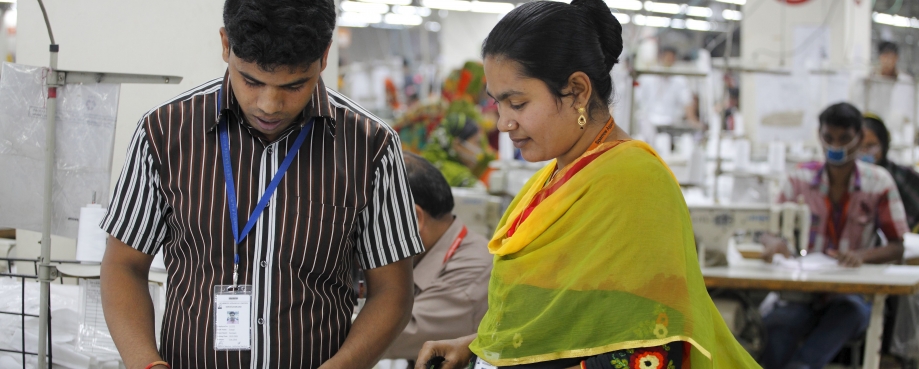
The image at the top of the page is courtesy of the ILO and is for illustrative purposes only. It does not refer to the current story.

ETI's blog covers issues at the intersection of business and human rights. We feature posts by, for and from our members and allies; we do not accept or offer payment for posts or publish content outside of these criteria. We welcome a range of insights and opinions from our guest bloggers, though don't necessarily agree with everything they say.

Stay up to date

Stay up to date with the latest from ETI via the following channels:
  • Email
  • Twitter
  • LinkedIn
  • Blog RSS

Related content

  • Joint statement on minimum wage compliance in Sindh's garment and textile sector
  • Building safer and greener tanneries
  • SMEP Programme briefing papers
  • Building safer and greener tanneries: Lessons from Savar
  • ETI Bangladesh Workplace Comittees
  • Shrimp Supply Chains: Making the link between purchasing practices & human rights

Get the latest

Subscribe to our email newsletters and stay up to speed on responsible business.

Subscribe

ETI elsewhere

  • Twitter
  • LinkedIn
  • YouTube

Footer

  • ETI Community
  • Accessibility
  • Contact
  • FAQ
  • Jobs at ETI
  • Press resources
  • Security & privacy
Other ETIs: Bangladesh, Denmark, Norway, Sweden
Ethical Trading Initiative | Registered No. 3578127