Home

Main menu

  • About ETI
    • Our members
      • Public reporting performance
    • Who we are
      • ETI's origins
    • What we do
    • Global presence
    • Governance
    • Our team
      • ETI Board members
    • Our Strategy
  • Home
  • Why ETI
    • Why join ETI
  • ETI Base Code
    • Base Code overview
    • Base Code clause 1: Employment is freely chosen
    • Base Code clause 2: Freedom of association
    • Base Code clause 3: Working conditions are safe and hygienic
    • Base Code clause 4: Child labour shall not be used
    • Base Code clause 5: Living wages are paid
    • Base Code clause 6: Working hours are not excessive
    • Base Code clause 7: No discrimination is practiced
    • Base Code clause 8: Regular employment is provided
    • Base Code clause 9: No harsh or inhumane treatment is allowed
  • Our approach
    • Membership
    • Programmes
    • Transparency
    • Meaningful stakeholder engagement (MSE)
  • Our expertise
    • Climate change & Just transitions
    • Crisis response
    • Gender equity in supply chains
    • Worker representation
    • Forced labour & modern slavery
    • Responsible purchasing practices
      • RPP in manufacturing
    • Human rights due diligence
      • HRDD legislation tracker
  • Resources
    • Guidance & reports
    • Blog
      • Blog series: Tackling gender-based violence through GRACE
    • Issues
      • Human rights due diligence (HRDD): a complete guide for business
        • What is human rights due diligence?
        • Human rights due diligence legislation and regulatory requirements
        • How to implement human rights due diligence in your company
        • HRDD risk assessment for supply chains
        • Supplier engagement and human rights due diligence
      • Forced labour & modern slavery: a complete guide for business
        • What is modern slavery? Definitions, forms and scale
        • How to identify forced labour in your supply chain
        • Remediation: what to do when forced labour is found
        • Modern slavery legislation: what businesses need to know
        • EU Forced Labour Regulation: what it means for your business
        • How to write a modern slavery statement
        • High-risk sectors and sourcing regions for forced labour
        • Forced labour and migrant workers in supply chains
      • Responsible purchasing practices: what they are and why they matter
        • How to implement responsible purchasing practices
        • Responsible purchasing practices and legislation: what companies need to know
        • Responsible purchasing practices by sector
    • Case studies
    • Training
    • Events
      • ETI Insights series
    • Impact report 2024-25

Breadcrumb

  1. Home
  2. blog

Training their way towards equal treatment on the Western Cape

  • Share on Facebook
  • Share on Twitter
  • Share on LinkedIn
  • Sabita Banerji - THIRST
  • 21 November 2013
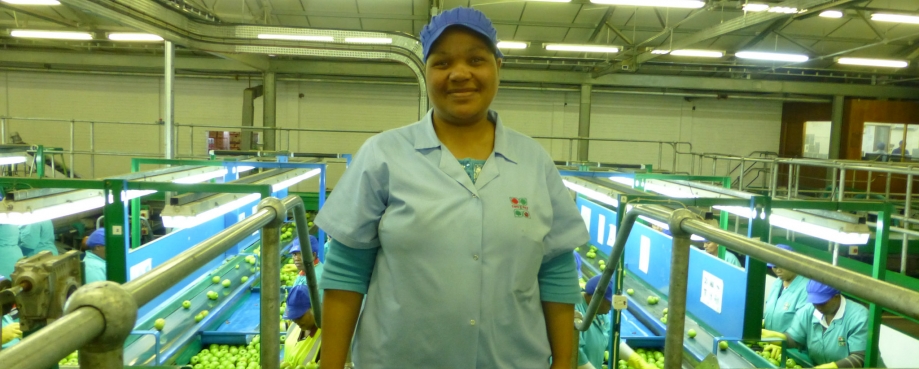
Female fruit packing house supervisor, South Africa

The Western Cape is characterised by stunning views of cloud-capped mountains, sweeping valleys lined with vineyards, fruit and flower farms and dotted with gleaming white Cape Dutch-style villages and towns.

It is also characterised by a complex and highly sensitive history of racial demarcation. In the Western Cape, people are from diverse heritages, speak diverse languages and have diverse cultures. Despite the egalitarian nature of modern, post-apartheid South Africa, vestiges of discrimination can – often subconsciously – remain. When socio-economic and gender inequalities are added into the mix, it can become pretty volatile. Indeed in the last year or two tensions have been known to boil over into sometimes violent strikes in different industries.

Since 2011, ETI partner organisation WIETA has been running an innovative kind of training programme to help businesses tackle these sensitive issues in agricultural workplaces across the Western Cape and beyond. First piloted on flower farms in Kenya and the UK by ETI, WIETA has adapted it for the South African context and is now coming to the end of the three year, Comic Relief-funded programme.

Tabitha[1], a supervisor at a fruit packing house, attended the one-day training session to raise awareness of workers' rights, discrimination and sexual harassment, in September last year. Workers and managers also went through the highly interactive and informative training process. They learned about South African labour law, what constitutes sexual harassment and discrimination and what you can do if you feel you have a grievance.

"I didn't know about my rights before the training," Tabitha says, "but since that day I know my rights."

She learned that she had the right to say how she felt when one of her managers shouted rudely at her in front of the workers she supervises. The manager had also been through the training and apologised, which Tabitha says made her feel more respected.

After all three groups have been trained, a joint session is held to discuss issues that have emerged from the  training and together they come up with an action plan to address these issues. These can make for very difficult and challenging conversations, but they have also helped resolved rumbling, underlying tensions. Managers have to hear some hard truths about how their workers feel about their conditions and treatment, but by addressing these they say they have been able to clear the air and improve worker morale.

During the training at Tabitha's workplace, one of the issues raised was the fact that many workers and supervisors were on seasonal contracts even though they worked almost as many hours as those on permanent contracts. Management listened and put 88 such staff – including Tabitha – onto permanent contracts.

"Now that I am on a permanent contract," says Tabitha, "I can pay for school fees, transport and better food for my three kids."

At an end-of-programme reflection session this week, managers and owners of fruit and flower farms, fruit packing houses, vineyards and wine cellars joined the WIETA project team, trainers and assessors to look back at how the programme has gone and consider what impact it has had on their work places.

They overwhelmingly agreed that since the training, communication – both up and down the line and also across the workforce – has improved enormously. They said the practical tools and policy templates, and the follow-up support that WIETA provided were particularly helpful.

One farmer, had an especially challenging session with his supervisors and workers after their training 18 months ago. Despite some short term adjustment problems amongst his staff, the business benefits he is now experiencing have made him one of the programme's strongest advocates.

"It has eliminated conflict between workers," he said, "and that has meant better communication, better morale and better productivity. I thank Comic Relief for funding the programme, it has had a really positive effect on my farm."

Read about ETI’s Equal treatment of workers training programme


[1] Not her real name

ETI's blog covers issues at the intersection of business and human rights. We feature posts by, for and from our members and allies; we do not accept or offer payment for posts or publish content outside of these criteria. We welcome a range of insights and opinions from our guest bloggers, though don't necessarily agree with everything they say.

Stay up to date

Stay up to date with the latest from ETI via the following channels:
  • Email
  • Twitter
  • LinkedIn
  • Blog RSS

Related content

  • The future of human rights due diligence in supply chains
  • Access to remedy: getting it right for workers while reducing legal liability
  • A world in which women and men enjoy equal treatment in the workplace
  • Companies asked to embed #MeToo in global supply chains
  • Three International Women’s Day lessons for supply chains
  • OECD 2018 Forum on human rights due diligence in the garment and footwear sector

Get the latest

Subscribe to our email newsletters and stay up to speed on responsible business.

Subscribe

ETI elsewhere

  • Twitter
  • LinkedIn
  • YouTube

Footer

  • ETI Community
  • Accessibility
  • Contact
  • FAQ
  • Jobs at ETI
  • Press resources
  • Security & privacy
Other ETIs: Bangladesh, Denmark, Norway, Sweden
Ethical Trading Initiative | Registered No. 3578127