Home

Main menu

  • About ETI
    • Our members
      • Public reporting performance
    • Who we are
      • ETI's origins
    • What we do
    • Global presence
    • Governance
    • Our team
      • ETI Board members
    • Our Strategy
  • Home
  • Why ETI
    • Why join ETI
  • ETI Base Code
    • Base Code overview
    • Base Code clause 1: Employment is freely chosen
    • Base Code clause 2: Freedom of association
    • Base Code clause 3: Working conditions are safe and hygienic
    • Base Code clause 4: Child labour shall not be used
    • Base Code clause 5: Living wages are paid
    • Base Code clause 6: Working hours are not excessive
    • Base Code clause 7: No discrimination is practiced
    • Base Code clause 8: Regular employment is provided
    • Base Code clause 9: No harsh or inhumane treatment is allowed
  • Our approach
    • Membership
    • Programmes
    • Transparency
    • Meaningful stakeholder engagement (MSE)
  • Our expertise
    • Climate change & Just transitions
    • Crisis response
    • Gender equity in supply chains
    • Worker representation
    • Forced labour & modern slavery
    • Responsible purchasing practices
      • RPP in manufacturing
    • Human rights due diligence
      • HRDD legislation tracker
  • Resources
    • Guidance & reports
    • Blog
      • Blog series: Extreme heat and risks to workers
      • Blog series: Tackling gender-based violence through GRACE
    • Issues
      • Human rights due diligence (HRDD): a complete guide for business
        • What is human rights due diligence?
        • Human rights due diligence legislation and regulatory requirements
        • How to implement human rights due diligence in your company
        • HRDD risk assessment for supply chains
        • Supplier engagement and human rights due diligence
      • Forced labour & modern slavery: a complete guide for business
        • What is modern slavery? Definitions, forms and scale
        • How to identify forced labour in your supply chain
        • Remediation: what to do when forced labour is found
        • Modern slavery legislation: what businesses need to know
        • EU Forced Labour Regulation: what it means for your business
        • How to write a modern slavery statement
        • High-risk sectors and sourcing regions for forced labour
        • Forced labour and migrant workers in supply chains
      • Responsible purchasing practices: what they are and why they matter
        • How to implement responsible purchasing practices
        • Responsible purchasing practices and legislation: what companies need to know
        • Responsible purchasing practices by sector
    • Case studies
    • Training
    • Events
      • ETI Insights series
    • Impact report 2024-25

Breadcrumb

  1. Home
  2. blog

ETI joins call urging EU to make labour rights a precondition of resuming trade negotiations with Thailand

  • Share on Facebook
  • Share on Twitter
  • Share on LinkedIn
  • Lindsay Wright - ETI
  • 29 October 2020

ETI and a number of its member brands has joined a number of leading NGOs, trade unions, and multi-stakeholder initiatives to call on the European Commission to require labour reform in Thailand to be a precondition to the resumption of trade negotiations.

ETI is among 45 organizations to write to Valdis Dombrovkis, Executive Vice President of the European Commission, urging the European Union to require labour reform in Thailand as a precondition to the resumption of trade negotiations with the Government of Thailand. The letter was coordinated by theSeafood Working Group (SWG) in collaboration with Finnwatch.

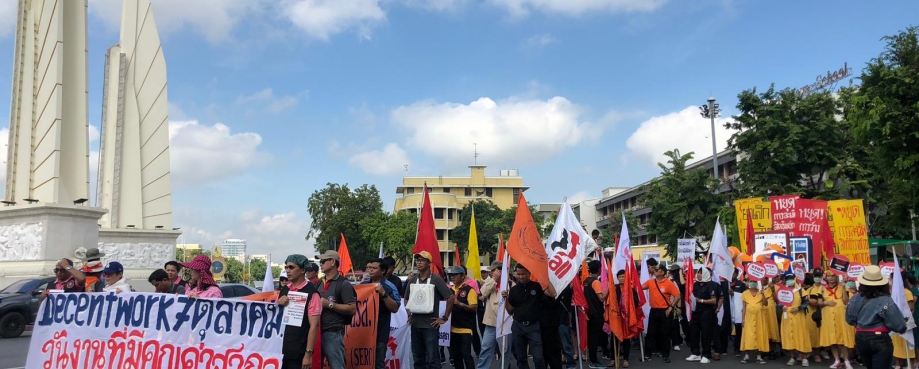
EU-Thai trade negotiations began in 2013 but were suspended because of Thailand’s May 2014 military coup. Since elections in March 2019, and the ascension of former coup leader Gen. Prayut Chan-ocha as Prime Minister, the EU has indicated that it sees the end of Thailand’s formal military government as an opportunity for re-engagement on trade with Bangkok. In 2019, the EU and the Thai government began preparations for a possible resumption of the EU-Thai free trade negotiations. The EU has pledged to place respect for human rights at the core of its trade policy. Recent events in September and October 2020 to crack down on peaceful protesters in Bangkok raise further concerns the EU must take into serious consideration.

In a letter to Valdis Dombrovkis, Executive Vice President of the European Commission, the signatories point to Thailand’s weak labour laws and the government’s or track record in preventing and countering forced labor, discrimination against migrant workers, and violations of freedom of association.

The letter calls for the European Union to establish a clearly defined, measurable and time-bound roadmap for Thailand to follow before trade negotiations can be restarted. In particular, it calls for this roadmap to include ratification of ILO Conventions 87 and 98, covering freedom of association and collective bargaining rights, followed by passage of amendments to national labor laws to bring them into compliance with these core ILO conventions.   

The SWG is a global coalition of labour, human rights and environmental organizations coordinating to end forced labor in the seafood industry, convened by Global Labor Justice – International Labor Rights Forum (GLJ-ILRF).


ETI's blog covers issues at the intersection of business and human rights. We feature posts by, for and from our members and allies; we do not accept or offer payment for posts or publish content outside of these criteria. We welcome a range of insights and opinions from our guest bloggers, though don't necessarily agree with everything they say.

Stay up to date

Stay up to date with the latest from ETI via the following channels:
  • Email
  • Twitter
  • LinkedIn
  • Blog RSS

Get the latest

Subscribe to our email newsletters and stay up to speed on responsible business.

Subscribe

ETI elsewhere

  • Twitter
  • LinkedIn
  • YouTube

Footer

  • ETI Community
  • Accessibility
  • Contact
  • FAQ
  • Jobs at ETI
  • Press resources
  • Security & privacy
Other ETIs: Bangladesh, Denmark, Norway, Sweden
Ethical Trading Initiative | Registered No. 3578127