Home

Main menu

  • Home
  • Why ETI
    • Why join ETI
  • ETI Base Code
    • Base Code overview
    • Base Code clause 1: Employment is freely chosen
    • Base Code clause 2: Freedom of association
    • Base Code clause 3: Working conditions are safe and hygienic
    • Base Code clause 4: Child labour shall not be used
    • Base Code clause 5: Living wages are paid
    • Base Code clause 6: Working hours are not excessive
    • Base Code clause 7: No discrimination is practiced
    • Base Code clause 8: Regular employment is provided
    • Base Code clause 9: No harsh or inhumane treatment is allowed
  • Our approach
    • Membership
    • Programmes
    • Transparency
    • Meaningful stakeholder engagement (MSE)
  • Our expertise
    • Climate change & Just transitions
    • Crisis response
    • Gender equality in supply chains
    • Worker representation
    • Forced labour & modern slavery
    • Responsible purchasing practices
      • RPP in manufacturing
    • Human rights due diligence
      • HRDD legislation tracker
  • Resources
    • Guidance & reports
    • Blog
      • Blog series: Tackling gender-based violence through GRACE
    • Case studies
    • Training
    • Events
      • ETI Insights series
    • Impact report 2024-25
  • About ETI
    • Who we are
      • ETI's origins
    • What we do
    • Our members
      • Public reporting performance
    • Global presence
    • Governance
    • Our team
      • ETI Board members

Resources

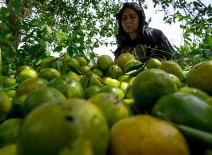
Woman harvesting citrus fruits

GAIA principles to end gender-based violence and harassment in commercial agriculture and fisheries

  • Public
  • 20 October 2025
  • Tools, Guidelines & Briefings
These principles form the foundation for businesses to address the root causes of gender-based violence and harassment (GBVH) in commercial agricultural and fishery supply chains, through individual and collective action.

The ETI Base Code

  • Public
  • 25 April 2016
  • Code of practice
The ETI Base Code in a range of different languages.

ETI Strategy 2026

  • Public
  • 13 October 2022
  • Tools, Guidelines & Briefings
For human rights, for better business. Our vision, mission, aims, theory of change, and strategic goals.

ETI Overview

  • Public
  • 1 September 2025
  • Leaflets, brochures & posters
Who we are, what we do and why ETI membership matters.
Crop spraying, arial, 2000x340

Annual impact report 2024-25

  • Public
  • 25 November 2025
  • ETI annual reviews & accounts
We worked to address human rights impacts through three essential areas of work as set out in our Theory of Change: facilitating an enabling environment, driving progression and accountability, and collaborating for impact.
Icons portraying the 5 principles of the MSE framework

Framework on Meaningful Stakeholder Engagement

  • Public
  • 11 February 2025
  • Tools, Guidelines & Briefings
Built on five principles, this framework moves beyond the check-the-box approach, driving real value for workers and businesses.

Responsible Purchasing Practices (RPP) resource hub

  • Public
  • 6 May 2025
  • Tools, Guidelines & Briefings
A comprehensive resource supporting businesses to improve their impact on supply chain partners and workers.

Purchasing Practices HRDD Framework

  • Public
  • 1 September 2025
  • Tools, Guidelines & Briefings
A resource for evaluating the integration of Responsible Purchasing Practices in Human Rights Due Diligence.

Responsible purchasing practices in European legislation

  • Public
  • 7 March 2025
  • Tools, Guidelines & Briefings
How the human rights aspects of CSDDD relate to the Common Framework for Responsible Purchasing Practices in Manufacturing Industries (CFRPP MI).

Human rights due diligence framework

  • Public
  • 19 May 2016
  • Tools, Guidelines & Briefings
A guide for companies to help them prevent and manage labour rights risks, and understand why engagement, negotiation and collaboration is the only way to succeed.

Human rights due diligence in challenging contexts: Joint ETIs report

  • Public
  • 31 May 2024
  • Tools, Guidelines & Briefings
Practical examples of how companies operating in or sourcing from challenging contexts are managing human rights risks, in line with the UNGPs and the OECD guidelines.
Iced cake portions

Common Framework for Responsible Purchasing Practices in Food

  • Public
  • 28 March 2024
  • Tools, Guidelines & Briefings
Overview of what is meant by ‘responsible purchasing practices’ for the food industry.
The framework is a reference point to support companies to engage with stakeholders and take practical action to improve their purchasing practices, creating an enabling environment for better labour standards in their supply chains.

Pagination

  • Page 1
  • Next page ››

Get the latest

Subscribe to our email newsletters and stay up to speed on responsible business.
Subscribe

ETI elsewhere

  • Twitter
  • LinkedIn
  • YouTube

Footer

  • ETI Community
  • Accessibility
  • Contact
  • FAQ
  • Jobs at ETI
  • Press resources
  • Security & privacy
Other ETIs: Bangladesh, Denmark, Norway, Sweden
Ethical Trading Initiative | Registered No. 3578127