Home

Main menu

  • About ETI
    • Our members
      • Public reporting performance
    • Who we are
      • ETI's origins
    • What we do
    • Global presence
    • Governance
    • Our team
      • ETI Board members
    • Our Strategy
  • Home
  • Why ETI
    • Why join ETI
  • ETI Base Code
    • Base Code overview
    • Base Code clause 1: Employment is freely chosen
    • Base Code clause 2: Freedom of association
    • Base Code clause 3: Working conditions are safe and hygienic
    • Base Code clause 4: Child labour shall not be used
    • Base Code clause 5: Living wages are paid
    • Base Code clause 6: Working hours are not excessive
    • Base Code clause 7: No discrimination is practiced
    • Base Code clause 8: Regular employment is provided
    • Base Code clause 9: No harsh or inhumane treatment is allowed
  • Our approach
    • Membership
    • Programmes
    • Transparency
    • Meaningful stakeholder engagement (MSE)
  • Our expertise
    • Climate change & Just transitions
    • Crisis response
    • Gender equity in supply chains
    • Worker representation
    • Forced labour & modern slavery
    • Responsible purchasing practices
      • RPP in manufacturing
    • Human rights due diligence
      • HRDD legislation tracker
  • Resources
    • Guidance & reports
    • Blog
      • Blog series: Tackling gender-based violence through GRACE
    • Issues
      • Human rights due diligence (HRDD): a complete guide for business
        • What is human rights due diligence?
        • Human rights due diligence legislation and regulatory requirements
        • How to implement human rights due diligence in your company
        • HRDD risk assessment for supply chains
        • Supplier engagement and human rights due diligence
      • Forced labour & modern slavery: a complete guide for business
        • What is modern slavery? Definitions, forms and scale
        • How to identify forced labour in your supply chain
        • Remediation: what to do when forced labour is found
        • Modern slavery legislation: what businesses need to know
        • EU Forced Labour Regulation: what it means for your business
        • How to write a modern slavery statement
        • High-risk sectors and sourcing regions for forced labour
        • Forced labour and migrant workers in supply chains
      • Responsible purchasing practices: what they are and why they matter
        • How to implement responsible purchasing practices
        • Responsible purchasing practices and legislation: what companies need to know
        • Responsible purchasing practices by sector
    • Case studies
    • Training
    • Events
      • ETI Insights series
    • Impact report 2024-25

Resources

ETI statement on sourcing from Myanmar

  • Public
  • 1 September 2021
  • ETI position statement
Businesses need to reassess their presence in Myanmar as a matter of urgency.

ETI support to RMG factory safety committees in Bangladesh

  • Public
  • 11 August 2021
  • Tools, Guidelines & Briefings
COVID-19 prevention support to safety committees

Developing a pool of master trainers

  • Public
  • 11 August 2021
  • Tools, Guidelines & Briefings
Overview of how the resources can be used as part of developing a pool of Master Trainers within factories.  

OHS training to RMG factory managers & supervisors

  • Public
  • 11 August 2021
  • Tools, Guidelines & Briefings
Advice on what form the training may take and how to organise it.

Covid-19 prevention behaviour change communication materials

  • Public
  • 11 August 2021
  • Tools, Guidelines & Briefings
Background to the materials and things to keep in mind before distributing them.

Raising awareness of Covid-19 prevention among workers

  • Public
  • 11 August 2021
  • Tools, Guidelines & Briefings
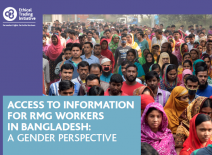
Male and female workers leaving a Bangladesh garment factory

Access to information for RMG workers in Bangladesh: a gender perspective

  • Public
  • 9 August 2021
  • Tools, Guidelines & Briefings
Results of a survey examining the patterns and obstacles present in accessing Covid-19 and other information for male and female workers in the RMG sector of Bangladesh

VSCF Africa agriculture: event slide deck

  • Public
  • 19 July 2021
  • Presentations
Slide deck with video from the meeting on 13 July 2021

ETI Member Charter

  • Public
  • 6 July 2021
  • Tools, Guidelines & Briefings
Outlines the expectations of all ETI members: companies, trade unions and NGOs, and of the ETI Secretariat itself.

Covid-19 awareness & prevention webinar for Africa agri-business sites

  • Public
  • 24 June 2021
  • Audio & film
A 50 min webinar covering a full range of Covid prevention measures and advice on managing outbreaks.
Graphic repeat pattern of wheat-style plant

Business continuity guide

  • Public
  • 18 June 2021
  • Tools, Guidelines & Briefings
A pack of tools and templates to enable African agri-food suppliers to draft their own Business Continuity Plan.
Access to remedy: a migrant worker's right

Access to remedy: a migrant worker's right

  • Public
  • 8 June 2021
  • Tools, Guidelines & Briefings
A set of principles to guide effective operational-level grievance mechanisms

Pagination

  • Previous page ‹‹
  • Page 11
  • Next page ››

Get the latest

Subscribe to our email newsletters and stay up to speed on responsible business.
Subscribe

ETI elsewhere

  • Twitter
  • LinkedIn
  • YouTube

Footer

  • ETI Community
  • Accessibility
  • Contact
  • FAQ
  • Jobs at ETI
  • Press resources
  • Security & privacy
Other ETIs: Bangladesh, Denmark, Norway, Sweden
Ethical Trading Initiative | Registered No. 3578127