Home

Main menu

  • About ETI
    • Our members
      • Public reporting performance
    • Who we are
      • ETI's origins
    • What we do
    • Global presence
    • Governance
    • Our team
      • ETI Board members
    • Our Strategy
  • Home
  • Why ETI
    • Why join ETI
  • ETI Base Code
    • Base Code overview
    • Base Code clause 1: Employment is freely chosen
    • Base Code clause 2: Freedom of association
    • Base Code clause 3: Working conditions are safe and hygienic
    • Base Code clause 4: Child labour shall not be used
    • Base Code clause 5: Living wages are paid
    • Base Code clause 6: Working hours are not excessive
    • Base Code clause 7: No discrimination is practiced
    • Base Code clause 8: Regular employment is provided
    • Base Code clause 9: No harsh or inhumane treatment is allowed
  • Our approach
    • Membership
    • Programmes
    • Transparency
    • Meaningful stakeholder engagement (MSE)
  • Our expertise
    • Climate change & Just transitions
    • Crisis response
    • Gender equity in supply chains
    • Worker representation
    • Forced labour & modern slavery
    • Responsible purchasing practices
      • RPP in manufacturing
    • Human rights due diligence
      • HRDD legislation tracker
  • Resources
    • Guidance & reports
    • Blog
      • Blog series: Tackling gender-based violence through GRACE
    • Issues
      • Human rights due diligence (HRDD): a complete guide for business
        • What is human rights due diligence?
        • Human rights due diligence legislation and regulatory requirements
        • How to implement human rights due diligence in your company
        • HRDD risk assessment for supply chains
        • Supplier engagement and human rights due diligence
      • Forced labour & modern slavery: a complete guide for business
        • What is modern slavery? Definitions, forms and scale
        • How to identify forced labour in your supply chain
        • Remediation: what to do when forced labour is found
        • Modern slavery legislation: what businesses need to know
        • EU Forced Labour Regulation: what it means for your business
        • How to write a modern slavery statement
        • High-risk sectors and sourcing regions for forced labour
        • Forced labour and migrant workers in supply chains
      • Responsible purchasing practices: what they are and why they matter
        • How to implement responsible purchasing practices
        • Responsible purchasing practices and legislation: what companies need to know
        • Responsible purchasing practices by sector
    • Case studies
    • Training
    • Events
      • ETI Insights series
    • Impact report 2024-25

ETI

Blog posts from this author

Dramatic view of Big Ben and the Gothic Houses of Parliament with an ornate street lamp in London, UK. Photo credit: Shutterstock.

ETI responds to the Immigration and Asylum Bill following its second reading

17 July 2026
New bill takes small step on corporate transparency, but as drafted, falls short of what is needed, and parts of it risk real harm.
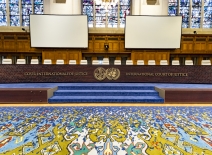
Courtroom and bench of International Court of Justice, principal judicial organ of the United Nations located at The Hague. Photo credit: Shutterstock.

ETI welcomes ICJ confirmation that the right to strike is protected under ILO Convention No. 87

22 May 2026
After more than a decade of dispute, the world's highest court has settled a critical question for workers everywhere. Here is what it means for responsible business.
Red double decker bus speeds past UK Parliament, London. Photo credit: Shutterstock.

A missed opportunity: ETI responds to the King's Speech

15 May 2026
The King's Speech marks the opening of a new UK parliamentary session, outlining the government's legislative agenda and policy priorities for the coming year. ETI is disappointed this week's speech did not include a commitment to mandatory Human Rights and Environmental Due Diligence (mHREDD) legislation, and calls on government to reconsider.
Cargo ships near the Strait of Hormuz. Photo credit: Shutterstock.

Middle East Conflict: ETI statement and recommendations for responsible business action

13 April 2026
The Middle East conflict is already reshaping global supply chains, driving up energy and food costs, and placing mounting pressure on workers across South Asia and beyond. ETI sets out what this means for businesses and the practical steps they should be taking.

OECD

ETI at the OECD Forum on Due Diligence in the Garment and Footwear Sector 2026

20 January 2026
A run down of where you can engage with us at the OECD Forum.
Lisa Parrott 3

Lisa Parrott joins ETI Board as Treasurer and Non-Executive Director

6 January 2026
Experienced CFO joins ETI Board as Treasurer, bringing extensive expertise in finance, governance and risk.

Pagination

  • Page 1
  • Next page ››

Stay up to date

Stay up to date with the latest from ETI via the following channels:
  • Email
  • Twitter
  • LinkedIn
  • Blog RSS

Get the latest

Subscribe to our email newsletters and stay up to speed on responsible business.
Subscribe

ETI elsewhere

  • Twitter
  • LinkedIn
  • YouTube

Footer

  • ETI Community
  • Accessibility
  • Contact
  • FAQ
  • Jobs at ETI
  • Press resources
  • Security & privacy
Other ETIs: Bangladesh, Denmark, Norway, Sweden
Ethical Trading Initiative | Registered No. 3578127