Get the latest
Subscribe to our email newsletters and stay up to speed on responsible business.

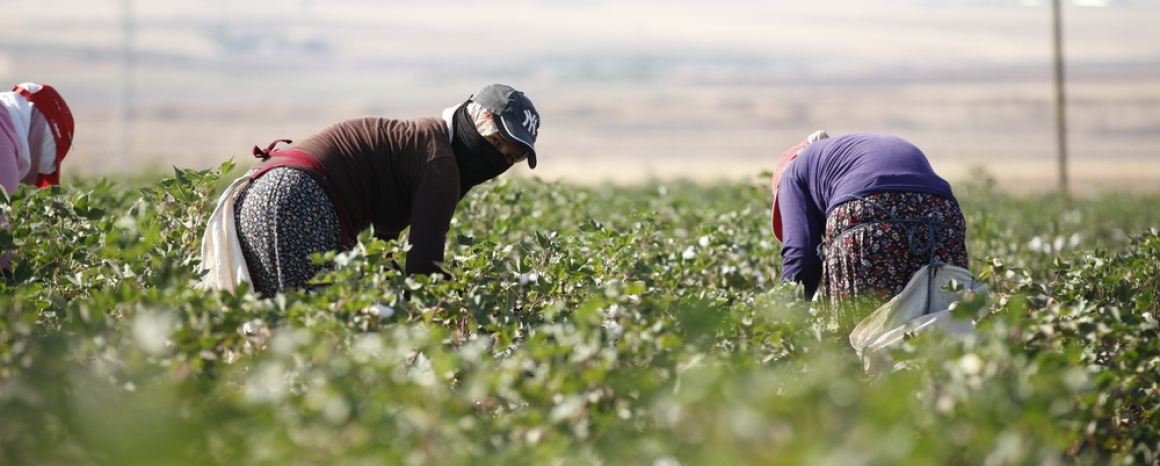
Forced labour and modern slavery are not distant risks. They are present in global supply chains across every major sector, often hidden in plain sight – and the laws that hold businesses accountable for them are getting stronger.
Approximately 50 million people are trapped in modern slavery worldwide, with 28 million in conditions of forced labour. Most are not in factories that can be reached by a typical supplier audit. They are in fields, homes, fishing vessels, and informal worksites, embedded in supply chain tiers that are genuinely difficult to map and monitor.
For companies operating global supply chains, the central challenge is building the systems to find forced labour risks, address them, and demonstrate that meaningful action is being taken – not just disclosed.
This guide explains what forced labour and modern slavery mean in practice, why the regulatory environment is intensifying, what businesses are now expected to do – and how to build an approach that goes beyond compliance.
The terms are related but not identical, and the distinction matters for compliance purposes.
Forced labour is defined by the International Labour Organization (ILO) as any work or service exacted from a person under the threat of a penalty and for which they have not offered themselves voluntarily. It encompasses debt bondage, passport confiscation, wage withholding, restrictions on movement, and coercion through threats of violence or denunciation to authorities.
Modern slavery is a broader umbrella term used in UK and Australian legislation. It covers forced labour, human trafficking, servitude, and debt bondage – essentially all situations in which a person cannot refuse or leave because of threats, violence, coercion, deception, or abuse of power.
The two concepts overlap substantially in a supply chain context. Most modern slavery encountered in commercial supply chains takes the form of forced labour – workers who are technically employed but whose freedom has been compromised through the practices of labour recruiters, employers, or the structural conditions of the work itself.
For practical guidance on the ILO’s eleven indicators of forced labour and how to apply them, see: How to identify forced labour in your supply chain
Forced labour rarely announces itself. Unlike unsafe machinery or missing protective equipment, exploitation of this kind is designed to be invisible to those looking from the outside in.
Several structural features of global supply chains make it especially difficult to identify:
The shift from voluntary disclosure to mandatory due diligence is well underway. Annual modern slavery statements remain important, but they are no longer sufficient on their own – companies are expected to demonstrate structured, ongoing action alongside public reporting.
The key legislative developments affecting UK–headquartered and internationally operating companies include:
UK Modern Slavery Act 2015 Requires any business operating in the UK with an annual turnover above £36 million to produce an annual modern slavery statement disclosing steps taken to prevent slavery and human trafficking in its operations and supply chains. The UK government has committed to strengthening the Act, including introducing mandatory reporting areas, enhanced due diligence obligations, and penalties for non–compliance.
EU Corporate Sustainability Due Diligence Directive (CSDDD) Requires in–scope companies to conduct ongoing human rights and environmental due diligence across their full value chains, with forced labour as a priority risk area. Introduces civil liability for harm caused or contributed to as a result of failures in due diligence. Companies with significant EU operations or revenues need to be preparing now.
EU Forced Labour Regulation (EUFLR) A market access measure distinct from the CSDDD. Products made with forced labour – anywhere in the world – can be barred from EU markets following an investigation. This applies to all companies placing goods on the EU market, regardless of where they are headquartered.
Uyghur Forced Labor Prevention Act (UFLPA) A US law establishing a rebuttable presumption that any goods produced wholly or in part in Xinjiang, China have been made with forced labour. Importers must demonstrate otherwise to gain market access. Significant implications for any company sourcing cotton, polysilicon, tomatoes, or other goods with Xinjiang exposure.
Canada: Fighting Against Forced Labour and Child Labour in Supply Chains Act In force from 2024, requiring government institutions and private entities to report annually on measures taken to prevent and reduce forced labour risks.
Australia: Modern Slavery Act 2018 Requires entities with annual consolidated revenue of at least AUD $100 million to produce an annual modern slavery statement.
These laws are not converging on a single standard – each has its own scope, thresholds, and requirements – but their cumulative direction is clear: companies must demonstrate proactive, structured action, not just annual disclosure.
For a jurisdiction–by–jurisdiction breakdown, see: Modern slavery legislation: what businesses need to know
A credible approach to forced labour goes further than annual reporting and supplier audits. Businesses are increasingly expected to show that forced labour risk management is embedded in how they operate day–to–day – in procurement decisions, supplier relationships, and internal governance – not treated as a compliance exercise managed once a year.
Effective practice has five interlocking components:
Effective forced labour risk management starts at the top. Board–level accountability, clear internal ownership across procurement, legal, compliance and sustainability functions, and incentive structures that support – rather than undermine – responsible sourcing are all part of embedding this into governance.
ETI Base Code clause 1 – employment is freely chosen – establishes the baseline: no forced, bonded, or trafficked labour; no requirement to deposit papers or pay recruitment fees; freedom to leave with reasonable notice. This is the standard against which practice should be assessed.
Meaningful risk assessment maps the full depth of the supply chain, not just direct suppliers. It identifies where forced labour risk is highest – by geography, sector, labour category, and sourcing practice – and prioritises action accordingly.
Key risk factors include: use of labour recruitment agencies (particularly cross–border); reliance on migrant workers; operations in high–risk countries or sectors; and purchasing practices that compress margins and timescales.
For a step–by–step guide to forced labour risk assessment, see: How to identify forced labour in your supply chain.
Engaging suppliers on forced labour cannot be reduced to a checklist or an audit visit. Suppliers need to understand what is expected, have the capacity to meet those expectations, and trust that raising problems will not result in immediate delisting.
Effective engagement is collaborative, long–term, and calibrated to the risk level and context of each supplier relationship. It includes capacity–building support, clear and consistent communication about purchasing practices, and regular dialogue – not just periodic compliance checks.
Workers are the primary source of information about what is actually happening in supply chains. Yet most corporate approaches to forced labour make it structurally difficult for workers to raise concerns – particularly where workers are migrants, informal, or have reason to fear disclosure.
Effective worker engagement means creating genuine conditions of safety and trust: confidential reporting mechanisms, engagement through trusted intermediaries including trade unions and civil society organisations, and a clear commitment to non–retaliation.
The EU CSDDD explicitly requires companies to demonstrate meaningful stakeholder engagement. This is not a procedural box to tick – it is the mechanism through which hidden risks are identified and addressed.
Finding forced labour in a supply chain is not a failure – it is a consequence of looking properly. The question is what a company does next.
Reflexive disengagement – cutting off a supplier immediately on discovery – can in practice worsen outcomes for the workers affected, who lose their livelihoods without accessing any remedy. Best practice involves staying engaged to support remediation, compensating affected workers for losses incurred, and working with civil society and unions to ensure workers receive the remedy they are entitled to.
For companies subject to the UK Modern Slavery Act – and increasingly Australian and Canadian equivalents – the annual modern slavery statement is both a legal obligation and a significant opportunity to signal the seriousness of their approach.
The gap between stated commitment and demonstrated action is where most modern slavery statements fall short – and where regulatory and investor scrutiny is increasingly focused. Statements that describe policies without showing how they are implemented, or that list activities without connecting them to identified risks, are less and less likely to satisfy stakeholders.
A credible statement addresses six areas:
The shift the UK government is moving towards – and that Australia and Canada already require in more structured form – is evidence of outcomes, not just descriptions of processes.
ETI's Modern Slavery Statements Evaluation Framework provides a detailed standard to assess and improve your statement against each of these areas.
ETI has worked on forced labour in global supply chains for more than two decades. We played a central role in shaping the UK Modern Slavery Act 2015, advocating for the transparency in supply chains provisions that now require thousands of companies to report publicly on their approach.
Our work on forced labour is grounded in our tripartite model – bringing together companies, trade unions, and NGOs. This means our guidance reflects what actually works in practice, informed by the experience of workers and rights holders, not just corporate compliance systems.
Through ETI membership, companies gain access to:
ETI membership also enables companies to demonstrate credible commitment. ETI’s transparency framework, our long–standing relationships with regulators, investors, and civil society, and our publicly recognised Base Code give member companies a grounding that is increasingly valued in procurement relationships, investor due diligence, and regulatory engagement.
What is the difference between forced labour and modern slavery?
Forced labour refers specifically to work exacted under coercion or threat of penalty without voluntary consent, as defined by the ILO. Modern slavery is a broader umbrella term used in UK and Australian legislation that encompasses forced labour alongside human trafficking, servitude, and debt bondage. In supply chain contexts, the two terms substantially overlap.
Is my company legally required to address forced labour in its supply chain?
Increasingly, yes – and the threshold is lowering. The UK Modern Slavery Act applies to businesses with UK operations and annual turnover above £36 million. The EU CSDDD and Forced Labour Regulation extend obligations significantly further. US import restrictions under the UFLPA apply to any company selling goods into the US market. The question for most companies is not whether they have obligations, but which specific requirements apply to them and their suppliers.
Can social audits identify forced labour?
Standard social audits have real limitations when it comes to detecting forced labour. They are typically arranged in advance, conducted with employer cooperation, and do not create the conditions of safety and trust that workers experiencing exploitation need in order to speak up. Audits can play a useful role as one tool within a broader system, but they work best alongside worker–centred engagement, supply chain mapping, and collaboration with civil society and trade unions.
What should we do if we find forced labour in our supply chain?
The priority is the welfare of the workers affected. Immediate disengagement – cutting off the supplier – is rarely the right first response, as it can deprive affected workers of income and access to remedy without improving their situation. Best practice involves engaging with the supplier to address the issue, ensuring workers receive remediation, and working with trade unions, NGOs, and where appropriate, public authorities to support affected workers. ETI can provide practical guidance on navigating this situation.
How does forced labour relate to human rights due diligence?
Forced labour is one of the most severe human rights risks in global supply chains, and addressing it is therefore a priority area within any credible HRDD system. The same governance structures, risk assessment processes, and worker engagement methods that underpin effective HRDD apply directly to forced labour – but forced labour also has specific characteristics (its hidden nature, the role of labour recruitment, the risk to migrant workers) that require targeted attention within that broader framework. See our complete guide to HRDD for more on the relationship between the two.
Explore forced labour and modern slavery in practice
What is modern slavery? Definitions, forms and scale
How to identify forced labour in your supply chain
Modern slavery legislation: what businesses need to know
How to write a modern slavery statement
Move from statements to action
ETI supports companies to build forced labour due diligence that is credible, practical, and grounded in the real experiences of workers. Whether you are developing your approach for the first time or strengthening an existing system, membership gives you access to the expertise, tools, and peer community to make real progress.
Find out about ETI membership