Home

Main menu

  • Home
  • Why ETI
    • Why join ETI
  • ETI Base Code
    • Base Code overview
    • Base Code clause 1: Employment is freely chosen
    • Base Code clause 2: Freedom of association
    • Base Code clause 3: Working conditions are safe and hygienic
    • Base Code clause 4: Child labour shall not be used
    • Base Code clause 5: Living wages are paid
    • Base Code clause 6: Working hours are not excessive
    • Base Code clause 7: No discrimination is practiced
    • Base Code clause 8: Regular employment is provided
    • Base Code clause 9: No harsh or inhumane treatment is allowed
  • Our approach
    • Membership
    • Programmes
    • Transparency
    • Meaningful stakeholder engagement (MSE)
  • Our expertise
    • Climate change & Just transitions
    • Crisis response
    • Gender equality in supply chains
    • Worker representation
    • Forced labour & modern slavery
    • Responsible purchasing practices
      • RPP in manufacturing
    • Human rights due diligence
      • HRDD legislation tracker
  • Resources
    • Guidance & reports
    • Blog
      • Blog series: Tackling gender-based violence through GRACE
    • Case studies
    • Training
    • Events
      • ETI Insights series
    • Impact report 2024-25
  • About ETI
    • Who we are
      • ETI's origins
    • What we do
    • Our members
      • Public reporting performance
    • Global presence
    • Governance
    • Our team
      • ETI Board members

Breadcrumb

  1. Home
  2. blog

The benefits for GRACE members

  • Share on Facebook
  • Share on Twitter
  • Share on LinkedIn
  • Dr. Jane Pillinger
  • 11 December 2025
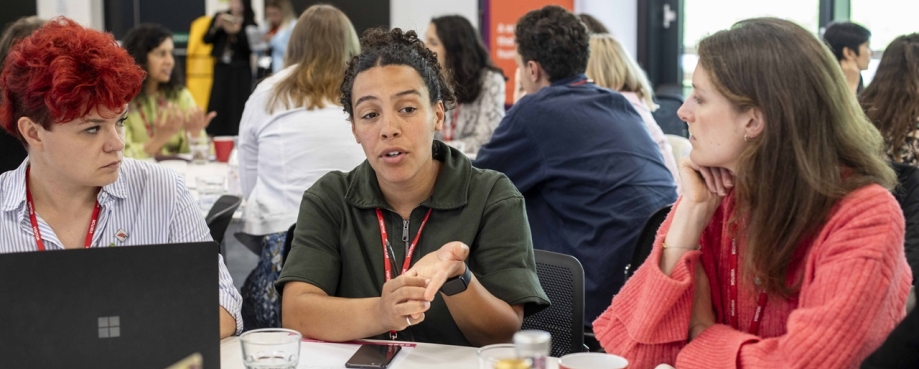
ETI members engaging in discussions at ETI Member Day 2024.

Throughout ETI's Gender Responsive Action Community (GRACE) programme, we observed some impressive and innovative developments and future possibilities. As part of our series reflecting on the project, this blog highlights some of the key developments.

A major early step was the adoption of a strategic and structured approach, including the use of a specially designed gender-maturity assessment template (GMAT). Brands also piloted a supplier questionnaire on GBVH and gender-responsive risk assessment, and and supported suppliers to develop and test new anti-GBVH policies. On the one hand, small brands showed they can drive rapid change and coordinate sustainability efforts with their contracting and buying functions and suppliers. On the other hand, larger companies can have a greater resource impact, undertake large-scale projects, deliver practical outcomes through country teams, and exert significant influence on suppliers. 

Regardless of the size, setting out clear expectations on suppliers is essential, as are effective ways to monitor and provide support for suppliers in meeting expectations, for example, to establish trusted and safe reporting channels, gender-responsive risk assessment, non-discrimination and non-retaliation policies, and medical and psychosocial support for survivors, which are the foundation for building capacity and impact. 

One of the objectives of GRACE was to provide practical advice for ETI member brands to help them develop and implement actions that are relevant to where they are, whether they are just starting, have made some progress, or are well on the way to making progress. One of the outcomes of this process is the ETI GRACE GBVH Prevention Toolkit, which draws on the learning and discussions with members to provide brands, suppliers and supply-chain partners with a comprehensive, gender-responsive human rights due diligence (GRHRDD) framework to prevent, identify, mitigate and remediate GBVH in the A&T supply chains. 

The toolkit provides practical, step-by-step guidance, including:

  • a supplier self-assessment,
  • a model GBVH policy,
  • risk-assessment checklists,
  • guidance on conducting participatory safety walks,
  • prevention-plan templates,
  • monitoring and reporting tools,
  • and survivor-centred remediation processes. 

Case studies (such as those from H&M, the Maitri Project, and the Dindigul Agreement) illustrate good practice. At the same time, an accompanying implementation pathway supports companies at different maturity levels in progressively strengthening systems, embedding accountability, collaborating with unions and experts, and driving long-term culture change across supply chains.

GRACE was funded by eight participating member companies and the Dutch Ministry of Foreign Affairs through the STITCH programme. The toolkit is available now to all ETI members.

Read tomorrow’s blog about the lessons from the project.

Blog post

Why a Community of Practice is required

Indonesia Garment factory production line
Reflections on ETI’s GRACE project that tackles GBVH in the apparel and textile sector by Dr. Jane Pillinger. The first in a new five-part blog series.
Read more
ETI's blog covers issues at the intersection of business and human rights. We feature posts by, for and from our members and allies; we do not accept or offer payment for posts or publish content outside of these criteria. We welcome a range of insights and opinions from our guest bloggers, though don't necessarily agree with everything they say.

Stay up to date

Stay up to date with the latest from ETI via the following channels:
  • Email
  • Twitter
  • LinkedIn
  • Blog RSS

Get the latest

Subscribe to our email newsletters and stay up to speed on responsible business.

Subscribe

ETI elsewhere

  • Twitter
  • LinkedIn
  • YouTube

Footer

  • ETI Community
  • Accessibility
  • Contact
  • FAQ
  • Jobs at ETI
  • Press resources
  • Security & privacy
Other ETIs: Bangladesh, Denmark, Norway, Sweden
Ethical Trading Initiative | Registered No. 3578127