Home

Main menu

  • About ETI
    • Our members
      • Public reporting performance
    • Who we are
      • ETI's origins
    • What we do
    • Global presence
    • Governance
    • Our team
      • ETI Board members
    • Our Strategy
  • Home
  • Why ETI
    • Why join ETI
  • ETI Base Code
    • Base Code overview
    • Base Code clause 1: Employment is freely chosen
    • Base Code clause 2: Freedom of association
    • Base Code clause 3: Working conditions are safe and hygienic
    • Base Code clause 4: Child labour shall not be used
    • Base Code clause 5: Living wages are paid
    • Base Code clause 6: Working hours are not excessive
    • Base Code clause 7: No discrimination is practiced
    • Base Code clause 8: Regular employment is provided
    • Base Code clause 9: No harsh or inhumane treatment is allowed
  • Our approach
    • Membership
    • Programmes
    • Transparency
    • Meaningful stakeholder engagement (MSE)
  • Our expertise
    • Climate change & Just transitions
    • Crisis response
    • Gender equity in supply chains
    • Worker representation
    • Forced labour & modern slavery
    • Responsible purchasing practices
      • RPP in manufacturing
    • Human rights due diligence
      • HRDD legislation tracker
  • Resources
    • Guidance & reports
    • Blog
      • Blog series: Extreme heat and risks to workers
      • Blog series: Tackling gender-based violence through GRACE
    • Issues
      • Human rights due diligence (HRDD): a complete guide for business
        • What is human rights due diligence?
        • Human rights due diligence legislation and regulatory requirements
        • How to implement human rights due diligence in your company
        • HRDD risk assessment for supply chains
        • Supplier engagement and human rights due diligence
      • Forced labour & modern slavery: a complete guide for business
        • What is modern slavery? Definitions, forms and scale
        • How to identify forced labour in your supply chain
        • Remediation: what to do when forced labour is found
        • Modern slavery legislation: what businesses need to know
        • EU Forced Labour Regulation: what it means for your business
        • How to write a modern slavery statement
        • High-risk sectors and sourcing regions for forced labour
        • Forced labour and migrant workers in supply chains
      • Responsible purchasing practices: what they are and why they matter
        • How to implement responsible purchasing practices
        • Responsible purchasing practices and legislation: what companies need to know
        • Responsible purchasing practices by sector
    • Case studies
    • Training
    • Events
      • ETI Insights series
    • Impact report 2024-25

Breadcrumb

  1. Home
  2. blog

Ensuring disabled people can contribute to business success

  • Share on Facebook
  • Share on Twitter
  • Share on LinkedIn
  • Susan Scott-Parker - Business Disability International
  • 9 March 2016
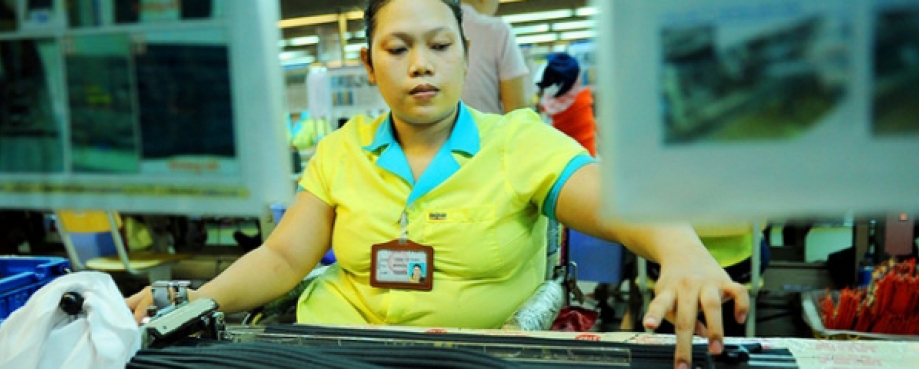
Disabled factory worker. Photo, ILO

In this blog, Susan Scott-Parker of business disability international (bdi) discusses the trends that are driving the need for global business to respond more consistently to the one billion people with disabilities worldwide – as their customers, their colleagues and their potential colleagues.

I think it’s exciting to see ETI encouraging its members to take a fresh approach to enabling the contribution of disabled people to business success. And the statistics show just how important that contribution could be.

The World Health Organisation estimates that at least 15 per cent of the population in any country will have a disability which results in economic and social disadvantage. And the fact that 1 in 3 aged 50-64 will be disabled is of particular relevance as the world’s population ages.

More than 160 countries have ratified the Convention on the Rights of Persons, which in turn is transforming expectations.

Enhancing a company’s disability performance inevitably benefits the business as well as its community and economy

bdi was jointly founded by Barclays, GSK and Infosys. They realised that enhancing any company’s disability performance inevitably benefits the business as well as the communities and economies in which they operate.

A crucial insight has been that corporate disability expertise improves the experience for older customers, including the many who would never describe themselves as ‘disabled’.

Barclays, for example, are publicly committed to becoming the most accessible bank, in the knowledge that removing barriers for disabled and older customers enhances the experience of every customer. And in the knowledge that their employees are also their customers.

Yet global companies encounter not just inconsistent but often contradictory disability legislation and messaging as they look around the world. Our job at bdi is to help global HQs lift above this confusion and deliver the corporate best practice we brand ‘disability confidence’. Because it is only best practice which transforms legal obligation to business benefit.

A 'disability confident' corporation will:

  • Understand how disability affects the entire business.
  • Remove obstacles which prevent groups of people from contributing.
  • Be willing and able to make the adjustments which enable individuals.
  • Not make assumptions about human potential on the basis of a label.

Treat people fairly by treating them differently

We have learned that we treat people fairly by treating them differently and that this benefits the business. We have also learned that the best way to identify the many needless and often discriminatory obstacles, is by learning directly from disabled people. However, the biggest obstacle of all remains the widespread ‘soft bigotry of low expectations’.

Low expectations not just of people with disabilities but of employers. Low expectations reinforced by so many deep rooted assumptions and stereotypes and lack of personal contact.

Here’s a recent classic comment from an HR director in a giant global corporation:

“But Blind People can’t use the internet – so why should our recruitment process be accessible?”

The truth is, that director has never seen a blind person try to use the internet. The director has nothing against blind people as such but just assumes the internet requires sight.

That assumption of course then makes it very unlikely that the director will ever meet the blind graduate who could have proved that blind people do in fact use the internet.

Because the graduate can’t apply for a job in the director’s company.

Delivering on a public commitment not to discriminate against people with disabilities

As ETI members begin to ask how to start to deliver on their public commitment not to discriminate against people with disabilities, I would like to make two suggestions. 

Why not join bdi and help us to make it easier for any global HQ to communicate what fair and reasonable treatment looks like, as they learn how to enable everyone’s access, productivity and potential – including blind graduates. And help us to make it easier to encourage your global suppliers to do the same.

And why not start a different conversation with people with disabilities as you ask them to describe the journeys they take, in any given country, as they seek to find work, keep their jobs when they become disabled, and access goods and services.

Then, with their advice, begin to remove the discriminatory and counterproductive obstacles in your control, while encouraging governments and others to remove the obstacles that remain with them.

We welcome the opportunity to collaborate with ETI and its members as we start a fresh conversation between business and people with disabilities. A conversation which challenges outdated assumptions on all sides – and opens the way to innovation, business improvement and enhanced life chances for everyone.

ETI's blog covers issues at the intersection of business and human rights. We feature posts by, for and from our members and allies; we do not accept or offer payment for posts or publish content outside of these criteria. We welcome a range of insights and opinions from our guest bloggers, though don't necessarily agree with everything they say.

Stay up to date

Stay up to date with the latest from ETI via the following channels:
  • Email
  • Twitter
  • LinkedIn
  • Blog RSS

Related content

  • THE LEADERSHIP SERIES: Addressing disability in supply chains
  • Persons with disabilities challenge supply chain barriers
  • Base Code Guidance: Disability
  • Towards Disability Inclusion
  • Social Insurance in China: the role of business in contributing to pension, unemployment, maternity, medical and workplace injury benefits
  • Disability: a badly neglected labour rights issue

Get the latest

Subscribe to our email newsletters and stay up to speed on responsible business.

Subscribe

ETI elsewhere

  • Twitter
  • LinkedIn
  • YouTube

Footer

  • ETI Community
  • Accessibility
  • Contact
  • FAQ
  • Jobs at ETI
  • Press resources
  • Security & privacy
Other ETIs: Bangladesh, Denmark, Norway, Sweden
Ethical Trading Initiative | Registered No. 3578127