Get the latest
Subscribe to our email newsletters and stay up to speed on responsible business.

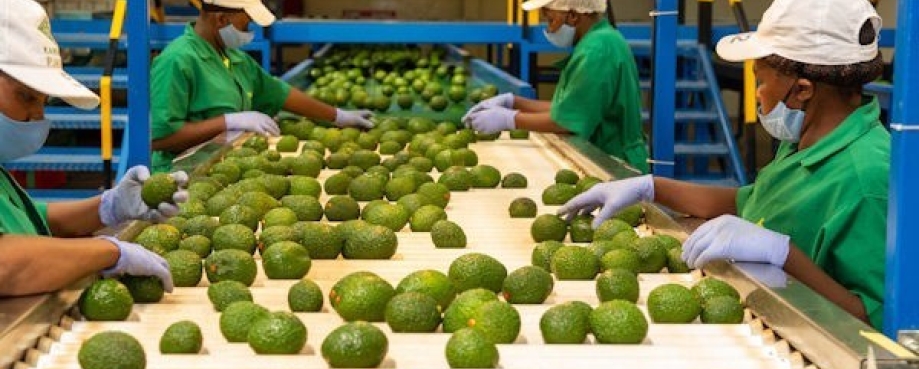
Eastern Produce Regional Services (EPRS) is a Kenya-based company that supports agricultural businesses across East and Southern Africa.
EPRS supports its partner companies through expertise in agronomy, supply chain and logistics, governance, legal, communications, ethics, sustainability, and Human Rights Due Diligence (HRDD). Working alongside five agricultural businesses across Kenya, Malawi, Tanzania and South Africa, EPRS works to strengthen operational performance, management systems, and responsible business practices aligned with both local and international standards.
Our journey with the Ethical Trading Initiative (ETI) began in 2024 when we joined as a foundation member — a first step before progressing to full membership — with the aim of strengthening and further structuring our approach to responsible business practices through collaboration, practical learning, and alignment with global standards.
While many of the principles reflected in the ETI Base Code were already embedded within our operations through our existing social compliance processes, ETI provided an important platform to build on what we already had in place and deepen our understanding of what it means to implement an effective, holistic human rights due diligence (HRDD) approach.
It also created opportunities to engage with peers facing similar operational and supply chain experiences and challenges across different sectors and regions.
When we joined, our policies were in reasonable shape, but we weren’t confident we fully understood the human rights risks further down our supply chain, or how to structure our approach to address them systematically. That’s what we joined ETI to work on.
Our ETI journey has provided valuable opportunities for both practical learning and reflection.
One of the key lessons was recognising the need to strengthen our understanding of human rights risks beyond our direct operations and further into our supply chain.
As a result, EPRS worked with one of its client companies, Eastern Produce Kenya, to commission a comprehensive HRDD process in 2025. The assessment sought to identify salient human rights risks across operations and supply chains, while also helping define practical actions for prevention, mitigation, and ongoing improvement.
The process included engagement with workers, suppliers, contractors, out-growers, and community representatives to better understand potential risks and priorities across the supply chain. The findings informed the development of a 2025–2026 supply chain HRDD Action Plan, which is now being implemented across Eastern Produce Kenya’s operations. The plan prioritises actions to address concerns raised during stakeholder engagement, including work injury insurance covers and fair wage practices among Tier 1 contractors, helping strengthen protections and improve working conditions across the supply chain.
The impact has extended beyond Eastern Produce Kenya. A similar HRDD exercise is now underway at Eastern Produce Malawi, reflecting a broader group-wide commitment to strengthening ethical trade and human rights practices.
Another important aspect of the ETI journey has been peer engagement, which reinforced that many responsible business challenges are shared, and often require collaborative rather than isolated solutions.
What stood out most was how directly ETI’s frameworks translated into practical action. Not just principles on paper, but tools and conversations that helped us move from recognising risks to doing something concrete about them. And the peer learning reinforced something important: these challenges are rarely unique to one company. The value of working through them collectively, rather than in isolation, is real.
Graduating to full ETI membership marks an important milestone in our journey, but not the conclusion of it.
We look forward to continued engagement through peer learning, exposure to evolving global standards, and opportunities to strengthen how sustainability, accountability, and responsible business practices are embedded across our operations.
If you are considering ETI membership, particularly in agri-supply chains across East or Southern Africa, we would be glad to share what the journey has looked like for us. Contributing those experiences within the ETI network is something we look forward to.
We are also keen to contribute more actively within the ETI network by sharing experiences, learning from others, and collaborating on approaches that support human rights and improved working conditions across global supply chains.
As part of strengthening accountability and transparency, we look forward to the annual progress updates through the Corporate Transparency Framework (CTF).
We know that while we have taken important steps on business and human rights, we do not have all the answers. What we do have is a commitment to keep learning, to strengthen our processes through collaboration, and to grow alongside others in this journey. As we graduate to full membership, we see ETI as a platform for continuous improvement, where we can contribute meaningfully while also learning from the collective wisdom of the community.
If any of this sounds familiar, we think the conversation is worth having.