Get the latest
Subscribe to our email newsletters and stay up to speed on responsible business.

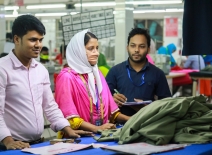
Beyond the Gender Responsive Action Community (GRACE) programme, a key issue for the future is determining strengthen further collaboration among brands, as well as with suppliers, NGOs, and trade unions. Collaboration can help brands and stakeholders address urgent social and environmental challenges, support innovation and impact, ensure shared ownership of gender-responsive human rights due diligence (GRHRDD) outcomes, and enhance supplier capabilities.
For example, this approach could enable the development of factory-wide, gender-responsive risk assessments to ensure that preventing gender-based violence and harassment (GBVH) is integrated into occupational safety and health (involving suppliers, workers, unions, and local NGOs).
Other examples of collaboration could include establishing consistent supplier- and factory-wide procedures, such as a single grievance and remediation system supported by clear referral pathways, methods, and approaches; protocols for handling GBVH complaints safely, reliably, and with gender sensitivity; and the sharing of data on grievances and complaints. In addition, collaboration can help promote the sharing of resources and expertise when providing information, training, and awareness-raising programmes, and when creating participatory tools such as safety walks and mapping, confidential interviews, and anonymous surveys. This collaboration could not only guarantee the standardised and consistent application of these methods, but it could also lead to resource sharing and economies of scale.
One way that brands are currently collaborating is through the partnership between ETI-RISE Respect and the development of an anti-GBVH toolkit focused on remediation, planned for publication in 2026. Could this be the start of a new step-wise approach to collaboration, partnership, and engagement across the sector, and a first step toward establishing industry-wide standards, including robust guidance and monitoring? This approach could start with co-funding practical prevention measures and training for workers, managers, and supervisors. Further examples could then follow to include strengthening gender-responsive external investigation and remediation, with access to local gender experts and investigators experienced in GBVH and trauma-informed interviewing and case handling. Regardless of the approaches taken, it is vitally important to ensure that brands collaborate with all relevant stakeholders and support the drive for systemic gender-transformative change in the sector, a goal that ETI’s collaborative, tripartite model is uniquely designed to deliver.