Get the latest
Subscribe to our email newsletters and stay up to speed on responsible business.

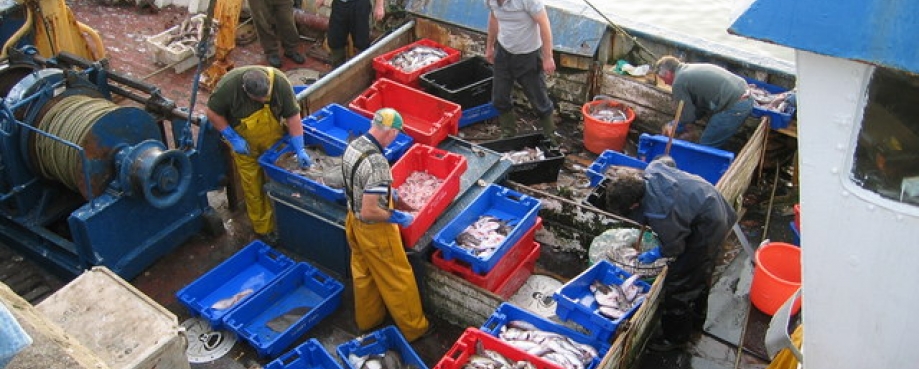
As analysed in Unravelling The Nets, our recent report on fishing, many migrant fishers entering the UK do so on either Code 7 Contract Seaman Leave or Skilled Worker Visas. Code 7 leave, which is often referred to as a transit visa, allows temporary entry to the UK for crew joining a vessel that will leave UK waters. It does not grant permission to work or reside in the UK. Migrant fishers on Code 7 leave are breaching the immigration rules if they work inside UK waters. Migrant fishers hired on Code 7 leave, including on UK flagged vessels, are routinely instructed to fish outside 12 nautical miles to meet “transit” conditions, then return to UK ports to live aboard vessels and perform portside duties such as unloading catch and mending nets—despite Code 7 not permitting work or residence in the UK.
As that blog discusses, the result is that many migrant fishers are paid far below the UK minimum wage, work extreme hours with little or no guaranteed rest, live and work on vessels without access to medical care or support, and are unable to report abuse for fear of immigration enforcement. Migrant fishing workers on Code 7 face extreme risk of exploitation.
The other route is via the Skilled Worker visa, which covers a range of sectors and professions. This allows foreign nationals to work as fishers legally within UK territorial waters, however, it is used far less often by migrant fishers due to the salary, language and skills thresholds which must be met, and the bureaucratic strain and costs placed on recruiters and employers.
Changes introduced in July 2025 raised eligibility thresholds for the Skilled Worker Visa. Applicants must earn £41,700 per year or the occupation’s going rate, demonstrate English at a B2 level (a January 2026 increase for new applicants from B1), and hold a role at Regulated Qualifications Framework Level 6 (graduate level) or above. They must also have a job offer from an employer who is a licensed sponsor.
Fishers however are among the roles for which visas can currently be granted while meeting lower threshold requirements. This is due to the recognition of the need for migrant workers in those sectors. Such roles are on the Immigration Salary List (ISL), a subset of the Skilled Worker Visa. It is the inclusion of fishing on the ISL which makes the Skilled Worker visa accessible to some migrant fishers.
In last year’s Immigration White Paper, the government set out plans to reform the Skilled Worker visa. Commitments to implement these plans include an announcement that the ISL will be abolished by December 2026, and replaced with a Temporary Shortage list. This will list sectors with a shortage of workers, which will facilitate lower thresholds for access to the Skilled Worker Visa.
Based on publicly available information, there are concerns that fishing may not be included on the forthcoming Temporary Shortage list. In other words, while the reforms purportedly reduce reliance on overseas labour in the long term, if the Immigration Salary List is abolished in December 2026, it will not be possible to employ migrant fishers who don’t meet the skills level and salary thresholds for the Skilled Worker Visa.
This presents dark clouds on the near-horizon for UK fishing. One possibility is that it will face a major labour shortage. More likely is that there will be an increased use of Code 7 to recruit migrant fishers, who will face huge challenges as a result; if they fish inside UK territorial waters they will be in breach of the immigration rules. Despite the UK’s recent Employment Rights Bill and creation of a Fair Work Agency, their immigration status will present real barriers to challenging poor living and working conditions.
The UK’s fishing industry is reliant on migrant workers. The fishing industry faces significant challenges recruiting domestically; migrant workers are essential to address this shortage. Fishing industry experts have described how boats have been tied up in port for months when they couldn’t recruit migrant fishers.
Whatever long-term considerations policy-makers might make regarding building a domestic workforce in the fishing industry, the reality is that presently and for the foreseeable future, the industry relies on migrants. Just like any workers, migrant fishers deserve rights, dignity, safety and security that only a work visa which recognises them as workers, with full access to UK employment rights, can provide.
That’s why Focus on Labour Exploitation, alongside unions, organisations and experts, is taking urgent action to steady the ship and address the situation of migrant fishers on UK flagged vessels. In the context of the widespread changes to the UK immigration system there is an urgent need to establish a Fishing Worker Visa. This visa would formally recognise fishers as workers, and help end the misuse and overreliance on a transit route which drives migrant fishers underground, creating fear of authorities.
It is important that any new visa must contain options (such as switching employers, and opportunity to renew the visa) to ensure all workers on the visa can access rights in practice and challenge exploitation. Alongside creating a Fishing Worker Visa, we are pushing for a bridging visa similar to Australia’s ‘Workplace Justice visa’. This came about via reforms to protect migrant workers on temporary visas from being trapped in exploitative work due to their immigration status. Where there is evidence of labour abuse, the Workplace Justice visa permits a person to work in any sector, while the worker seeks redress. Applying that here would enable migrant fishers with restricted immigration status who have been exploited to take claims against employers without losing their immigration status or permission to work.
We are also calling for better labour market enforcement in UK fishing. Labour market enforcement must be applied on all UK-flagged vessels. The new Fair Work Agency, supported by a visa systems which provides options to workers to challenge poor conditions, provides a real opportunity to drive up labour market standards in fishing.
What’s more, the fishers on those vessels must have the confidence to report exploitation and exercise their rights, knowing these will be enforced in a way which improves their situation without jeopardising their livelihood or immigration status. It is only through these measures that government can help workers and the sector navigate through the gathering storm.
Kate Roberts is Head of Policy at Focus on Labour Exploitation (FLEX), a policy and research charity looking to end exploitation. FLEX is an NGO member of the Ethical Trading Initiative.