Get the latest
Subscribe to our email newsletters and stay up to speed on responsible business.

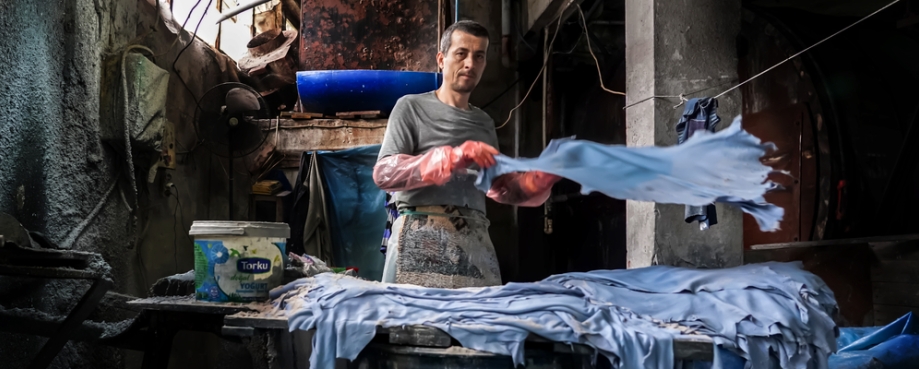
Recent global policy developments reveal a troubling disconnect between high-level commitments on deforestation, climate change, and human rights, and the practical reality of implementing them in complex supply chains such as leather. This gap demonstrates why legislation, while vital, cannot succeed without meaningful collaboration, capacity sharing, and worker-centred due diligence across the entire sector.
In late November, the European Parliament voted to delay the EU Deforestation Regulation (EUDR) by a full year. A measure once expected to take effect at the end of 2024 is now postponed to 2025. Critics fear that repeated delays and potential simplifications could weaken the regulation’s impact, open loopholes and lower compliance standards, especially for smaller operators and downstream traders. Meanwhile, every postponement leaves forests and ecosystems exposed for longer.
At the same time, COP30 concluded without a global, binding commitment to phase out coal, oil, and gas, despite calls from more than 80 countries. The summit recognised the need for a Just Transition Mechanism, but many observers still viewed it as a missed opportunity.
These outcomes point to a shared problem: ambition at the policy level often outpaces the operational capacity needed for implementation.
One of the core reasons cited for the EUDR delay is that both the EU and companies, particularly smaller ones, lack the necessary infrastructure for digital due diligence and traceability. Many businesses have not yet developed the supply-chain mapping, documentation, or risk-assessment systems required to demonstrate that their commodities are deforestation-free. The leather sector exemplifies this difficulty. Spanning livestock production, slaughterhouses, traders, and tanneries across multiple countries, the chain is long, fragmented, and historically opaque.
This was clear at Lineapelle in Milan, the largest global fair for leather stakeholders, where EUDR compliance dominated industry discussions. Brands, traders, and tanneries face mounting pressure to prove hide origins, yet many have never had access to such detailed visibility before.
Leather is an ancient, durable material that provides livelihoods for thousands and uses what would otherwise become waste. But risks, from pollution to labour rights violations, can arise at every stage when governance and oversight are weak. This is why due diligence matters.
While EUDR and the Corporate Sustainability Due Diligence Directive (CSDDD) are essential regulatory steps, the industry cannot afford to sit idle while their timelines shift. Practical improvements in environmental management, workers’ rights, and human rights due diligence must advance now.
Since August 2024, ETI has been working with 40 tanneries in the Savar Tannery Industrial Estate in Dhaka, Bangladesh, through the UK-funded Sustainable Manufacturing and Environmental Pollution (SMEP) Programme. Our learning paper From Pollution to Progress reveals profound environmental capacity gaps:
These weaknesses must be understood within Bangladesh’s broader pollution crisis. A 2024 World Bank study identifies unsafe air, water, and sanitation as contributing to over 272,000 premature deaths and 5.2 billion days of illness each year. Structural failings, such as the ineffective Central Effluent Treatment Plant (CETP), further block compliance with Leather Working Group (LWG) requirements, reducing market access. Financing remains scarce, with most banks viewing the sector as too risky to support.
On the social side, 56% of tannery workers are in informal employment, rising to 70% for women, with limited knowledge of their rights or protections.
These realities make one thing clear: regulation alone will not transform the leather industry unless the people and institutions within it have the capacity and incentives to meet new expectations.
Recognising this, ETI Bangladesh convened government, industry associations, financial institutions, labour groups, and civil society in November to discuss the future of the sector. The message was unanimous: isolated efforts will not work. Coordination and shared responsibility are essential. Key recommendations included:
This is the foundation for long-term sector transformation.
This brings us back to the uncertainty surrounding EUDR and CSDDD. Even with advanced technological tools and risk-assessment systems, due diligence fails unless it is built on meaningful stakeholder engagement, especially with workers and rightsholders. Because without substantive stakeholder input, due diligence processes cannot reliably reflect actual conditions on the ground.
Companies must move beyond one-off consultations to genuine two-way dialogue that shapes decisions and leads to concrete improvements. ETI’s tripartite model, bringing together companies, trade unions, and NGOs, supports exactly this shift:
from consultation to collaboration, from compliance to shared accountability.
This approach is especially important for mid-sized or newer companies that lack the resources of large multinationals. To support them, ETI launched Getting Started on Leather Due Diligence: A Good Practice Guide for Brands at Lineapelle in September, a practical entry point for more responsible sourcing.
The sector must not wait, progress requires partnership now
ETI’s mission is to advance human rights in global supply chains, and effective due diligence is central to that. But due diligence cannot simply be a regulatory checkbox or a technological exercise, it must be rooted in collaboration, worker engagement, and real capacity sharing across the supply chain.
Regulators will continue debating timelines and requirements. But the challenges facing the leather sector — from environmental pollution to informal labour — are unfolding right now. Meaningful progress will depend on what governments, brands, tanneries, investors, and workers choose to do before legislation takes effect.
And that starts with working together.
Thursday, 11 December, 2025 - 10:00 - 11:00 GMT
This session will explore how brands, suppliers, and industry partners can strengthen human rights due diligence (HRDD) within leather supply chains — complementing ongoing efforts on environmental performance and compliance.
The leather industry plays an important role in the global economy, supplying fashion, furniture and automotive sectors, and providing employment for thousands of workers worldwide. However, its complex supply chains can involve a range of human rights and environmental risks.
While environmental issues such as pollution and carbon emissions have gained regulatory attention, human rights risks remain under-addressed. To create fairer, more sustainable supply chains, companies are encouraged to bring human rights due diligence (HRDD) up to the same level of priority as environmental management, working collaboratively across the sector to drive continuous improvement.
In this 60-minute session, ETI will introduce the key insights from its new Leather Due Diligence guidance followed by a panel discussion featuring industry experts from across the value chain.
Speakers will share their perspectives on the opportunities and challenges of putting HRDD into practice — from mapping supply chains and building worker engagement, to aligning with environmental standards and emerging legislation.
Participants will gain practical insights on how to:
Open to both ETI members and non-members, this webinar offers an opportunity to exchange experiences, reflect on lessons learned, and identify practical ways forward for a more responsible and people-centred leather industry.
This session is designed for brands and manufacturers across the leather value chain: those with established footprints looking to further strengthen HREDD, and those new to the sector who need straightforward, actionable direction on how to begin.
This event is part of our ETI Insights series.