
Get the latest
Subscribe to our email newsletters and stay up to speed on responsible business.


As the garment sector navigates disruption, regulation and transition, recent conversations across the sector — including at the OECD Forum on Due Diligence in the Garment and Footwear Sector — have surfaced a set of recurring themes. Together, they point to a set of priorities that are likely to shape the next phase of human rights due diligence (HRDD) implementation.
As ETI enters a new strategic period, five themes stand out. They reinforce why multi-stakeholder collaboration remains central to effective human rights due diligence, and they align closely with ETI’s Strategy 2030: supporting members to make measurable progress on human rights due diligence, strengthen worker representation, drive collective action on systemic risks, and respond effectively to crises.
Disruption is no longer a periodic shock — it is a structural feature of how global supply chains operate. Geopolitical instability, climate shocks, rapid sourcing shifts have exposed how quickly workers can be left vulnerable: unpaid wages, cancelled orders, and weakened protections are often the result of commercial decisions taken before human rights considerations have been applied.
The challenge is familiar: commercial decisions move faster than human rights safeguards. Human rights risk assessment needs to be embedded in sourcing decisions from the outset, not applied after the fact.
Companies increasingly need to shift from reactive mitigation to preparedness — an area where structured progression frameworks and peer learning are becoming critical. For businesses and supply chain partners, it means aligning crisis management with responsible purchasing and remediation frameworks. Collective alignment — including shared expectations and guidance — becomes critical when speed and pressure are highest. This is reflected in ETI’s focus on crisis preparedness and responsible purchasing as core elements of effective HRDD.
Above all, beyond process, resilience depends on long-term supplier partnerships. In an unpredictable environment, sustained engagement — not reactive sourcing shifts — is what delivers greater stability and stronger outcomes for workers.
Decisions taken in the context of supply chain disruptions should be informed by engagement with suppliers and workers. When sourcing reductions or shifts are unavoidable, they must be managed responsibly. ETI’s technical guidance on responsible disengagement outlines practical steps and examples to help companies identify, prevent and mitigate associated human rights risks.
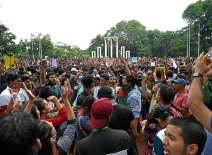
One clear insight emerging across the sector is that companies often already possess significant data on freedom of association (FoA) risks — audit findings, grievance patterns, worker surveys and supplier assessments. The gap is often not in the data itself, but how it is analysed and acted upon.
Quantitative indicators alone rarely tell the full story. Combined with qualitative insights from structured dialogue with trade unions, they help companies identify systemic risks such as anti-union practices or barriers to collective bargaining. Freedom of association is fundamentally about dialogue, and effective HRDD should reflect this.
Transparency is essential here too. More open data and collaboration between brands, suppliers and worker representatives can improve risk identification. But transparency must go hand in hand with safety. Trade unions have consistently highlighted the risks workers face when speaking up in restrictive environments, reinforcing the need for companies to actively assess and mitigate retaliation risks. This reinforces the importance of structured, safe engagement with workers and trade unions.
For businesses, this means sustained engagement rather than episodic consultation. This reflects a wider shift to embed meaningful stakeholder engagement and worker representation as core elements of HRDD — supporting members to translate information into action through structured, safe engagement with unions and workers.
Look out for our upcoming ETI insights webinar on this topic.
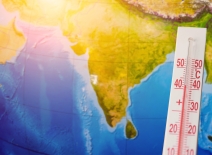
Climate change is already reshaping working conditions. Evidence show how extreme heat is affecting productivity, occupational health and income stability in garment-producing regions. Adaptation measures are emerging, such as altered shift patterns or cooling investments. But two key challenges emerge: industry alignment and internal alignment within companies. Alignment needs to extend beyond social and environmental sustainability, but also include commercial decisions.
At the industry level, addressing climate-related labour risks requires collective approaches — bringing together businesses, trade unions and NGOs to develop practical responses and alignment on the roles and responsibilities of each stakeholder.
At the company level, climate and human rights strategies often sit in separate corporate silos. Embedding climate risk — including extreme heat — into HRDD requires integrating occupational health and safety, wage protection and social dialogue into climate planning from the outset. For businesses and suppliers, this means assessing how decarbonisation and adaptation decisions affect working hours, pay structures and worker well-being.
The International Trade Union Confederation (ITUC) , IndustriALL Global Union and IndustriAll Europe launched the ‘Just Transition Manifesto for the Textile and Garment Supply Chain’. It offers a solid basis and sets out concrete demands for brands, employers and governments to ensure a Just Transition for workers in the garment and textile sector. The manifesto calls on brands to respect labour rights, enable social dialogue, advance gender equality, strengthen due diligence, adopt responsible purchasing practices, and champion environmental accountability. Collective platforms can support the operationalisation of these demands by facilitating shared learning and practical guidance, helping align environmental ambition with worker protection in ways that are operationally realistic.

Upstream risks are becoming more visible and more material for businesses. Forced labour risks often sit in earlier stages of production, where visibility and leverage are weakest.
The forthcoming EU Forced Labour Regulation reinforces this shift. By prohibiting products made with forced labour from entering the EU market, it moves expectations from voluntary commitment to enforceable obligation. This is an area where collective leverage is often essential. As legislation evolves, companies are looking for practical ways to translate requirements into implementation — including shared approaches to traceability, supplier engagement and remediation.
Companies described the operational challenges of mapping raw material supply chains, improving traceability and identifying credible local partners. The response increasingly lies in collaborative approaches — data sharing, pre-competitive initiatives and joint engagement in high-risk regions.
In practice, extending HRDD beyond Tier 1 means strengthening risk assessment methodologies, investing in upstream engagement and ensuring grievance mechanisms are accessible earlier in the value chain. Collective leverage becomes essential where individual company influence is insufficient.
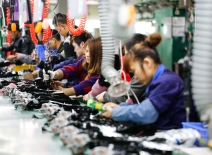
Evidence continues to show that commercial decisions shape working conditions. Case discussions highlighted how inaccurate forecasting, price pressure and late order changes undermine even well-designed due diligence systems.
A key challenge is internal alignment across procurement, sustainability and legal teams. These teams must operate under coherent incentives, particularly as regulatory scrutiny of corporate due diligence intensifies.
Strengthening purchasing practices supports more effective HRDD by reducing the structural pressures that contribute to labour rights risks. For businesses, this means embedding responsible purchasing indicators into performance frameworks and supplier relationships. For suppliers, it can provide greater predictability and capacity to comply with labour standards.
Responsible purchasing is a central focus of ETI’s progression approach, supporting members to translate due diligence commitments into day-to-day commercial practice.
Across all five themes, two points ring clear.
First, HRDD only works when workers are placed at its centre. Meaningful engagement with workers and trade unions is not a procedural step — it is the foundation on which credible due diligence is built. Whether responding to crisis, addressing extreme heat, tackling forced labour upstream or reforming purchasing practices, progress depends on structured, ongoing dialogue backed by evidence, transparency and robust safeguards.
Second, businesses need to align decision-making across commercial, human rights and sustainability functions. Fragmented incentives produce fragmented outcomes. Coherent internal alignment is as important as external accountability.
ETI's Strategy 2030 is built around this direction — supporting members to implement meaningful HRDD, strengthen worker representation, collaborate on systemic risks and respond effectively when crises arise.
Our role remains practical and convening: bringing businesses, trade unions and NGOs together to translate expectations into action, share learning and develop approaches that work in real supply chains.
The priority now is turning discussion into action — through practical guidance, shared learning and collective approaches that are credible, collaborative and built to last.