Home

Main menu

  • About ETI
    • Our members
      • Public reporting performance
    • Who we are
      • ETI's origins
    • What we do
    • Global presence
    • Governance
    • Our team
      • ETI Board members
    • Our Strategy
  • Home
  • Why ETI
    • Why join ETI
  • ETI Base Code
    • Base Code overview
    • Base Code clause 1: Employment is freely chosen
    • Base Code clause 2: Freedom of association
    • Base Code clause 3: Working conditions are safe and hygienic
    • Base Code clause 4: Child labour shall not be used
    • Base Code clause 5: Living wages are paid
    • Base Code clause 6: Working hours are not excessive
    • Base Code clause 7: No discrimination is practiced
    • Base Code clause 8: Regular employment is provided
    • Base Code clause 9: No harsh or inhumane treatment is allowed
  • Our approach
    • Membership
    • Programmes
    • Transparency
    • Meaningful stakeholder engagement (MSE)
  • Our expertise
    • Climate change & Just transitions
    • Crisis response
    • Gender equity in supply chains
    • Worker representation
    • Forced labour & modern slavery
    • Responsible purchasing practices
      • RPP in manufacturing
    • Human rights due diligence
      • HRDD legislation tracker
  • Resources
    • Guidance & reports
    • Blog
      • Blog series: Tackling gender-based violence through GRACE
    • Issues
      • Human rights due diligence (HRDD): a complete guide for business
        • What is human rights due diligence?
        • Human rights due diligence legislation and regulatory requirements
        • How to implement human rights due diligence in your company
        • HRDD risk assessment for supply chains
        • Supplier engagement and human rights due diligence
      • Forced labour & modern slavery: a complete guide for business
        • What is modern slavery? Definitions, forms and scale
        • How to identify forced labour in your supply chain
        • Remediation: what to do when forced labour is found
        • Modern slavery legislation: what businesses need to know
        • EU Forced Labour Regulation: what it means for your business
        • How to write a modern slavery statement
        • High-risk sectors and sourcing regions for forced labour
        • Forced labour and migrant workers in supply chains
      • Responsible purchasing practices: what they are and why they matter
        • How to implement responsible purchasing practices
        • Responsible purchasing practices and legislation: what companies need to know
        • Responsible purchasing practices by sector
    • Case studies
    • Training
    • Events
      • ETI Insights series
    • Impact report 2024-25

Breadcrumb

  1. Home
  2. blog

ETI welcomes ICJ confirmation that the right to strike is protected under ILO Convention No. 87

  • Share on Facebook
  • Share on Twitter
  • Share on LinkedIn
  • ETI
  • 22 May 2026
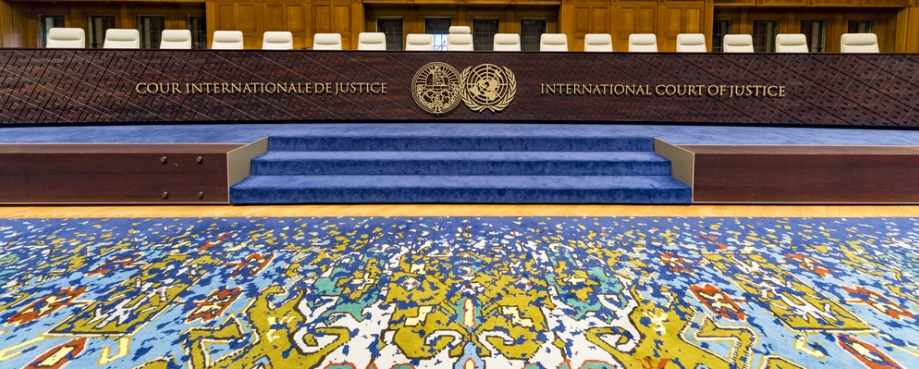
Courtroom and bench of International Court of Justice, principal judicial organ of the United Nations located at The Hague. Photo credit: Shutterstock.

The Ethical Trading Initiative (ETI) welcomes the International Court of Justice’s confirmation this week, by ten votes to four, that the right to strike is protected under ILO Convention No. 87. This brings long-overdue clarity to a question that has divided employers, workers and governments within the ILO for more than a decade.

The ILO's own supervisory bodies have long held this position: that the right to strike is an intrinsic element of freedom of association. The Court has now affirmed it. Importantly, the opinion does not determine the precise content, scope or conditions for the exercise of that right. Those questions remain for national legislators and ILO processes to address. But its recognition matters. 

Freedom of association is an enabling right: the foundation on which fair wages, safe conditions and genuine remedy are built. This is why it sits at the heart of ETI's new 2030 strategy, which we will be launching shortly. That strategy reflects what ETI's own experience, and a growing body of evidence, consistently shows: where workers can organise and represent their own interests, human rights abuses are identified and addressed more quickly, and working conditions improve over time.

This ruling is important not only for workers and trade unions, but also for governments and responsible businesses. Legal clarity on such a critical aspect of international labour law is indispensable for stable industrial relations and effective social dialogue.

We encourage our member companies to use this moment to review their supplier codes, strengthen due diligence on collective bargaining and the right to strike, and build the kind of authentic worker engagement that drives real and lasting change.

“For too long, the absence of clarity on the right to strike has left workers, businesses and governments in an uncertain landscape. Now that the Court has spoken, our job is to make sure that clarity translates into real change in supply chains. That is exactly what ETI and our members are committed to doing.”

Giles Bolton, Executive Director, ETI

ETI's blog covers issues at the intersection of business and human rights. We feature posts by, for and from our members and allies; we do not accept or offer payment for posts or publish content outside of these criteria. We welcome a range of insights and opinions from our guest bloggers, though don't necessarily agree with everything they say.

Stay up to date

Stay up to date with the latest from ETI via the following channels:
  • Email
  • Twitter
  • LinkedIn
  • Blog RSS

Get the latest

Subscribe to our email newsletters and stay up to speed on responsible business.

Subscribe

ETI elsewhere

  • Twitter
  • LinkedIn
  • YouTube

Footer

  • ETI Community
  • Accessibility
  • Contact
  • FAQ
  • Jobs at ETI
  • Press resources
  • Security & privacy
Other ETIs: Bangladesh, Denmark, Norway, Sweden
Ethical Trading Initiative | Registered No. 3578127