Get the latest
Subscribe to our email newsletters and stay up to speed on responsible business.

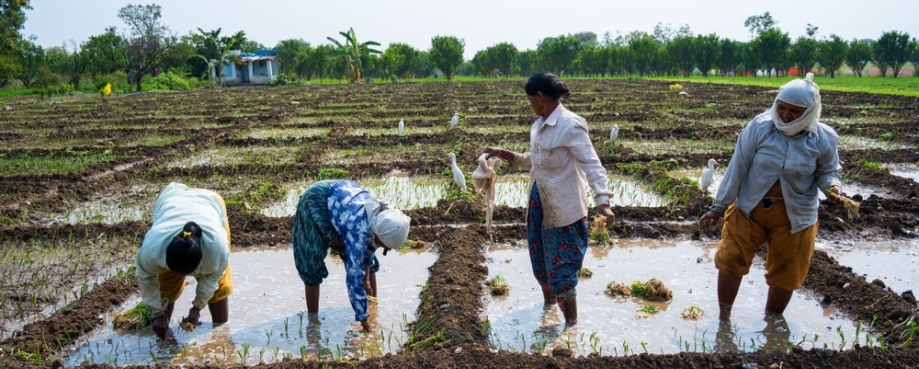
ETI is proud to launch the GAIA principles to end gender-based violence and harassment (GBVH) in commercial agriculture and fisheries. This blog sets out how businesses are expected to use the principles in practice. Read for our expectations on how to use the principles.
The Gender Action in Agriculture (GAIA) project was created to address GBVH as a persistent, under reported issue within commercial agriculture and fishery supply chains. The project was developed through a two year long working group process with tripartite members (trade union, NGO, and companies). Through this process, it became clear that current approaches, often focused on policies, audits, or isolated interventions, are failing to prevent GBVH or address its root causes. Having reflected on the factors that put workers at risk of GBVH, ETI members came to the conclusion that a system wide approach was needed. As the core part of the GAIA project, ETI co-developed a set of principles to systematically address GBVH in commercial agriculture and fishery supply chains.
The GAIA principles were created through extensive engagement with buyers, suppliers, producers, workers and their representatives, trade unions, civil society, multistakeholder initiatives, government institutions, specialised agencies, and academic experts. Over 90 stakeholders were engaged over a 15-month process. ETI members selected Kenyan commercial agriculture (tea and flowers) and South African citrus as focus areas for engagement with local producers, workers and their representatives, civil society, and other stakeholders. Online workshops and surveys were conducted to engage with further stakeholders in global food, farming, and even fishery supply chains. This helped ensure the principles are globally applicable, reflecting the widespread risk of GBVH across sectors and regions.
The GAIA principles provide a framework for all businesses to address the root causes of GBVH in commercial agriculture and fishery supply chains. The principles are intended to encourage collaboration through a recognition of shared responsibility to address GBVH across the supply chain (for example, buyers, suppliers, producers), without disproportionally transferring risks and costs to partners.
In practice, this means implementation should be collaborative, reflecting the shared responsibility of all actors in the supply chain. This is because every business in the supply chain has a responsibility to address GBVH. Responsibility should be shared and upheld at all levels of the supply chain, rather than being solely pushed onto lower-tier suppliers or workers.
Businesses should use the GAIA principles when recruiting and employing workers, and when purchasing goods and services from other businesses, to ensure shared expectations and consistent approaches to preventing GBVH. Workers, trade unions and other civil society organisations can use these principles as a basis to engage businesses on solutions and accountability.
For ETI’s company members, the most effective starting point is dialogue with supply chain partners, workers and their representatives or trade unions to understand what GBVH means within own operations and in their supply chains, where the greatest risk lies, in terms of severity (including irremediability) and scale.
It is also important to have joint understanding with business/supply chain partners of what the principles mean and how to collaborate in implementing them, to determine roles, responsibilities, and areas for further support.
This shared understanding must be grounded through meaningful engagement with those who are affected by and are at risk of GBVH - workers, especially women - trade unions, individuals and organisations with expertise in GBVH. This process should inform action plans that are designed and implemented with workers, validated and monitored by workers and their representatives.
The GAIA principles were developed to support greater alignment and a systemic approach since current approaches are failing to effectively address GBVH. Where actors encounter resistance to collaboration, the co-creation of the GAIA principles by businesses, trade unions, and NGOs can be used to legitimise engagement and signal a clear direction of travel towards shared responsibility.
ETI has written more on understanding the principles, how businesses can use them, where to begin, what are the responsibilities of buyers, how non-private sector actors can use them, and answers to other questions you may have. Read more