Get the latest
Subscribe to our email newsletters and stay up to speed on responsible business.

The Ethical Trading Initiative (ETI) is deeply concerned about the ongoing conflict in the Middle East and its impact on workers, suppliers and supply chains globally. A two-week ceasefire was agreed on 8 April, a necessary first step, but one that has yet to translate into meaningful relief for workers, communities, supply chains or shipping routes.
The Strait of Hormuz remains effectively closed, and the IMF has warned that even in the best case there will be no swift return to the status quo, with the damage already done to living standards, energy markets and supply chains likely to leave lasting scars. The burden will not be shared equally: net oil-importing nations and low-income countries are expected to be hit the hardest. ETI urges all parties to pursue a lasting resolution, and calls on businesses to treat this moment not as a signal to stand down, but as an opportunity to deepen their commitment to the workers their businesses depend on.
The closure of the Strait of Hormuz, through which around 20% of the world's oil supply normally passes, has sent energy prices rising worldwide, disrupted major shipping and air corridors, and is already being felt across apparel, textile and food supply chains. The effects are most acute in India, Bangladesh, Pakistan and Sri Lanka, but the WTO has warned that no part of global trade is insulated from the fallout.
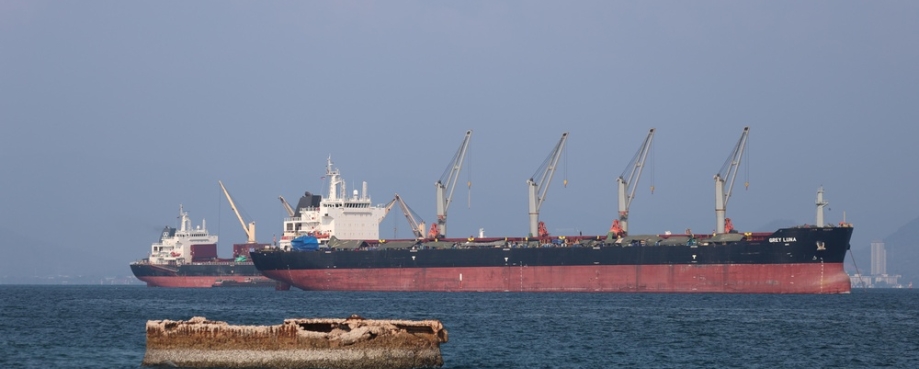
At least eight seafarers have been killed in the Strait of Hormuz, and approximately 20,000 crew members remain stranded on vessels in the area, with repatriation severely restricted due to airspace closures. We stand in solidarity with the seafarers and transport workers affected, echoing the calls from the International Transport Workers' Federation (ITF) and Global Union Federations for governments to act urgently to protect workers at sea. We also acknowledge the wider human cost faced by migrant workers in Gulf states caught up in the violence, many of whom come from the same countries where ETI members source and operate. In situations of conflict, it is invariably workers, and those already marginalised, who bear the heaviest burden. ETI calls on states and international bodies to uphold their obligations to protect civilian lives and workers' rights.
Energy disruptions are affecting factories across Bangladesh, Sri Lanka and Pakistan, with intermittent power supply, higher generator usage and fuel scarcity reported. Workers are already experiencing rising fuel costs and queues at petrol stations. Nearly 70% of synthetic fibres are derived from hydrocarbons, meaning that prolonged disruption will affect material production and costs further upstream.
Air freight costs from South Asia to Europe have surged sharply, and products are accumulating at airports across the region. More than half of Bangladesh's air cargo travels via Gulf carriers, leaving exporters significantly exposed. If the conflict continues, there is a real risk that brands will start shifting some sourcing away from the region, with potentially severe consequences for suppliers and the workers who depend on them.
Food supply chains face a compounding pressure: rising fuel costs are hitting transport and cold storage, while fertiliser prices have surged globally, squeezing agricultural producers across Asia, Africa, and Latin America, with food costs for workers and their families likely to rise as a result.
We are also mindful of the longer-term pressure this places on workers: financial strain on suppliers can translate into reduced hiring, delayed wage payments, compressed production schedules, excessive overtime and, in the worst cases, factory closures and layoffs. Any sustained disruption to the remittances sent home by South Asian workers in the Gulf would compound these pressures significantly, with knock-on impacts for household incomes and the broader economy. Rising fuel and food costs are already eroding the real value of workers' wages. Where living wage commitments exist, brands should consider whether those benchmarks remain adequate in light of accelerating inflation.
All companies have a responsibility to respect international human rights standards, including the ILO core conventions and the UN Guiding Principles on Business and Human Rights (UNGPs), in all circumstances, including during periods of crisis. We strongly urge members to:
This crisis underscores the urgency of decarbonisation. The energy vulnerability it has exposed is a direct consequence of fossil fuel dependency, and it reinforces why companies must press ahead with net zero commitments, ensuring that the transition to clean energy across their supply chains is delivered in line with just transition principles, in partnership with suppliers and workers.
ETI will continue to monitor this situation, working with our teams in South Asia, our network of members, local partners, trade unions and civil society organisations. We will convene members to share updates as the situation develops and provide further guidance as needed.
We urge our members to respond with transparency, solidarity and a genuine commitment to the workers at the heart of global supply chains.