Home

Main menu

  • About ETI
    • Our members
      • Public reporting performance
    • Who we are
      • ETI's origins
    • What we do
    • Global presence
    • Governance
    • Our team
      • ETI Board members
    • Our Strategy
  • Home
  • Why ETI
    • Why join ETI
  • ETI Base Code
    • Base Code overview
    • Base Code clause 1: Employment is freely chosen
    • Base Code clause 2: Freedom of association
    • Base Code clause 3: Working conditions are safe and hygienic
    • Base Code clause 4: Child labour shall not be used
    • Base Code clause 5: Living wages are paid
    • Base Code clause 6: Working hours are not excessive
    • Base Code clause 7: No discrimination is practiced
    • Base Code clause 8: Regular employment is provided
    • Base Code clause 9: No harsh or inhumane treatment is allowed
  • Our approach
    • Membership
    • Programmes
    • Transparency
    • Meaningful stakeholder engagement (MSE)
  • Our expertise
    • Climate change & Just transitions
    • Crisis response
    • Gender equity in supply chains
    • Worker representation
    • Forced labour & modern slavery
    • Responsible purchasing practices
      • RPP in manufacturing
    • Human rights due diligence
      • HRDD legislation tracker
  • Resources
    • Guidance & reports
    • Blog
      • Blog series: Extreme heat and risks to workers
      • Blog series: Tackling gender-based violence through GRACE
    • Issues
      • Human rights due diligence (HRDD): a complete guide for business
        • What is human rights due diligence?
        • Human rights due diligence legislation and regulatory requirements
        • How to implement human rights due diligence in your company
        • HRDD risk assessment for supply chains
        • Supplier engagement and human rights due diligence
      • Forced labour & modern slavery: a complete guide for business
        • What is modern slavery? Definitions, forms and scale
        • How to identify forced labour in your supply chain
        • Remediation: what to do when forced labour is found
        • Modern slavery legislation: what businesses need to know
        • EU Forced Labour Regulation: what it means for your business
        • How to write a modern slavery statement
        • High-risk sectors and sourcing regions for forced labour
        • Forced labour and migrant workers in supply chains
      • Responsible purchasing practices: what they are and why they matter
        • How to implement responsible purchasing practices
        • Responsible purchasing practices and legislation: what companies need to know
        • Responsible purchasing practices by sector
      • UK mandatory human rights due diligence: what businesses need to know
    • Case studies
    • Training
    • Events
      • ETI Insights series
    • Impact report 2024-25

Blog

Oil pumpjack in seaside park overlooking the Baku skyline where COP29 is taking place. Photo credit: Shutterstock.

Just Transitions: buzzword, fuzzword? And what’s it got to do with business?

12 November 2024
As climate negotiators meet at COP29, ETI's George Williams reflects on what just transitions mean, where the term came from, and what it involves for business and workers worldwide.

ETI welcomes the Modern Slavery Act 2015 Committee’s report

18 October 2024
ETI responds to the Modern Slavery Act 2015 Committee's report which post-legislative scrutiny on the Act and recommended changes.
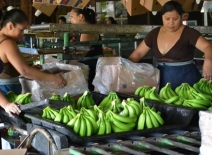
Women workers sort bananas into boxes.

How collective bargaining & social dialogue advance inclusion & sustainability in food

16 October 2024
Banana Link’s Project Coordinator, Holly Woodward-Davey and ETI’s Just Transitions Advisor, George Williams examine the role of trade union rights in Colombia and the ways they've delivered for workers, women and the planet.
Garment factory workers

ETI’s transparency journey and partnership with Open Supply Hub

14 October 2024
ETI becomes the first multistakeholder initiative to mandate publication of tier one suppliers on Open Supply Hub
ETI's team at Member Day 2024

How ETI drives impact

11 October 2024
Executive Director, Giles Bolton, reflects on ETI's impact following the publication of its annual impact report.
Melissa Kardana, ETI's Purchasing Practices Programme Lead engages with garment industry stakeholders in Bangladesh.

The Reality of Purchasing Practices in India and Bangladesh: What needs to change

3 October 2024
Reflections from 10 weeks in India and Bangladesh, engaging with over 180 stakeholders across the textile and garment industry on the topic of responsible purchasing practices.
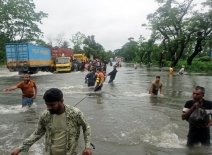
Feni,Bangladesh 24.08.2024 : In heavy rains, the neighboring areas are submerged in floods. The main highway of Bangladesh was submerged in flood water. Photo credit: Shutterstock.

Bangladesh faces floods weeks after government transition

28 August 2024
ETI responds to recent floods in Bangladesh
Joint statement partner logos

Joint statement for responsible business conduct in Bangladesh

20 August 2024
Together with eight multistakeholder organisations, ETI has developed a joint statement and recommendations for responsible business conduct in Bangladesh following recent events.
Students and peoples shout slogans during a protest rally as they demand justice for victims arrested and killed in the recent nationwide violence over job quotas, in Dhaka, on August 3, 2024. Photo credit: Shutterstock.. Photo credit: Shutterstock.

Bangladesh PM resigns following unrest

5 August 2024
Considerations for companies as Bangladesh transitions to new government
By Rayhan9d - Own work, CC BY-SA 4.0, https://commons.wikimedia.org/w/index.php?curid=150228440

Unrest in Bangladesh: Considerations for responsible business

24 July 2024
Considerations for responsible business operating in or sourcing from Bangladesh.
Selfridges Oxford Street Corner Shot Oxford Street & Duke Street. Photo Credit: Andrew Meredith/Selfridges.

Selfridges joins ETI

9 July 2024
Our newest members reflect on their motivations for joining ETI and progress to date.
Two workers cutting a bunch of bananas for transport to the warehouse in Tenerife, Canary islands. Photo credit: Shutterstock.

What does it take to make living wages a reality?

3 July 2024
ETI members Banana Link, Lidl and Sainsbury's reflect on what it takes to make living wages a reality for workers, with lessons from the banana industry.

Pagination

  • Previous page ‹‹
  • Page 11
  • Next page ››

Get the latest

Subscribe to our email newsletters and stay up to speed on responsible business.
Subscribe

ETI elsewhere

  • Twitter
  • LinkedIn
  • YouTube

Footer

  • ETI Community
  • Accessibility
  • Contact
  • FAQ
  • Jobs at ETI
  • Press resources
  • Security & privacy
Other ETIs: Bangladesh, Denmark, Norway, Sweden
Ethical Trading Initiative | Registered No. 3578127