Home

Main menu

  • About ETI
    • Our members
      • Public reporting performance
    • Who we are
      • ETI's origins
    • What we do
    • Global presence
    • Governance
    • Our team
      • ETI Board members
    • Our Strategy
  • Home
  • Why ETI
    • Why join ETI
  • ETI Base Code
    • Base Code overview
    • Base Code clause 1: Employment is freely chosen
    • Base Code clause 2: Freedom of association
    • Base Code clause 3: Working conditions are safe and hygienic
    • Base Code clause 4: Child labour shall not be used
    • Base Code clause 5: Living wages are paid
    • Base Code clause 6: Working hours are not excessive
    • Base Code clause 7: No discrimination is practiced
    • Base Code clause 8: Regular employment is provided
    • Base Code clause 9: No harsh or inhumane treatment is allowed
  • Our approach
    • Membership
    • Programmes
    • Transparency
    • Meaningful stakeholder engagement (MSE)
  • Our expertise
    • Climate change & Just transitions
    • Crisis response
    • Gender equity in supply chains
    • Worker representation
    • Forced labour & modern slavery
    • Responsible purchasing practices
      • RPP in manufacturing
    • Human rights due diligence
      • HRDD legislation tracker
  • Resources
    • Guidance & reports
    • Blog
      • Blog series: Extreme heat and risks to workers
      • Blog series: Tackling gender-based violence through GRACE
    • Issues
      • Human rights due diligence (HRDD): a complete guide for business
        • What is human rights due diligence?
        • Human rights due diligence legislation and regulatory requirements
        • How to implement human rights due diligence in your company
        • HRDD risk assessment for supply chains
        • Supplier engagement and human rights due diligence
      • Forced labour & modern slavery: a complete guide for business
        • What is modern slavery? Definitions, forms and scale
        • How to identify forced labour in your supply chain
        • Remediation: what to do when forced labour is found
        • Modern slavery legislation: what businesses need to know
        • EU Forced Labour Regulation: what it means for your business
        • How to write a modern slavery statement
        • High-risk sectors and sourcing regions for forced labour
        • Forced labour and migrant workers in supply chains
      • Responsible purchasing practices: what they are and why they matter
        • How to implement responsible purchasing practices
        • Responsible purchasing practices and legislation: what companies need to know
        • Responsible purchasing practices by sector
      • UK mandatory human rights due diligence: what businesses need to know
    • Case studies
    • Training
    • Events
      • ETI Insights series
    • Impact report 2024-25

Blog

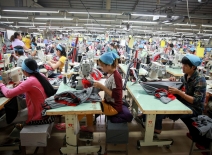
ETI responds to Cambodia's new minimum wage for garment workers

1 October 2021
In light of Cambodia's new minimum wage, the lowest hike since 2013, ETI calls on responsible brands to work with local suppliers to ensure progress towards a living wage.
Access to remedy: a migrant worker's right

ETI calls on business to support new access to remedy principles and transform the lives of migrant workers     

29 September 2021
The new A2RP provide practical guidance on how to set up an operational-level grievance mechanism (OGM) that works for migrant workers. Bansari Somani explains how and the app that's helping migrant workers in and travelling to Malaysia.
Garment factory workers

Joules graduates to full ETI membership

29 September 2021
Ruby Fowler reflects on Joules CSR journey, from foundation member learnings to future goals as full members of ETI
Women workers associated with Better Work Programme, Bangladesh.

UK, Bangladesh, Norway & Denmark ETIs welcome the new International Accord on Health and Safety

28 September 2021
JETIs come together to discuss and reflect on the new International Accord, and thank negotiating partners.
Close-up of needle and thread in the hand of a homeworker

Are you diligent or in denial about homeworkers in your supply chains?

22 September 2021
Homeworkers Worldwide launches its new toolkit, Finding Hidden Homeworkers.
Prof. John G. Ruggie at the opening of the Forum on Business and Human Rights. U.S. Mission Photo by Eric Bridiers/ Flickr.

ETI pays tribute to Professor John Ruggie

20 September 2021
Professor John G. Ruggie (1944-2021), author of the UN Guiding Principles on Business and Human Rights, has passed away. Our thoughts are with his family and friends.

Myanmar: ETI, Fair Wear Foundation & other expert parties to develop human rights impact assessment

16 September 2021
While MSIs develop a human rights impact assessment of the situation, businesses must work to cut direct or indirect business, commercial, or financial ties to the Myanmar military regime.
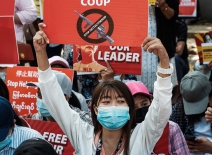
Pro-democracy demonstration, Myanmar

Myanmar: ETI calls for reassessment by business

1 September 2021
Businesses need to reassess their presence in Myanmar as a matter of urgency.
Puatiasia Faitai, caregiver, talking to the elderly, Matelita Fataua. Photo credit: Asian Development Bank/ Flick.

How Can Business Support a New Social Contract? The ITUC’s economic case for social protection

26 August 2021
Evelyn Astor makes the ITUC’s economic case for social protection drawing from the ITUC's latest research

Schoolblazer - Becoming an ETI Graduate

24 August 2021
Tim James reflects on Schoolblazer's ETI membership so far, and what the company has learnt from their graduation process.

Is business and human rights work working? An introduction to new measurement tools

5 August 2021
Mark Hodge, introduces new measurement tools developed by Shift
Covid PPE, supermarket, Thailand

Global rights in the face of Covid-19

2 August 2021
Beverley Hall reflects on this year's ITUC Global Rights Index and how companies, trade unions and NGOs should respond in the year ahead.

Pagination

  • Previous page ‹‹
  • Page 25
  • Next page ››

Get the latest

Subscribe to our email newsletters and stay up to speed on responsible business.
Subscribe

ETI elsewhere

  • Twitter
  • LinkedIn
  • YouTube

Footer

  • ETI Community
  • Accessibility
  • Contact
  • FAQ
  • Jobs at ETI
  • Press resources
  • Security & privacy
Other ETIs: Bangladesh, Denmark, Norway, Sweden
Ethical Trading Initiative | Registered No. 3578127