Home

Main menu

  • About ETI
    • Our members
      • Public reporting performance
    • Who we are
      • ETI's origins
    • What we do
    • Global presence
    • Governance
    • Our team
      • ETI Board members
    • Our Strategy
  • Home
  • Why ETI
    • Why join ETI
  • ETI Base Code
    • Base Code overview
    • Base Code clause 1: Employment is freely chosen
    • Base Code clause 2: Freedom of association
    • Base Code clause 3: Working conditions are safe and hygienic
    • Base Code clause 4: Child labour shall not be used
    • Base Code clause 5: Living wages are paid
    • Base Code clause 6: Working hours are not excessive
    • Base Code clause 7: No discrimination is practiced
    • Base Code clause 8: Regular employment is provided
    • Base Code clause 9: No harsh or inhumane treatment is allowed
  • Our approach
    • Membership
    • Programmes
    • Transparency
    • Meaningful stakeholder engagement (MSE)
  • Our expertise
    • Climate change & Just transitions
    • Crisis response
    • Gender equity in supply chains
    • Worker representation
    • Forced labour & modern slavery
    • Responsible purchasing practices
      • RPP in manufacturing
    • Human rights due diligence
      • HRDD legislation tracker
  • Resources
    • Guidance & reports
    • Blog
      • Blog series: Extreme heat and risks to workers
      • Blog series: Tackling gender-based violence through GRACE
    • Issues
      • Human rights due diligence (HRDD): a complete guide for business
        • What is human rights due diligence?
        • Human rights due diligence legislation and regulatory requirements
        • How to implement human rights due diligence in your company
        • HRDD risk assessment for supply chains
        • Supplier engagement and human rights due diligence
      • Forced labour & modern slavery: a complete guide for business
        • What is modern slavery? Definitions, forms and scale
        • How to identify forced labour in your supply chain
        • Remediation: what to do when forced labour is found
        • Modern slavery legislation: what businesses need to know
        • EU Forced Labour Regulation: what it means for your business
        • How to write a modern slavery statement
        • High-risk sectors and sourcing regions for forced labour
        • Forced labour and migrant workers in supply chains
      • Responsible purchasing practices: what they are and why they matter
        • How to implement responsible purchasing practices
        • Responsible purchasing practices and legislation: what companies need to know
        • Responsible purchasing practices by sector
      • UK mandatory human rights due diligence: what businesses need to know
    • Case studies
    • Training
    • Events
      • ETI Insights series
    • Impact report 2024-25

Blog

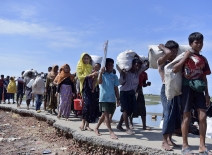
Cambodia crackdowns, Rohingya crisis: where business meets human rights

26 October 2017
Reflections on the role of companies when government support for human rights is deemed problematic.
Image of contract cleaner courtesy of Shutterstock

New roadmap on preventing labour exploitation in the UK

19 October 2017
Find out about FLEX’s action plan “Risky business: tackling exploitation in the UK labour market” on tackling labour abuses and providing protection to workers.
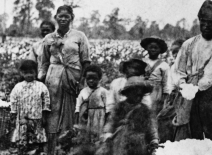
Slave family on an early-1860s American cotton plantation

Ethical trade in the 1850s: breaking the chains of slavery

17 October 2017
The Modern Slavery Act is forcing businesses to discuss slavery openly to an extent that has not occurred since the days of the 19th century abolitionists.
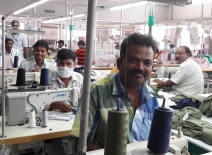
Garment workers in Tamil Nadu courtesy of the ILO

Paying living wages is easier if companies and trade unions work together

16 October 2017
Not only is paying a living wage part of the ETI Base Code of labour standards, it is also part of the responsibilities on business set out in the UN Guiding Principles on Business and Human Rights.

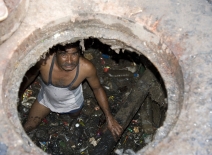
The most revolting blog post you will ever read

11 October 2017
Drawing lessons from "manual scavenging", here's why companies need to look out for caste discrimination in their Indian supply chains.

Stand up for decent work!

9 October 2017
Millions of workers and trade unions stand up for World Decent Work Day.
A Haitian garment worker in the country's ILO Better Work programme

Combating gender-based violence at work

4 October 2017
The ILO is in a process of considering whether to establish a new convention on “Ending violence and harassment against women and men in the world of work”.

UK progress on ending labour exploitation since the Modern Slavery Act

2 October 2017
There is increasing awareness around modern slavery and labour exploitation. Not only within businesses but also by policymakers and the public.

Human rights defenders, civic space and the links to modern slavery

29 September 2017
The right to freedom of association and freedom of expression are central to combatting modern slavery and child labour.

[VIDEO] What will submissions to the UK labour market enforcement consultation include?

28 September 2017
Speakers at ETI's ethical insights discussion on labour exploitation comment on the upcoming UK labour market enforcement consultation.
Last Night of the Proms courtesy of Royal Albert Hall

Great British inventions: trade unions and collective bargaining

28 September 2017
When the United Kingdom ratified ILO Convention No.98 on the Right to Organise and Collective Bargaining.

71% of modern day slaves are women: new statistics launched at UN General Assembly

19 September 2017
The ILO launches new global estimates of people in modern slavery – including forced labour and child labour.

Pagination

  • Previous page ‹‹
  • Page 52
  • Next page ››

Get the latest

Subscribe to our email newsletters and stay up to speed on responsible business.
Subscribe

ETI elsewhere

  • Twitter
  • LinkedIn
  • YouTube

Footer

  • ETI Community
  • Accessibility
  • Contact
  • FAQ
  • Jobs at ETI
  • Press resources
  • Security & privacy
Other ETIs: Bangladesh, Denmark, Norway, Sweden
Ethical Trading Initiative | Registered No. 3578127