Home

Main menu

  • About ETI
    • Our members
      • Public reporting performance
    • Who we are
      • ETI's origins
    • What we do
    • Global presence
    • Governance
    • Our team
      • ETI Board members
    • Our Strategy
  • Home
  • Why ETI
    • Why join ETI
  • ETI Base Code
    • Base Code overview
    • Base Code clause 1: Employment is freely chosen
    • Base Code clause 2: Freedom of association
    • Base Code clause 3: Working conditions are safe and hygienic
    • Base Code clause 4: Child labour shall not be used
    • Base Code clause 5: Living wages are paid
    • Base Code clause 6: Working hours are not excessive
    • Base Code clause 7: No discrimination is practiced
    • Base Code clause 8: Regular employment is provided
    • Base Code clause 9: No harsh or inhumane treatment is allowed
  • Our approach
    • Membership
    • Programmes
    • Transparency
    • Meaningful stakeholder engagement (MSE)
  • Our expertise
    • Climate change & Just transitions
    • Crisis response
    • Gender equity in supply chains
    • Worker representation
    • Forced labour & modern slavery
    • Responsible purchasing practices
      • RPP in manufacturing
    • Human rights due diligence
      • HRDD legislation tracker
  • Resources
    • Guidance & reports
    • Blog
      • Blog series: Extreme heat and risks to workers
      • Blog series: Tackling gender-based violence through GRACE
    • Issues
      • Human rights due diligence (HRDD): a complete guide for business
        • What is human rights due diligence?
        • Human rights due diligence legislation and regulatory requirements
        • How to implement human rights due diligence in your company
        • HRDD risk assessment for supply chains
        • Supplier engagement and human rights due diligence
      • Forced labour & modern slavery: a complete guide for business
        • What is modern slavery? Definitions, forms and scale
        • How to identify forced labour in your supply chain
        • Remediation: what to do when forced labour is found
        • Modern slavery legislation: what businesses need to know
        • EU Forced Labour Regulation: what it means for your business
        • How to write a modern slavery statement
        • High-risk sectors and sourcing regions for forced labour
        • Forced labour and migrant workers in supply chains
      • Responsible purchasing practices: what they are and why they matter
        • How to implement responsible purchasing practices
        • Responsible purchasing practices and legislation: what companies need to know
        • Responsible purchasing practices by sector
      • UK mandatory human rights due diligence: what businesses need to know
    • Case studies
    • Training
    • Events
      • ETI Insights series
    • Impact report 2024-25

Blog

Caravan accommodation for temporary workers – new guidance

10 May 2017
Fresh Produce Consortium guidance on the provision of caravan accommodation for temporary workers in the UK
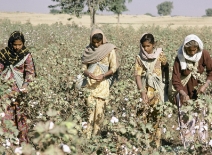
harvesting cotton in India ©RayWitlin-World Bank

Getting business on side: how business can engage with the SDGs

8 May 2017
The SDGs are ambitious, but in a world where 8 men have the same wealth as the poorest half of the world, nothing less would suffice.
Courtesy of Shutterstock

Fyffes' ETI membership: ETI’s May 2017 Board meeting decision

5 May 2017
Fyffes' membership of ETI suspended.
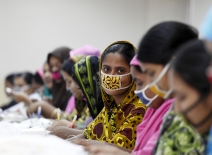
Bangladesh garment workers ©ILO

Rana Plaza: honouring the dead, looking forward with the living

4 May 2017
What has been learnt and is still being learnt by the garment sector as a whole? What is the bigger picture?
Metal industry workers in Jiangsu Province, China courtesy of the ILO

Business and the Sustainable Development Goals: time to make the human rights connections

2 May 2017
With specific worker-related targets, the SDGs are a rallying point for businesses, unions and civil society organisations.

[VIDEO] What does the gig economy mean for workers rights?

25 April 2017
Speakers at our Ethical insights discussion on the future of work give their thoughts on the effect of the gig economy on workers' rights.
Courtesy of romolo tavini-shutterstock

LIVE BLOG: The future of work, digitalisation and workers rights

24 April 2017
How can workers and companies grappling with new forms of employment ensure labour rights are respected and strengthened?

[VIDEO] LGBT issues and ethical trade

24 April 2017

[VIDEO] Ethical trade and the SDGs

21 April 2017
Speakers at our Ethical insights session on ethical trade and the Sustainable Development Goals (SDGs) reflect on the key points covered in the discussion.
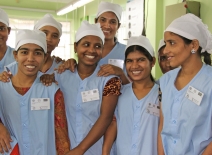
Bangladesh trainee sewing machine operators © ILO-Sarah Jane Saltmarsh

Four years after Rana Plaza, union action prevents a potential repeat

21 April 2017
At 5 pm on Wednesday 5 April, a two-storey brick structure adjoining the Ananta Apparel factory on Elephant Road, Dhaka collapsed.
Vietnam to Japan Migrant worker training © ILO-Nguyen Viet Thanh

The future of human rights due diligence in supply chains

18 April 2017
Current supply chain issues, challenges and opportunities.

Protect, Respect and Remedy: what does Ruggie's framework mean for ethical trade in 2017?

13 April 2017
The growing trend around non-financial reporting, stemming from John Ruggie's Protect, Respect, Remedy framework, sees greater importance attached to human rights due diligence.

Pagination

  • Previous page ‹‹
  • Page 55
  • Next page ››

Get the latest

Subscribe to our email newsletters and stay up to speed on responsible business.
Subscribe

ETI elsewhere

  • Twitter
  • LinkedIn
  • YouTube

Footer

  • ETI Community
  • Accessibility
  • Contact
  • FAQ
  • Jobs at ETI
  • Press resources
  • Security & privacy
Other ETIs: Bangladesh, Denmark, Norway, Sweden
Ethical Trading Initiative | Registered No. 3578127