Home

Main menu

  • About ETI
    • Our members
      • Public reporting performance
    • Who we are
      • ETI's origins
    • What we do
    • Global presence
    • Governance
    • Our team
      • ETI Board members
    • Our Strategy
  • Home
  • Why ETI
    • Why join ETI
  • ETI Base Code
    • Base Code overview
    • Base Code clause 1: Employment is freely chosen
    • Base Code clause 2: Freedom of association
    • Base Code clause 3: Working conditions are safe and hygienic
    • Base Code clause 4: Child labour shall not be used
    • Base Code clause 5: Living wages are paid
    • Base Code clause 6: Working hours are not excessive
    • Base Code clause 7: No discrimination is practiced
    • Base Code clause 8: Regular employment is provided
    • Base Code clause 9: No harsh or inhumane treatment is allowed
  • Our approach
    • Membership
    • Programmes
    • Transparency
    • Meaningful stakeholder engagement (MSE)
  • Our expertise
    • Climate change & Just transitions
    • Crisis response
    • Gender equity in supply chains
    • Worker representation
    • Forced labour & modern slavery
    • Responsible purchasing practices
      • RPP in manufacturing
    • Human rights due diligence
      • HRDD legislation tracker
  • Resources
    • Guidance & reports
    • Blog
      • Blog series: Extreme heat and risks to workers
      • Blog series: Tackling gender-based violence through GRACE
    • Issues
      • Human rights due diligence (HRDD): a complete guide for business
        • What is human rights due diligence?
        • Human rights due diligence legislation and regulatory requirements
        • How to implement human rights due diligence in your company
        • HRDD risk assessment for supply chains
        • Supplier engagement and human rights due diligence
      • Forced labour & modern slavery: a complete guide for business
        • What is modern slavery? Definitions, forms and scale
        • How to identify forced labour in your supply chain
        • Remediation: what to do when forced labour is found
        • Modern slavery legislation: what businesses need to know
        • EU Forced Labour Regulation: what it means for your business
        • How to write a modern slavery statement
        • High-risk sectors and sourcing regions for forced labour
        • Forced labour and migrant workers in supply chains
      • Responsible purchasing practices: what they are and why they matter
        • How to implement responsible purchasing practices
        • Responsible purchasing practices and legislation: what companies need to know
        • Responsible purchasing practices by sector
      • UK mandatory human rights due diligence: what businesses need to know
    • Case studies
    • Training
    • Events
      • ETI Insights series
    • Impact report 2024-25

Blog

Garment knitting factory, China

Lessons from Decent Work in China

22 June 2011
Some key lessons from ETI's Decent Work Project on helping build constructive dialogue between workers and managers in China.

Improving health and safety: time to look at the root causes

14 June 2011
"More than one hundred thousand workers are killed every year at work in India. That's the equivalent of a Bhopal disaster every month." An interview with Stirling Smith.

ETI statement regarding ActionAid's report on Asda

27 May 2011
ActionAid has published a report highlighting the payment of poverty wages, unreasonable hours and abuse of clothing workers in Bangladesh.

ETI condemns Cambodian police violence against protesting garment workers

12 May 2011
"Violence is no way to respond to legitimate workers' demands."

National Health Disservice

10 May 2011
"I associated surgical instruments with the clean sterile environment of the operating theatre. But here they were being ground and filed by 10 year-old children working full-time in small open garages on the street." New guide launched to improve ethical standards in NHS purchasing.

Re-imagining the minimum wage

9 May 2011
Can Singapore's model be applied elsewhere?
Respect should begin with supervisors

Respect should begin with supervisors

18 April 2011
The attitudes and behaviour of supervisors are major barriers to progress on workers' rights.

Protect, Respect and Remedy: what does Ruggie's framework mean for ethical trade?

13 April 2011
The UN Secretary General's Special Representative on the issue of human rights and transnational corporations and other business enterprises, Professor John Ruggie, has produced his final report on Guiding Principles for Business and Human Rights.
Chinese flag. istockphoto.com

The Chinese are here: viewpoint from Southern Africa

5 April 2011
When it comes to the textile industry in Southern Africa, BBC's Justin Rowlatt got it wrong - the Chinese aren't coming, they are here. And it's both exciting and scary.

What next for ethical trade?

4 April 2011
Social auditor and former social compliance manager for Marks and Spencer, Muriel Johnson, talks to ETI's Alan Sadler about current ethical trade trends.
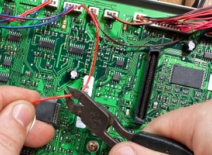
Electronics - The new fast fashion?

Electronics - The new fast fashion?

24 February 2011
Is the electronics industry making the same blunders in addressing working conditions as the fashion industry, or learning from its mistakes?
Photo of fire buckets

What next for audits?

17 February 2011
Stuart Bell, Director of Policy at Ergon Associates, looks at some of the shortcomings of conventional audits as a tool and how companies are increasingly taking a different tack.

Pagination

  • Previous page ‹‹
  • Page 83
  • Next page ››

Get the latest

Subscribe to our email newsletters and stay up to speed on responsible business.
Subscribe

ETI elsewhere

  • Twitter
  • LinkedIn
  • YouTube

Footer

  • ETI Community
  • Accessibility
  • Contact
  • FAQ
  • Jobs at ETI
  • Press resources
  • Security & privacy
Other ETIs: Bangladesh, Denmark, Norway, Sweden
Ethical Trading Initiative | Registered No. 3578127