Home

Main menu

  • About ETI
    • Our members
      • Public reporting performance
    • Who we are
      • ETI's origins
    • What we do
    • Global presence
    • Governance
    • Our team
      • ETI Board members
    • Our Strategy
  • Home
  • Why ETI
    • Why join ETI
  • ETI Base Code
    • Base Code overview
    • Base Code clause 1: Employment is freely chosen
    • Base Code clause 2: Freedom of association
    • Base Code clause 3: Working conditions are safe and hygienic
    • Base Code clause 4: Child labour shall not be used
    • Base Code clause 5: Living wages are paid
    • Base Code clause 6: Working hours are not excessive
    • Base Code clause 7: No discrimination is practiced
    • Base Code clause 8: Regular employment is provided
    • Base Code clause 9: No harsh or inhumane treatment is allowed
  • Our approach
    • Membership
    • Programmes
    • Transparency
    • Meaningful stakeholder engagement (MSE)
  • Our expertise
    • Climate change & Just transitions
    • Crisis response
    • Gender equity in supply chains
    • Worker representation
    • Forced labour & modern slavery
    • Responsible purchasing practices
      • RPP in manufacturing
    • Human rights due diligence
      • HRDD legislation tracker
  • Resources
    • Guidance & reports
    • Blog
      • Blog series: Extreme heat and risks to workers
      • Blog series: Tackling gender-based violence through GRACE
    • Issues
      • Human rights due diligence (HRDD): a complete guide for business
        • What is human rights due diligence?
        • Human rights due diligence legislation and regulatory requirements
        • How to implement human rights due diligence in your company
        • HRDD risk assessment for supply chains
        • Supplier engagement and human rights due diligence
      • Forced labour & modern slavery: a complete guide for business
        • What is modern slavery? Definitions, forms and scale
        • How to identify forced labour in your supply chain
        • Remediation: what to do when forced labour is found
        • Modern slavery legislation: what businesses need to know
        • EU Forced Labour Regulation: what it means for your business
        • How to write a modern slavery statement
        • High-risk sectors and sourcing regions for forced labour
        • Forced labour and migrant workers in supply chains
      • Responsible purchasing practices: what they are and why they matter
        • How to implement responsible purchasing practices
        • Responsible purchasing practices and legislation: what companies need to know
        • Responsible purchasing practices by sector
      • UK mandatory human rights due diligence: what businesses need to know
    • Case studies
    • Training
    • Events
      • ETI Insights series
    • Impact report 2024-25

Blog

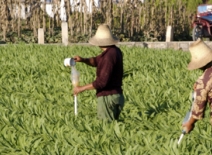
Farmers water their crops, China

Could China's gain become its workers' loss?

15 February 2011
Could China's economic boom and changing consumer patterns unwittingly lead to poorer conditions for its workers as domestic orders begin to fill the gaps left by exiting international firms?
Spreading the love - and workers' rights - on Valentine's Day

Spreading the love (and workers' rights) on Valentine's Day

9 February 2011
Phillipina Moshe talks about how her union has used Valentine's Day to help build constructive relations between workers and mangagement on Tanzanian flower farms.

The long road to ethical bananas: Part 2

4 February 2011
"If in five years time, the majority of plantation workers have not noticed the difference that the Forum is making, then we can conclude that a promising initiative has failed."  
Bangladesh: Time for a new protocol for dealing with industrial disasters

Bangladesh: Time for a new protocol for dealing with industrial disasters

3 February 2011
"Six years on from the Spectrum tragedy, a draft protocol for dealing with industrial disasters will be discussed. This could not be more timely as stakeholders grapple with the aftermath of recent fires."
The long road to ethical bananas - part 1

The long road to ethical bananas: Part 1

17 January 2011
"A sustainable banana economy remains a distant goal. The good news is that this goal is now shared by most of the big players and a growing handful of governments - not just the trade unions and small farmers themselves."
2010: A year of change

2010: A year of change

12 January 2011
"My first few months at ETI have provided a fantastic opportunity to learn about ETI's many strengths - not least the commitment and engagement of our membership - and to start to introduce some fresh perspectives into our thinking."

Bangladesh tragedies are damning indictment of workers' conditions, says ETI Director

16 December 2010
"With each new incident it becomes clearer that the garment industry in Bangladesh is in crisis."
Ethical shoppers

How to harness ethical shopping's 'floating voters'

14 December 2010
Brands and retailers are far more interested in this group than they are the ethical activists - or the ostriches, for that matter.
Syringes

Ethical trade champions call for government to take ‘moral lead’ on ethical procurement

13 December 2010
"A lot can be done by organisations like ETI and others to train people up and raise their awareness, but we need leadership from the top."
Hopes for transforming South African workers' lives

Hopes for transforming South African workers' lives

6 December 2010
We often hear that South Africa is going through a process of transformation - what does that mean for its million farm workers?
Public spending cuts: a catalyst for advancing workers' rights?

Public spending cuts: a catalyst for advancing workers' rights?

29 November 2010
The government's recent spending review could open up opportunities for integrating ethics into public procurement.
Why we mustn't forget Delhi 2010 (RTimages/istock.com)

Why we mustn't forget Delhi 2010

22 November 2010
Let's not forget the lessons that Delhi has taught us. We'd do so at the peril of all the workers involved in our big event - and all the ones to come.

Pagination

  • Previous page ‹‹
  • Page 84
  • Next page ››

Get the latest

Subscribe to our email newsletters and stay up to speed on responsible business.
Subscribe

ETI elsewhere

  • Twitter
  • LinkedIn
  • YouTube

Footer

  • ETI Community
  • Accessibility
  • Contact
  • FAQ
  • Jobs at ETI
  • Press resources
  • Security & privacy
Other ETIs: Bangladesh, Denmark, Norway, Sweden
Ethical Trading Initiative | Registered No. 3578127