Home

Main menu

  • About ETI
    • Our members
      • Public reporting performance
    • Who we are
      • ETI's origins
    • What we do
    • Global presence
    • Governance
    • Our team
      • ETI Board members
    • Our Strategy
  • Home
  • Why ETI
    • Why join ETI
  • ETI Base Code
    • Base Code overview
    • Base Code clause 1: Employment is freely chosen
    • Base Code clause 2: Freedom of association
    • Base Code clause 3: Working conditions are safe and hygienic
    • Base Code clause 4: Child labour shall not be used
    • Base Code clause 5: Living wages are paid
    • Base Code clause 6: Working hours are not excessive
    • Base Code clause 7: No discrimination is practiced
    • Base Code clause 8: Regular employment is provided
    • Base Code clause 9: No harsh or inhumane treatment is allowed
  • Our approach
    • Membership
    • Programmes
    • Transparency
    • Meaningful stakeholder engagement (MSE)
  • Our expertise
    • Climate change & Just transitions
    • Crisis response
    • Gender equity in supply chains
    • Worker representation
    • Forced labour & modern slavery
    • Responsible purchasing practices
      • RPP in manufacturing
    • Human rights due diligence
      • HRDD legislation tracker
  • Resources
    • Guidance & reports
    • Blog
      • Blog series: Extreme heat and risks to workers
      • Blog series: Tackling gender-based violence through GRACE
    • Issues
      • Human rights due diligence (HRDD): a complete guide for business
        • What is human rights due diligence?
        • Human rights due diligence legislation and regulatory requirements
        • How to implement human rights due diligence in your company
        • HRDD risk assessment for supply chains
        • Supplier engagement and human rights due diligence
      • Forced labour & modern slavery: a complete guide for business
        • What is modern slavery? Definitions, forms and scale
        • How to identify forced labour in your supply chain
        • Remediation: what to do when forced labour is found
        • Modern slavery legislation: what businesses need to know
        • EU Forced Labour Regulation: what it means for your business
        • How to write a modern slavery statement
        • High-risk sectors and sourcing regions for forced labour
        • Forced labour and migrant workers in supply chains
      • Responsible purchasing practices: what they are and why they matter
        • How to implement responsible purchasing practices
        • Responsible purchasing practices and legislation: what companies need to know
        • Responsible purchasing practices by sector
    • Case studies
    • Training
    • Events
      • ETI Insights series
    • Impact report 2024-25

ETI

Blog posts from this author

Port of Los Angeles, CA. 2025 Jan 30. Photo credit: Shutterstock.

Responsible business conduct amid Trump’s trade war

11 April 2025
ETI reflects on the impacts of US tariff announcements with recommendations for responsible business conduct
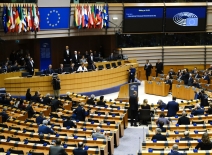
General view inside the European Parliament as Holocaust Memorial Day is marked in Brussels, Belgium on January 26, 2023. Photo credit: Shutterstock.

Omnibus stop-the-clock proposal approved – ETI’s response

3 April 2025
ETI responds to the EU Parliament's decision to delay the application of the CSRD and CSDDD.
Map of Myanmar. Photo credit: Shutterstock

Earthquake in Myanmar and Southeast Asia: ETI’s response

28 March 2025
ETI responds to the earthquake in Myanmar also impacting neighbouring countries.

UK Modern Slavery Act: Ten years on

26 March 2025
ETI reflects on a decade of the MSA, new guidance from the UK Home Office and what more needs to protect people and planet.
European flags in front of the Berlaymont building, headquarters of the European Commission in Brussels, Belgium. Photo credit: Shutterstock.

ETI responds to the EU Commission’s Omnibus proposal

28 February 2025
ETI urges European legislators to uphold the core principles of the CSDDD and CSRD.
UK government HM Treasury building in Westminster, London. Photo credit: Shutterstock.

ETI responds to reductions in international aid

27 February 2025
ETI expressed its concern regarding recent cuts to foreign aid, and their impact on the worlds' most vulnerable, putting greater pressure on underfunded NGOs, trade unions and businesses driving sustainable development.

Pagination

  • Previous page ‹‹
  • Page 4
  • Next page ››

Stay up to date

Stay up to date with the latest from ETI via the following channels:
  • Email
  • Twitter
  • LinkedIn
  • Blog RSS

Get the latest

Subscribe to our email newsletters and stay up to speed on responsible business.

Subscribe

ETI elsewhere

  • Twitter
  • LinkedIn
  • YouTube

Footer

  • ETI Community
  • Accessibility
  • Contact
  • FAQ
  • Jobs at ETI
  • Press resources
  • Security & privacy
Other ETIs: Bangladesh, Denmark, Norway, Sweden
Ethical Trading Initiative | Registered No. 3578127