Home

Main menu

  • About ETI
    • Our members
      • Public reporting performance
    • Who we are
      • ETI's origins
    • What we do
    • Global presence
    • Governance
    • Our team
      • ETI Board members
    • Our Strategy
  • Home
  • Why ETI
    • Why join ETI
  • ETI Base Code
    • Base Code overview
    • Base Code clause 1: Employment is freely chosen
    • Base Code clause 2: Freedom of association
    • Base Code clause 3: Working conditions are safe and hygienic
    • Base Code clause 4: Child labour shall not be used
    • Base Code clause 5: Living wages are paid
    • Base Code clause 6: Working hours are not excessive
    • Base Code clause 7: No discrimination is practiced
    • Base Code clause 8: Regular employment is provided
    • Base Code clause 9: No harsh or inhumane treatment is allowed
  • Our approach
    • Membership
    • Programmes
    • Transparency
    • Meaningful stakeholder engagement (MSE)
  • Our expertise
    • Climate change & Just transitions
    • Crisis response
    • Gender equity in supply chains
    • Worker representation
    • Forced labour & modern slavery
    • Responsible purchasing practices
      • RPP in manufacturing
    • Human rights due diligence
      • HRDD legislation tracker
  • Resources
    • Guidance & reports
    • Blog
      • Blog series: Tackling gender-based violence through GRACE
    • Issues
      • Human rights due diligence (HRDD): a complete guide for business
        • What is human rights due diligence?
        • Human rights due diligence legislation and regulatory requirements
        • How to implement human rights due diligence in your company
        • HRDD risk assessment for supply chains
        • Supplier engagement and human rights due diligence
      • Forced labour & modern slavery: a complete guide for business
        • What is modern slavery? Definitions, forms and scale
        • How to identify forced labour in your supply chain
        • Remediation: what to do when forced labour is found
        • Modern slavery legislation: what businesses need to know
        • EU Forced Labour Regulation: what it means for your business
        • How to write a modern slavery statement
        • High-risk sectors and sourcing regions for forced labour
        • Forced labour and migrant workers in supply chains
      • Responsible purchasing practices: what they are and why they matter
        • How to implement responsible purchasing practices
        • Responsible purchasing practices and legislation: what companies need to know
        • Responsible purchasing practices by sector
    • Case studies
    • Training
    • Events
      • ETI Insights series
    • Impact report 2024-25

Peter McAllister

Peter McAllister
Position
Former Executive Director
Organisation
ETI

Peter has spent more than 30 years engaged in international development and rights-based initiatives around the world.

He was Exective Director at ETI between October 2010 and June 2024 after spending seven years at the Geneva-based International Cocoa Initiative (ICI).

At ICI, Peter earned an impressive reputation among all stakeholders in the sector for his clarity of leadership and the impact that ICI has had on the lives of many cocoa-producing families, producer policy and sourcing practices of major global brands.

Previously, he spent 13 years working in leadership roles for the international development NGO CARE, including spending prolonged spells in strategic roles India and West and Southern Africa.

Blog posts from this author

ETI responds to Cambodia's new minimum wage for garment workers

1 October 2021
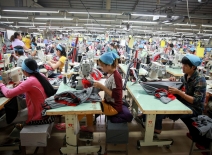
In light of Cambodia's new minimum wage, the lowest hike since 2013, ETI calls on responsible brands to work with local suppliers to ensure progress towards a living wage.
Prof. John G. Ruggie at the opening of the Forum on Business and Human Rights. U.S. Mission Photo by Eric Bridiers/ Flickr.

ETI pays tribute to Professor John Ruggie

20 September 2021
Professor John G. Ruggie (1944-2021), author of the UN Guiding Principles on Business and Human Rights, has passed away. Our thoughts are with his family and friends.

Statement to the EAC regarding ETI and Boohoo

14 July 2020
An open letter from ETI Director Peter McAllister, to the Environmental Audit Committee regarding ETI's contact with Boohoo

ETI during the Coronavirus outbreak

23 March 2020
Peter McAllister, ETI's Executive Director, on how ETI is operating during the outbreak, and the importance of standing in solidarity with workers at this difficult time

Ethics attract: can Ethiopia woo investors with fair labour practice?

23 May 2019
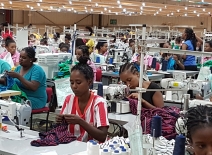
Ethiopia is in the rise as investors eye its increasing role in global supply chains.

In search of a vision for the global apparel and textiles sector

11 February 2019
Ahead of the 2019 OECD Forum on Due Diligence in the Garment and Footwear Sector, we reflect on the recently launched CEO Agenda 2019 and its implications for the industry.

Pagination

  • Previous page ‹‹
  • Page 2
  • Next page ››

Stay up to date

Stay up to date with the latest from ETI via the following channels:
  • Email
  • Twitter
  • LinkedIn
  • Blog RSS

Get the latest

Subscribe to our email newsletters and stay up to speed on responsible business.

Subscribe

ETI elsewhere

  • Twitter
  • LinkedIn
  • YouTube

Footer

  • ETI Community
  • Accessibility
  • Contact
  • FAQ
  • Jobs at ETI
  • Press resources
  • Security & privacy
Other ETIs: Bangladesh, Denmark, Norway, Sweden
Ethical Trading Initiative | Registered No. 3578127