Home

Main menu

  • About ETI
    • Our members
      • Public reporting performance
    • Who we are
      • ETI's origins
    • What we do
    • Global presence
    • Governance
    • Our team
      • ETI Board members
    • Our Strategy
  • Home
  • Why ETI
    • Why join ETI
  • ETI Base Code
    • Base Code overview
    • Base Code clause 1: Employment is freely chosen
    • Base Code clause 2: Freedom of association
    • Base Code clause 3: Working conditions are safe and hygienic
    • Base Code clause 4: Child labour shall not be used
    • Base Code clause 5: Living wages are paid
    • Base Code clause 6: Working hours are not excessive
    • Base Code clause 7: No discrimination is practiced
    • Base Code clause 8: Regular employment is provided
    • Base Code clause 9: No harsh or inhumane treatment is allowed
  • Our approach
    • Membership
    • Programmes
    • Transparency
    • Meaningful stakeholder engagement (MSE)
  • Our expertise
    • Climate change & Just transitions
    • Crisis response
    • Gender equity in supply chains
    • Worker representation
    • Forced labour & modern slavery
    • Responsible purchasing practices
      • RPP in manufacturing
    • Human rights due diligence
      • HRDD legislation tracker
  • Resources
    • Guidance & reports
    • Blog
      • Blog series: Tackling gender-based violence through GRACE
    • Issues
      • Human rights due diligence (HRDD): a complete guide for business
        • What is human rights due diligence?
        • Human rights due diligence legislation and regulatory requirements
        • How to implement human rights due diligence in your company
        • HRDD risk assessment for supply chains
        • Supplier engagement and human rights due diligence
      • Forced labour & modern slavery: a complete guide for business
        • What is modern slavery? Definitions, forms and scale
        • How to identify forced labour in your supply chain
        • Remediation: what to do when forced labour is found
        • Modern slavery legislation: what businesses need to know
        • EU Forced Labour Regulation: what it means for your business
        • How to write a modern slavery statement
        • High-risk sectors and sourcing regions for forced labour
        • Forced labour and migrant workers in supply chains
      • Responsible purchasing practices: what they are and why they matter
        • How to implement responsible purchasing practices
        • Responsible purchasing practices and legislation: what companies need to know
        • Responsible purchasing practices by sector
    • Case studies
    • Training
    • Events
      • ETI Insights series
    • Impact report 2024-25

Peter McAllister

Peter McAllister
Position
Former Executive Director
Organisation
ETI

Peter has spent more than 30 years engaged in international development and rights-based initiatives around the world.

He was Exective Director at ETI between October 2010 and June 2024 after spending seven years at the Geneva-based International Cocoa Initiative (ICI).

At ICI, Peter earned an impressive reputation among all stakeholders in the sector for his clarity of leadership and the impact that ICI has had on the lives of many cocoa-producing families, producer policy and sourcing practices of major global brands.

Previously, he spent 13 years working in leadership roles for the international development NGO CARE, including spending prolonged spells in strategic roles India and West and Southern Africa.

Blog posts from this author

'Africa is open for business' | istockphoto.com/Peeter Viisimaa

DFID's call for pro-poor investment in Africa is timely

14 July 2011
"Effective and credible ethical trade strategies can help generate not just more jobs at any cost, but better jobs, more stable jobs, with better wages, that will enable millions of poor and vulnerable people to lift themselves out of poverty."
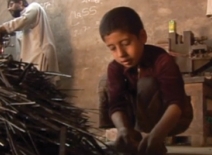
Panorama programme shed light on manufacture of surgical instruments

Panorama's surgical probe missed a trick

28 June 2011
"For the NHS, ethical sourcing should be just as much about protecting the people who make its equipment as it is about the patients who are treated with it."
2010: A year of change

2010: A year of change

12 January 2011
"My first few months at ETI have provided a fantastic opportunity to learn about ETI's many strengths - not least the commitment and engagement of our membership - and to start to introduce some fresh perspectives into our thinking."

Pagination

  • Previous page ‹‹
  • Page 7

Stay up to date

Stay up to date with the latest from ETI via the following channels:
  • Email
  • Twitter
  • LinkedIn
  • Blog RSS

Get the latest

Subscribe to our email newsletters and stay up to speed on responsible business.

Subscribe

ETI elsewhere

  • Twitter
  • LinkedIn
  • YouTube

Footer

  • ETI Community
  • Accessibility
  • Contact
  • FAQ
  • Jobs at ETI
  • Press resources
  • Security & privacy
Other ETIs: Bangladesh, Denmark, Norway, Sweden
Ethical Trading Initiative | Registered No. 3578127