Home

Main menu

  • About ETI
    • Our members
      • Public reporting performance
    • Who we are
      • ETI's origins
    • What we do
    • Global presence
    • Governance
    • Our team
      • ETI Board members
    • Our Strategy
  • Home
  • Why ETI
    • Why join ETI
  • ETI Base Code
    • Base Code overview
    • Base Code clause 1: Employment is freely chosen
    • Base Code clause 2: Freedom of association
    • Base Code clause 3: Working conditions are safe and hygienic
    • Base Code clause 4: Child labour shall not be used
    • Base Code clause 5: Living wages are paid
    • Base Code clause 6: Working hours are not excessive
    • Base Code clause 7: No discrimination is practiced
    • Base Code clause 8: Regular employment is provided
    • Base Code clause 9: No harsh or inhumane treatment is allowed
  • Our approach
    • Membership
    • Programmes
    • Transparency
    • Meaningful stakeholder engagement (MSE)
  • Our expertise
    • Climate change & Just transitions
    • Crisis response
    • Gender equity in supply chains
    • Worker representation
    • Forced labour & modern slavery
    • Responsible purchasing practices
      • RPP in manufacturing
    • Human rights due diligence
      • HRDD legislation tracker
  • Resources
    • Guidance & reports
    • Blog
      • Blog series: Tackling gender-based violence through GRACE
    • Issues
      • Human rights due diligence (HRDD): a complete guide for business
        • What is human rights due diligence?
        • Human rights due diligence legislation and regulatory requirements
        • How to implement human rights due diligence in your company
        • HRDD risk assessment for supply chains
        • Supplier engagement and human rights due diligence
      • Forced labour & modern slavery: a complete guide for business
        • What is modern slavery? Definitions, forms and scale
        • How to identify forced labour in your supply chain
        • Remediation: what to do when forced labour is found
        • Modern slavery legislation: what businesses need to know
        • EU Forced Labour Regulation: what it means for your business
        • How to write a modern slavery statement
        • High-risk sectors and sourcing regions for forced labour
        • Forced labour and migrant workers in supply chains
      • Responsible purchasing practices: what they are and why they matter
        • How to implement responsible purchasing practices
        • Responsible purchasing practices and legislation: what companies need to know
        • Responsible purchasing practices by sector
    • Case studies
    • Training
    • Events
      • ETI Insights series
    • Impact report 2024-25

Breadcrumb

  1. Home
  2. blog

On International Women’s Day 2023, where are the women?

  • Share on Facebook
  • Share on Twitter
  • Share on LinkedIn
  • Cara Casey-Boyce - ETI
  • 8 March 2023
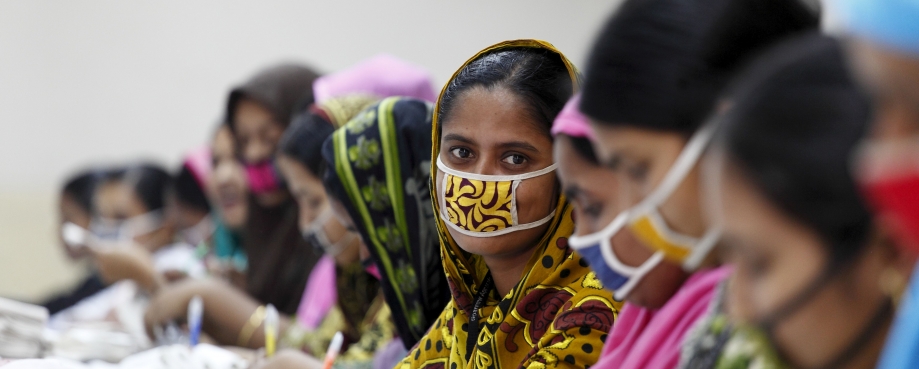
Women workers associated with Better Work Programme, Bangladesh.

This year’s International Women’s Day theme, #EmbraceEquity, seeks to challenge gender stereotypes, call out discrimination, draw attention to bias and seek out inclusion.

These are precisely the same issues that we have recently found through a landmark study exploring the decline in number of women workers in the ready-made-garments (RMG) in Bangladesh.

In Bangladesh’s major cities – Dhaka and Chattogram – a typical morning scene is of thousands of women making their way to work in garment factories. However, for some years now, researchers and industry experts alike have noticed a decline in these numbers. 

You might be wondering why we need to understand these trends in the first place. For starters, the RMG sector in Bangladesh has been responsible for the employment of millions of women in the country, thus contributing significantly to gender equality and women’s economic empowerment. The business models upon which the sector has been built over the past four decades, have also largely depended on women’s low skilled labour, which has helped to keep production costs low. A decline in the numbers of women employed by the sector is therefore concerning, both from an industry and economic perspective.

So, where are the women?

ETI Bangladesh and GIZ, with support from the Informal Workplace-Based Dialogue Network (WBDN) and funding from the Ministry of Foreign Affairs of the Netherlands, recently commissioned BRAC University in Bangladesh to investigate this decline further. And the findings are quite staggering.

Exit 

The data shows that the numbers of women employed by the RMG sector in Bangladesh has declined from 80% in 1980, to about 54% today. Factory surveys, focus group discussions with women workers and key informant interviews with industry stakeholders paint a very worrying picture. When asked why they were leaving their seemingly decent jobs, 27% of the women cited the difficulty they face in balancing paid work with unpaid care work, specifically caring for their children. This was closely followed by reports of the sector’s difficult working conditions, with reference to harassment faced, long working hours and low pay.

Entry 

The research also found that women entering the job market are simply not so keen on being employed in the RMG sector. They would rather look for non-garment sectors jobs such as hospital support staff, home tailors, or teacher, among others. Why? These jobs are likely to provide them with greater flexibility in terms of their time, an easier commute, personal independence when it came to workload, more understanding supervisors and no verbal abuse. 

What does it mean overall? 

When you put these exit and entry factors together, it is clear they are very much interconnected and re-enforce the need for significant improvements in overall working conditions in the sector. At the heart of this, is better purchasing practices, specifically around production planning by buyers and suppliers. This would ensure factories can meet their production volumes without putting pressure on workers to do overtime and would also reduce incidences of harassment. 

Retaining skilled women workers and attracting new entrants also requires factories to review recruitment and retention practices for bias and discrimination against women, and invest in creating a favourable working environment.  Trade unions and worker representatives can facilitate such improvements through constructive social dialogue where the voices of women workers can be heard and their needs adequately addressed. 

To #EmbraceEquity in the world of work, be it in the RMG sector in Bangladesh or elsewhere, first requires an understanding of where discrimination against workers based on their gender exists, and a deliberate desire to change it. There is still some way to go but we must keep moving forward.

See the summary report for this study below, including recommendations for factories, buyers, government, trade unions and civil society organisations. 

File(s)

Where are the women?

A study on the declining number of women workers in the Bangladesh RMG industry.
Read more
ETI's blog covers issues at the intersection of business and human rights. We feature posts by, for and from our members and allies; we do not accept or offer payment for posts or publish content outside of these criteria. We welcome a range of insights and opinions from our guest bloggers, though don't necessarily agree with everything they say.

Stay up to date

Stay up to date with the latest from ETI via the following channels:
  • Email
  • Twitter
  • LinkedIn
  • Blog RSS

Related content

  • Time for men to show leadership in eliminating violence against women
  • A visit to Coimbatore
  • Giving everyone in Turkey’s garment industry a voice and a platform
  • THE LEADERSHIP SERIES: ETI and me – why it’s important to empathise, talk and act to change supply chains
  • “I can do anything” | Empowering women in India's garment sector
  • Women’s economic empowerment cannot be divorced from workers’ rights

Get the latest

Subscribe to our email newsletters and stay up to speed on responsible business.
Subscribe

ETI elsewhere

  • Twitter
  • LinkedIn
  • YouTube

Footer

  • ETI Community
  • Accessibility
  • Contact
  • FAQ
  • Jobs at ETI
  • Press resources
  • Security & privacy
Other ETIs: Bangladesh, Denmark, Norway, Sweden
Ethical Trading Initiative | Registered No. 3578127