Home

Main menu

  • About ETI
    • Our members
      • Public reporting performance
    • Who we are
      • ETI's origins
    • What we do
    • Global presence
    • Governance
    • Our team
      • ETI Board members
    • Our Strategy
  • Home
  • Why ETI
    • Why join ETI
  • ETI Base Code
    • Base Code overview
    • Base Code clause 1: Employment is freely chosen
    • Base Code clause 2: Freedom of association
    • Base Code clause 3: Working conditions are safe and hygienic
    • Base Code clause 4: Child labour shall not be used
    • Base Code clause 5: Living wages are paid
    • Base Code clause 6: Working hours are not excessive
    • Base Code clause 7: No discrimination is practiced
    • Base Code clause 8: Regular employment is provided
    • Base Code clause 9: No harsh or inhumane treatment is allowed
  • Our approach
    • Membership
    • Programmes
    • Transparency
    • Meaningful stakeholder engagement (MSE)
  • Our expertise
    • Climate change & Just transitions
    • Crisis response
    • Gender equity in supply chains
    • Worker representation
    • Forced labour & modern slavery
    • Responsible purchasing practices
      • RPP in manufacturing
    • Human rights due diligence
      • HRDD legislation tracker
  • Resources
    • Guidance & reports
    • Blog
      • Blog series: Tackling gender-based violence through GRACE
    • Issues
      • Human rights due diligence (HRDD): a complete guide for business
        • What is human rights due diligence?
        • Human rights due diligence legislation and regulatory requirements
        • How to implement human rights due diligence in your company
        • HRDD risk assessment for supply chains
        • Supplier engagement and human rights due diligence
      • Forced labour & modern slavery: a complete guide for business
        • What is modern slavery? Definitions, forms and scale
        • How to identify forced labour in your supply chain
        • Remediation: what to do when forced labour is found
        • Modern slavery legislation: what businesses need to know
        • EU Forced Labour Regulation: what it means for your business
        • How to write a modern slavery statement
        • High-risk sectors and sourcing regions for forced labour
        • Forced labour and migrant workers in supply chains
      • Responsible purchasing practices: what they are and why they matter
        • How to implement responsible purchasing practices
        • Responsible purchasing practices and legislation: what companies need to know
        • Responsible purchasing practices by sector
    • Case studies
    • Training
    • Events
      • ETI Insights series
    • Impact report 2024-25

Breadcrumb

  1. Home
  2. blog

The Sustainable Development Goals: will they make a difference to workers?

  • Share on Facebook
  • Share on Twitter
  • Share on LinkedIn
  • 31 March 2017

Following the publication of our latest report on the Sustainable Development Goals, Realise the Potential of Your Ethical Trade Programme, we organised an Ethical Insights breakfast briefing to focus on the topic. Luca Ponzetta reports on the discussion.

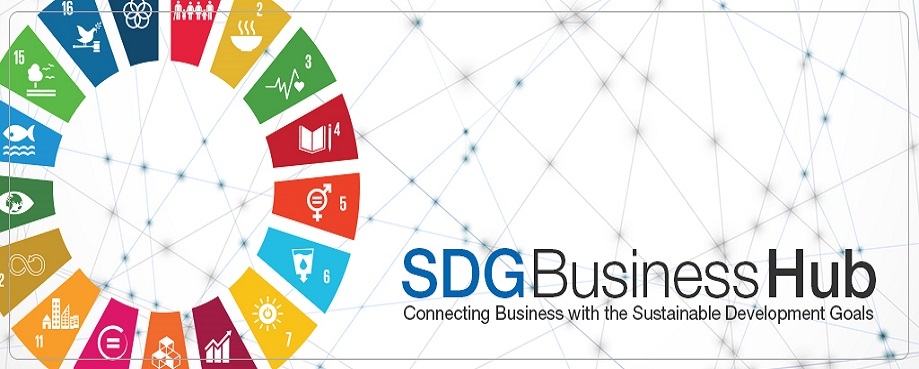
The Sustainable Development Goals (SDGs) are broad. They range from ending poverty and hunger to ensuring gender equality and reducing inequality generally.

They also include targets around sustainability and the environment.

Leave no one behind

Significantly, unlike their precursor the Millennium Development Goals, the SDGs refer explicitly to work and jobs.

Their aim is to mobilise action and shape the efforts of governments, businesses, trade unions and civil society organisations across the world.

An underlying commitment is to “leave no one behind”.

This is welcome.

It is usually the most marginalised and vulnerable workers that remain invisible and do get left behind. More often than not, they do not get to share in the benefits of development.

Decent work and economic growth

ETI’s main interest arguably lies in SDG 8.

SDG 8: Promote sustained, inclusive and sustainable economic growth, full and productive employment and decent work for all.

SDG 8.7, in particular, refers to eradicating forced labour and the worst forms of child labour – two issues which ETI has been and continues to be very active on, through advocacy, programme work and training.

However, the goals should not be looked at in isolation, as they are very much interlinked with one another.

For instance, SDG 5 deals with gender equality. With 80% of workers in garment supply chains women, for example, this is an issue over which ETI is deeply concerned.

Decent jobs are also key to addressing poverty and inequality, which are the focus of SDG 1 and SDG 10.

The debate

The starting question of the briefing was whether the SDGs can or will make any actual difference to workers.

It was pointed out that elements like Freedom of Association and Collective Bargaining, which are critical enablers for workers’ agency, are only implicitly referred to.

Furthermore, there is no mention of living wages. Nor is there a clear commitment to dealing with harsh and inhumane treatment.

All these elements are part of ETI’s Base Code of labour standards.

At the same time, the SDGs are a clear invitation for the private sector to engage directly, rather than just being a set of targets for governments to deal with or strive toward.

That, of course, is of interest to us; ETI’s work is based on multi-stakeholder collaboration and we are a key player in driving this agenda.

Our speakers

The speakers at our SDGs briefing reflected on current issues, illustrated dilemmas and discussed best practice. They included:

  • Jon Barnes an independent researcher who co-drafted our report.
  • Amina Khan who leads SDG research at the Overseas Development Institute
  • Ruth Mhlanga, Oxfam GB’s Private Sector Policy Advisor.

Jon Barnes gave an overview of the SDGs and looked at some of their gaps and weaknesses, as well as the links with other frameworks.

Amina Khan, discussed the significance of data (or lack thereof) in order to measure progress against the SDGs. She also raised the impact of timing and the potential cost of delaying action.

Ruth Mhlanga,  illustrated how companies can respond to the SDGs, challenging the traditional “business case” model. She explained how Oxfam is working with businesses in a practical way to advance the SDGs and offered insights on how businesses can work effectively with NGOs to help deliver the SDGs.

Subsequent discussions among the audience included calls for:

  • Business champions to speak up and be vocal about their efforts.
  • Investors to be drivers of change within for business.
  • And agreement on greater collection and interpretation of data and on the question of who is actually responsible.

What do you think?

Ethical Insights briefings occur monthly and we focus on a wide range of topics. In the spirit of collaboration, they offer an informal, open space to air challenges, share ideas and learn from one another. Subscribe to our mailing list and be kept up-to-date. And next time, join us for an excellent debate! 

ETI's blog covers issues at the intersection of business and human rights. We feature posts by, for and from our members and allies; we do not accept or offer payment for posts or publish content outside of these criteria. We welcome a range of insights and opinions from our guest bloggers, though don't necessarily agree with everything they say.

Stay up to date

Stay up to date with the latest from ETI via the following channels:
  • Email
  • Twitter
  • LinkedIn
  • Blog RSS

Related content

  • The Leadership Series: Where business meets human rights
  • The future of human rights due diligence in supply chains
  • Vulnerable employment is on the rise
  • Business and the Sustainable Development Goals: time to make the human rights connections
  • Getting business on side: how business can engage with the SDGs
  • Is the business of business development?

Get the latest

Subscribe to our email newsletters and stay up to speed on responsible business.
Subscribe

ETI elsewhere

  • Twitter
  • LinkedIn
  • YouTube

Footer

  • ETI Community
  • Accessibility
  • Contact
  • FAQ
  • Jobs at ETI
  • Press resources
  • Security & privacy
Other ETIs: Bangladesh, Denmark, Norway, Sweden
Ethical Trading Initiative | Registered No. 3578127