Home

Main menu

  • About ETI
    • Our members
      • Public reporting performance
    • Who we are
      • ETI's origins
    • What we do
    • Global presence
    • Governance
    • Our team
      • ETI Board members
    • Our Strategy
  • Home
  • Why ETI
    • Why join ETI
  • ETI Base Code
    • Base Code overview
    • Base Code clause 1: Employment is freely chosen
    • Base Code clause 2: Freedom of association
    • Base Code clause 3: Working conditions are safe and hygienic
    • Base Code clause 4: Child labour shall not be used
    • Base Code clause 5: Living wages are paid
    • Base Code clause 6: Working hours are not excessive
    • Base Code clause 7: No discrimination is practiced
    • Base Code clause 8: Regular employment is provided
    • Base Code clause 9: No harsh or inhumane treatment is allowed
  • Our approach
    • Membership
    • Programmes
    • Transparency
    • Meaningful stakeholder engagement (MSE)
  • Our expertise
    • Climate change & Just transitions
    • Crisis response
    • Gender equity in supply chains
    • Worker representation
    • Forced labour & modern slavery
    • Responsible purchasing practices
      • RPP in manufacturing
    • Human rights due diligence
      • HRDD legislation tracker
  • Resources
    • Guidance & reports
    • Blog
      • Blog series: Extreme heat and risks to workers
      • Blog series: Tackling gender-based violence through GRACE
    • Issues
      • Human rights due diligence (HRDD): a complete guide for business
        • What is human rights due diligence?
        • Human rights due diligence legislation and regulatory requirements
        • How to implement human rights due diligence in your company
        • HRDD risk assessment for supply chains
        • Supplier engagement and human rights due diligence
      • Forced labour & modern slavery: a complete guide for business
        • What is modern slavery? Definitions, forms and scale
        • How to identify forced labour in your supply chain
        • Remediation: what to do when forced labour is found
        • Modern slavery legislation: what businesses need to know
        • EU Forced Labour Regulation: what it means for your business
        • How to write a modern slavery statement
        • High-risk sectors and sourcing regions for forced labour
        • Forced labour and migrant workers in supply chains
      • Responsible purchasing practices: what they are and why they matter
        • How to implement responsible purchasing practices
        • Responsible purchasing practices and legislation: what companies need to know
        • Responsible purchasing practices by sector
      • UK mandatory human rights due diligence: what businesses need to know
    • Case studies
    • Training
    • Events
      • ETI Insights series
    • Impact report 2024-25

Blog

[Webinar recording] Human rights reporting and accountability

30 August 2016
Recording of a webinar featuring ETI, Assent Compliance and University of Sheffield discussing the future for human rights reporting.
Yoda, Grand Jedi Master

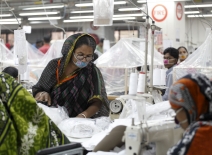
What’s the Bengali for jargon? Social dialogue in garment factories

24 August 2016
Social dialogue, a way for managers and workers to discuss, listen and potentially change their minds when necessary. 
Garment worker Bangladesh ©ILO

SURVEY: Inviting suppliers to help buyers improve their purchasing practices

23 August 2016
Help us ensure that purchasing practices can help, not hinder, efforts to trade ethically.

Modern slavery training: ETI teams up with Chartered Institute of Procurement & Supply

22 August 2016
Training a critical mass of companies to make modern slavery a thing of the past.

Ethical buyers step up

18 August 2016
As retailers foster closer working relations with their suppliers, how is the role of buyers evolving?

Rethinking recovery: growth and degradation in UK apparel manufacturing

17 August 2016
Working conditions can vary but inadequate health and safety standards and verbal abuse, bullying, threats and humiliation are too often commonplace. 
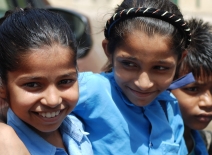
School children in India courtesy of the ILO

India expands maternity protection for women

15 August 2016
Global companies sourcing from India will need to make sure that their suppliers reflect the new law in their maternity leave policies.
Burmese migrants working on a Thai boat in Mahachai port ©ILO-Thierry Falise

Thailand’s improved human trafficking status: a springboard for change?

11 August 2016
Ending migrant worker abuse, slavery and trafficking in the Thai fishing and seafood processing sectors.

9 ways to make the most of the UK’s new fund to tackle slavery

9 August 2016
The new £33 million International Fund on Modern Slavery can make a real difference by building partnerships and listening to those most affected.
Syrian refugee Salha Al Hussein is applying for a work permit in Jordan under an ILO scheme

Independent review calls for consistency in combating slavery

4 August 2016
Theresa May shows leadership on slavery: one year on analysing the Modern Slavery Act's impact over three blogs
Image of a Byron Burger

Byron Hamburgers and the impact of the 2016 Immigration Act

4 August 2016
The UK's new Immigration Act now places the onus on employers, such as Byron, to ensure that they carry out checks against the right to work.
The IPEC CONVERGANCE project, funded by the US Department of Labour, is helping India’s efforts to address child labour in five states. ©ILO/A.DOW

India’s new Child Labour law: forwards or backwards?

1 August 2016
The legislative and social ramifications around the latest Indian attempt to tackle child labour.

Pagination

  • Previous page ‹‹
  • Page 62
  • Next page ››

Get the latest

Subscribe to our email newsletters and stay up to speed on responsible business.
Subscribe

ETI elsewhere

  • Twitter
  • LinkedIn
  • YouTube

Footer

  • ETI Community
  • Accessibility
  • Contact
  • FAQ
  • Jobs at ETI
  • Press resources
  • Security & privacy
Other ETIs: Bangladesh, Denmark, Norway, Sweden
Ethical Trading Initiative | Registered No. 3578127