Home

Main menu

  • Home
  • Why ETI
    • Why join ETI
  • ETI Base Code
    • Base Code overview
    • Base Code clause 1: Employment is freely chosen
    • Base Code clause 2: Freedom of association
    • Base Code clause 3: Working conditions are safe and hygienic
    • Base Code clause 4: Child labour shall not be used
    • Base Code clause 5: Living wages are paid
    • Base Code clause 6: Working hours are not excessive
    • Base Code clause 7: No discrimination is practiced
    • Base Code clause 8: Regular employment is provided
    • Base Code clause 9: No harsh or inhumane treatment is allowed
  • Our approach
    • Membership
    • Programmes
    • Transparency
    • Meaningful stakeholder engagement (MSE)
  • Our expertise
    • Climate change & Just transitions
    • Crisis response
    • Gender equality in supply chains
    • Worker representation
    • Forced labour & modern slavery
    • Responsible purchasing practices
      • RPP in manufacturing
    • Human rights due diligence
      • HRDD legislation tracker
  • Resources
    • Guidance & reports
    • Blog
    • Case studies
    • Training
    • Events
      • ETI Insights series
    • Annual impact report
  • About ETI
    • Who we are
      • ETI's origins
    • What we do
    • Our members
      • Public reporting performance
    • Global presence
    • Governance
    • Our team
      • ETI Board members

Blog

Where there's a political will...

16 July 2015
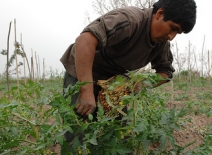
When it comes to making living wages a reality for all salaried workers, Ecuador provides a model which other countries would do well to emulate.
Photo: ILO/Areeluck Phankhian

ETI supports calls for new Myanmar minimum wage to apply to garment sector

15 July 2015
ETI and its members support international calls for Myanmar’s new minimum wage to be applied countrywide. We have articulated this stance in a letter to the Myanmar government, urging it to resist the request for an exemption from the country’s garment manufacturers.
Business ethics awareness training for suppliers in China

Business ethics awareness training for suppliers in China

6 July 2015
ETI will offer a ‘Business ethics awareness: Introduction to ethical trade’ course to China-based suppliers in Guangzhou (27 & 28 July) and Shanghai (30 & 31 July).
Photo: ILO

Companies urge Cambodia government to strengthen industrial relations law

29 June 2015
ETI member companies lobby the Cambodia government to strengthen the draft of the new Law on Unions of Enterprises.
Panelists at the launch of the Local Resources Network, Kenya

Local Resources Network launched in Kenya

17 June 2015
Today the Local Resources Network (LRN) was launched at the first regional multi-stakeholder workshop on ethical trade in Kenya.
Waterloo led to plans for model workplaces

Waterloo and ethical trade

14 June 2015
Stirling Smith finds that 1815, and the peace brought about by Waterloo, was a great year for ethical trade with plans developed for model workplaces.

Building trust in Tamil Nadu’s garment sector

11 June 2015
Trust and confidence; these two words are so important to our work within Tamil Nadu’s garment and textiles sector.
Young female trainee leather workers in a factory, Gazipur, Bangladesh

Two years of working for safety in Bangladesh

5 June 2015
The Bangladesh Accord on Fire and Building Safety is two years old. Stirling Smith examines its achievements.
Female garment factory workers, Cambodia

The importance of trade unions

3 June 2015
ETI Director Peter McAllister endorses comments from the the US Ambassador to Cambodia on the role trade unions there can play in sustaining democracies and giving vulnerable workers a voice.
ETI publishes external evaluation

ETI publishes external evaluation

2 June 2015
ETI recently commissioned an external evaluation to assess progress against our vision and theory of change, as well as our capacity to deliver on our forthcoming strategy for 2015 – 2020.
India's garment sector

What is the True Cost of the garment sector?

29 May 2015
New documentary True Cost exposes some challenging truths about the human impact of the garment sector. But does it tell the whole story?
Worker voice and representation - booking now

Need progress on Living wage? Then boost worker participation

26 May 2015
Workers' ability to negotiate their own terms and conditions of work makes for an effective way of securing ethical trade in supply chains. Our Worker voice and representation course will show you how.

Pagination

  • Previous page ‹‹
  • Page 65
  • Next page ››

Get the latest

Subscribe to our email newsletters and stay up to speed on ethical trade.
Subscribe

ETI elsewhere

  • Twitter
  • LinkedIn
  • YouTube

Footer

  • ETI Community
  • Accessibility
  • Contact
  • FAQ
  • Jobs at ETI
  • Press resources
  • Security & privacy
Other ETIs: Bangladesh, Denmark, Norway, Sweden
Ethical Trading Initiative | Registered No. 3578127