Home

Main menu

  • About ETI
    • Our members
      • Public reporting performance
    • Who we are
      • ETI's origins
    • What we do
    • Global presence
    • Governance
    • Our team
      • ETI Board members
    • Our Strategy
  • Home
  • Why ETI
    • Why join ETI
  • ETI Base Code
    • Base Code overview
    • Base Code clause 1: Employment is freely chosen
    • Base Code clause 2: Freedom of association
    • Base Code clause 3: Working conditions are safe and hygienic
    • Base Code clause 4: Child labour shall not be used
    • Base Code clause 5: Living wages are paid
    • Base Code clause 6: Working hours are not excessive
    • Base Code clause 7: No discrimination is practiced
    • Base Code clause 8: Regular employment is provided
    • Base Code clause 9: No harsh or inhumane treatment is allowed
  • Our approach
    • Membership
    • Programmes
    • Transparency
    • Meaningful stakeholder engagement (MSE)
  • Our expertise
    • Climate change & Just transitions
    • Crisis response
    • Gender equity in supply chains
    • Worker representation
    • Forced labour & modern slavery
    • Responsible purchasing practices
      • RPP in manufacturing
    • Human rights due diligence
      • HRDD legislation tracker
  • Resources
    • Guidance & reports
    • Blog
      • Blog series: Tackling gender-based violence through GRACE
    • Issues
      • Human rights due diligence (HRDD): a complete guide for business
        • What is human rights due diligence?
        • Human rights due diligence legislation and regulatory requirements
        • How to implement human rights due diligence in your company
        • HRDD risk assessment for supply chains
        • Supplier engagement and human rights due diligence
      • Forced labour & modern slavery: a complete guide for business
        • What is modern slavery? Definitions, forms and scale
        • How to identify forced labour in your supply chain
        • Remediation: what to do when forced labour is found
        • Modern slavery legislation: what businesses need to know
        • EU Forced Labour Regulation: what it means for your business
        • How to write a modern slavery statement
        • High-risk sectors and sourcing regions for forced labour
        • Forced labour and migrant workers in supply chains
      • Responsible purchasing practices: what they are and why they matter
        • How to implement responsible purchasing practices
        • Responsible purchasing practices and legislation: what companies need to know
        • Responsible purchasing practices by sector
    • Case studies
    • Training
    • Events
      • ETI Insights series
    • Impact report 2024-25

Breadcrumb

  1. Home
  2. blog

Our response to the GMB Union's call for multinational fruit company Fyffes to be expelled from ETI

  • Share on Facebook
  • Share on Twitter
  • Share on LinkedIn
  • 12 February 2016
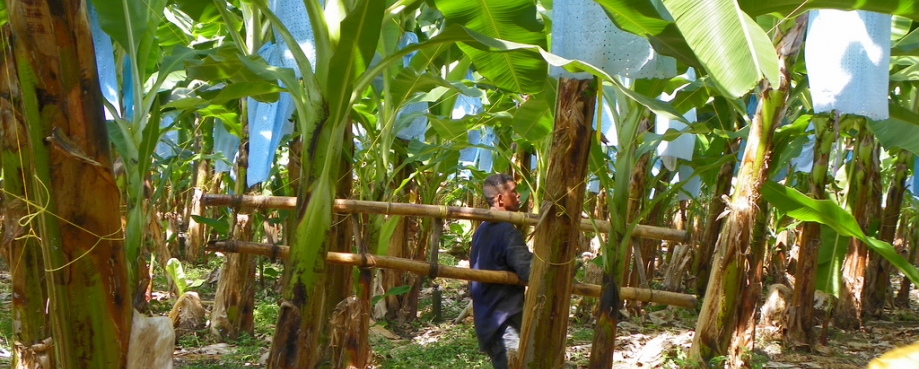
Photo: J. Stephen Conn

The GMB has made allegations of human rights abuses in the Honduran and Costa Rican fruit sectors supplying multinational company Fyffes, and called for Fyffes to be expelled from the Ethical Trading Initiative (ETI).

This statement has been superseded by the following: Update on a dispute between Fyffes and Honduran union Festagro.

We recognise that this is a region and sector where worker’s rights violations are known to exist and acknowledge the seriousness of the allegations made.

We also confirm that:

  • Fyffes is a member of ETI, as is the NGO BananaLink, which ETI understands has recently raised concerns with Fyffes on behalf of SURAGROH melon plantation workers at the centre of the allegations.
  • ETI first became aware of potential issues on the plantation on Wednesday 10 February, the day before the GMB’s press release.
  • No party has escalated the allegations to a formal process whereby the ETI’s Secretariat steps in to take action.
  • ETI reserves the right to expel members and has done so in the past, but only after a thorough investigation.

Peter McAllister, the ETI’s Executive Director said: “We take all allegations very seriously.

“When issues are raised and there are local processes in place such as mediation and negotiation agreements, members are expected to work together and use those processes to get resolution.

“We understand that there are local processes in place in this case.

“Once local processes have been followed, and if parties are unable to reach agreement, then members can raise this formally with the ETI and we take action according to our established procedures.”

Peter McAlister went on to say that the ETI is active in promoting workers’ rights across supply chains in line with its Base Code, a globally recognised code of labour standards to which all members commit when joining the ETI.

He also said that ETI is a tripartite organisation that includes global trade union federations – the TUC, ITUC and others – as well as companies and NGOs and that all have equal rights to raise issues of concerns on behalf of any other union, company or organisation.

ENDS

Released by Jane Moyo, Acting Communications Manager, Ethical Trading Initiative on 020 7841 4358

ETI's blog covers issues at the intersection of business and human rights. We feature posts by, for and from our members and allies; we do not accept or offer payment for posts or publish content outside of these criteria. We welcome a range of insights and opinions from our guest bloggers, though don't necessarily agree with everything they say.

Stay up to date

Stay up to date with the latest from ETI via the following channels:
  • Email
  • Twitter
  • LinkedIn
  • Blog RSS

Related content

  • How the Behind the Brands campaign has driven change in corporate policies
  • Update on Fyffes suspension from ETI
  • UN Guiding Principles show us the way to fairer trade
  • Update on a dispute between Fyffes and Honduran plantation workers
  • The long road to ethical bananas: Part 2
  • Global implications of addressing unfair trade practices in Europe’s food chain

Get the latest

Subscribe to our email newsletters and stay up to speed on responsible business.

Subscribe

ETI elsewhere

  • Twitter
  • LinkedIn
  • YouTube

Footer

  • ETI Community
  • Accessibility
  • Contact
  • FAQ
  • Jobs at ETI
  • Press resources
  • Security & privacy
Other ETIs: Bangladesh, Denmark, Norway, Sweden
Ethical Trading Initiative | Registered No. 3578127