Home

Main menu

  • About ETI
    • Our members
      • Public reporting performance
    • Who we are
      • ETI's origins
    • What we do
    • Global presence
    • Governance
    • Our team
      • ETI Board members
    • Our Strategy
  • Home
  • Why ETI
    • Why join ETI
  • ETI Base Code
    • Base Code overview
    • Base Code clause 1: Employment is freely chosen
    • Base Code clause 2: Freedom of association
    • Base Code clause 3: Working conditions are safe and hygienic
    • Base Code clause 4: Child labour shall not be used
    • Base Code clause 5: Living wages are paid
    • Base Code clause 6: Working hours are not excessive
    • Base Code clause 7: No discrimination is practiced
    • Base Code clause 8: Regular employment is provided
    • Base Code clause 9: No harsh or inhumane treatment is allowed
  • Our approach
    • Membership
    • Programmes
    • Transparency
    • Meaningful stakeholder engagement (MSE)
  • Our expertise
    • Climate change & Just transitions
    • Crisis response
    • Gender equity in supply chains
    • Worker representation
    • Forced labour & modern slavery
    • Responsible purchasing practices
      • RPP in manufacturing
    • Human rights due diligence
      • HRDD legislation tracker
  • Resources
    • Guidance & reports
    • Blog
      • Blog series: Extreme heat and risks to workers
      • Blog series: Tackling gender-based violence through GRACE
    • Issues
      • Human rights due diligence (HRDD): a complete guide for business
        • What is human rights due diligence?
        • Human rights due diligence legislation and regulatory requirements
        • How to implement human rights due diligence in your company
        • HRDD risk assessment for supply chains
        • Supplier engagement and human rights due diligence
      • Forced labour & modern slavery: a complete guide for business
        • What is modern slavery? Definitions, forms and scale
        • How to identify forced labour in your supply chain
        • Remediation: what to do when forced labour is found
        • Modern slavery legislation: what businesses need to know
        • EU Forced Labour Regulation: what it means for your business
        • How to write a modern slavery statement
        • High-risk sectors and sourcing regions for forced labour
        • Forced labour and migrant workers in supply chains
      • Responsible purchasing practices: what they are and why they matter
        • How to implement responsible purchasing practices
        • Responsible purchasing practices and legislation: what companies need to know
        • Responsible purchasing practices by sector
      • UK mandatory human rights due diligence: what businesses need to know
    • Case studies
    • Training
    • Events
      • ETI Insights series
    • Impact report 2024-25

Blog

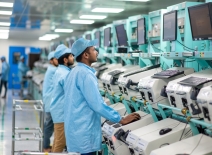
Workers at a manufacturing plant

Responsible purchasing practices in manufacturing: Transforming buyer-supplier relationships

16 May 2025
ETI Purchasing Practices Programme lead shares key lessons and practical insights from ETI's manufacturing initiative, and unpacks questions which emerged from our recent webinar discussion.
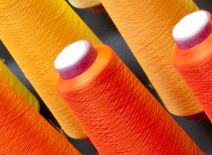
Orange cotton thread spools

Pulling back the curtain: How ETI members are reporting on human rights

14 May 2025
ETI publicly shares how our company members are performing against the Corporate Transparency Framework (CTF).
George Williams speaks at Innovation Forum's Sustainable Apparel and Textiles Conference, 2025.

Sustainable Apparel & Textiles: Urgency, inclusion, and just transition

9 May 2025
George Williams, Just Transitions Adviser, shares his reflections from Innovation Forum's conference on Sustainable Apparel & Textiles conference.
Smiling woman participating in a professional workshop with colleagues in a modern office setting, conveying engagement and teamwork. Photo credit: Shutterstock.

“It’s about workers as rightsholders” - Meet your expert trainer for Module 2 of ETI’s Human Rights Essentials Course

7 May 2025
ETI’s Human Rights Essentials Course gives participants a firm foundation in human rights that they can immediately bring back to their own work or business. Gabbi Wass from our training partner Inherently Human breaks down Module Two.
Two women in manufacturing factory

Exploring the Common Framework for Responsible Purchasing Practices in Manufacturing Industries

30 April 2025
Reflections from our Responsible purchasing practices in manufacturing initiative.
Rana Plaza collapse, Bangladesh 2013. Photo credit: Shutterstock.

Why gender-responsive occupational health and safety matters

24 April 2025
Reflecting on the anniversary of the Rana Plaza disaster, ETI General Merchandise Advisor, highlights the disproportional impact on women workers and need for gender responsive OSH.
Used textile wholesale business. Photo credit: Shutterstock.

Circular Fashion: Committing to transparency and human rights from the outset

22 April 2025
A look at how transparency can enable effective human rights due diligence in circular fashion supply chains.
Port of Los Angeles, CA. 2025 Jan 30. Photo credit: Shutterstock.

Responsible business conduct amid Trump’s trade war

11 April 2025
ETI reflects on the impacts of US tariff announcements with recommendations for responsible business conduct
Man stands near train tracks in a mine, looking up to a lit passage way. Photo credit: Shutterstock.

Mined minerals and metals: Integrating HRDD is key to a just transition

10 April 2025
ETI's Purchasing Practices Programme Lead reflects on key takeaways from new research launched via our latest ETI insights webinar.
General view inside the European Parliament as Holocaust Memorial Day is marked in Brussels, Belgium on January 26, 2023. Photo credit: Shutterstock.

Omnibus stop-the-clock proposal approved – ETI’s response

3 April 2025
ETI responds to the EU Parliament's decision to delay the application of the CSRD and CSDDD.
Map of Myanmar. Photo credit: Shutterstock

Earthquake in Myanmar and Southeast Asia: ETI’s response

28 March 2025
ETI responds to the earthquake in Myanmar also impacting neighbouring countries.

UK Modern Slavery Act: Ten years on

26 March 2025
ETI reflects on a decade of the MSA, new guidance from the UK Home Office and what more needs to protect people and planet.

Pagination

  • Previous page ‹‹
  • Page 8
  • Next page ››

Get the latest

Subscribe to our email newsletters and stay up to speed on responsible business.
Subscribe

ETI elsewhere

  • Twitter
  • LinkedIn
  • YouTube

Footer

  • ETI Community
  • Accessibility
  • Contact
  • FAQ
  • Jobs at ETI
  • Press resources
  • Security & privacy
Other ETIs: Bangladesh, Denmark, Norway, Sweden
Ethical Trading Initiative | Registered No. 3578127