Home

Main menu

  • About ETI
    • Our members
      • Public reporting performance
    • Who we are
      • ETI's origins
    • What we do
    • Global presence
    • Governance
    • Our team
      • ETI Board members
    • Our Strategy
  • Home
  • Why ETI
    • Why join ETI
  • ETI Base Code
    • Base Code overview
    • Base Code clause 1: Employment is freely chosen
    • Base Code clause 2: Freedom of association
    • Base Code clause 3: Working conditions are safe and hygienic
    • Base Code clause 4: Child labour shall not be used
    • Base Code clause 5: Living wages are paid
    • Base Code clause 6: Working hours are not excessive
    • Base Code clause 7: No discrimination is practiced
    • Base Code clause 8: Regular employment is provided
    • Base Code clause 9: No harsh or inhumane treatment is allowed
  • Our approach
    • Membership
    • Programmes
    • Transparency
    • Meaningful stakeholder engagement (MSE)
  • Our expertise
    • Climate change & Just transitions
    • Crisis response
    • Gender equity in supply chains
    • Worker representation
    • Forced labour & modern slavery
    • Responsible purchasing practices
      • RPP in manufacturing
    • Human rights due diligence
      • HRDD legislation tracker
  • Resources
    • Guidance & reports
    • Blog
      • Blog series: Extreme heat and risks to workers
      • Blog series: Tackling gender-based violence through GRACE
    • Issues
      • Human rights due diligence (HRDD): a complete guide for business
        • What is human rights due diligence?
        • Human rights due diligence legislation and regulatory requirements
        • How to implement human rights due diligence in your company
        • HRDD risk assessment for supply chains
        • Supplier engagement and human rights due diligence
      • Forced labour & modern slavery: a complete guide for business
        • What is modern slavery? Definitions, forms and scale
        • How to identify forced labour in your supply chain
        • Remediation: what to do when forced labour is found
        • Modern slavery legislation: what businesses need to know
        • EU Forced Labour Regulation: what it means for your business
        • How to write a modern slavery statement
        • High-risk sectors and sourcing regions for forced labour
        • Forced labour and migrant workers in supply chains
      • Responsible purchasing practices: what they are and why they matter
        • How to implement responsible purchasing practices
        • Responsible purchasing practices and legislation: what companies need to know
        • Responsible purchasing practices by sector
      • UK mandatory human rights due diligence: what businesses need to know
    • Case studies
    • Training
    • Events
      • ETI Insights series
    • Impact report 2024-25

Blog

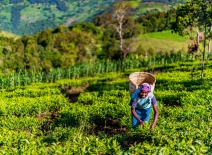
Woman harvesting tea leaves and flushes by hand. Photo credit: Shutterstock.

Investigating GBVH at James Finlays Kenya - Informing wider sector collaboration

25 March 2025
Ella Frankel, Senior FFF Advisor reflects on two years of investigating gender based violence and harassment at James Finlays Kenya, and how this work aims to inform wider sector collaboration.
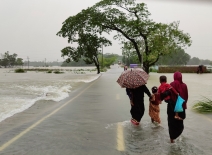
Two women and two children walk along a flooded road in Bangladesh. Photo credit: Shutterstock.

Rising Waters, Rising Risks: How floods impact workers in global supply chains

21 March 2025
Learn about flood impacts for workers and explore insights from our new snapshot for responsible business.
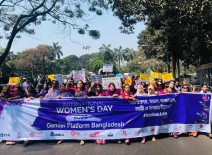
International Women's Day march in Dhaka, Bangladesh. Photo credit: ETI Bangladesh.

Achieving gender equality in Bangladesh's garment sector

11 March 2025
A look at the issues women garment workers face in Bangladesh, and the steps ETI Bangladesh is taking to address them.
ETI's Gender Programme Lead, Heidi Chan, picture with women workers in Myanmar in 2018. Photo credit: Heidi Chan.

What we want: Accelerated action on GBVH in supply chains

7 March 2025
ETI's Gender Programme Lead reflects on her engagement with women supply chain workers, what they want, and how gender-responsive HRDD can take steps towards achieving it.
From left to right, ETI Executive Director, Giles Bolton, Progression Advisor, Jasmine Stockham and Senior Apparel & Textiles Advisor, Laurent Arnone.

A reality check on HRDD progress in the garment & footwear sector

4 March 2025
ETI's Senior Apparel & Textiles Advisor shares his reflections from the OECD Forum on Due Diligence in the Garment & Footwear Sector.
European flags in front of the Berlaymont building, headquarters of the European Commission in Brussels, Belgium. Photo credit: Shutterstock.

ETI responds to the EU Commission’s Omnibus proposal

28 February 2025
ETI urges European legislators to uphold the core principles of the CSDDD and CSRD.
UK government HM Treasury building in Westminster, London. Photo credit: Shutterstock.

ETI responds to reductions in international aid

27 February 2025
ETI expressed its concern regarding recent cuts to foreign aid, and their impact on the worlds' most vulnerable, putting greater pressure on underfunded NGOs, trade unions and businesses driving sustainable development.
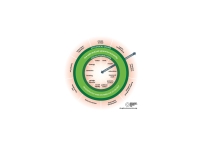
Kate Raworth and Christian Guthier. CC-BY-SA 4.0.

Planetary crisis and social justice

27 February 2025
What can we learn from donut economics in light of this years' World Social Justice Day theme?

Mark Robertson, Senior VP of The Centre for Child Rights and Business, appointed Non-Executive Director of ETI Board

17 February 2025
Meet our new NGO non-executive director of the ETI board.

ETI at OECD Forum on Due Diligence in the Garment and Footwear Sector 2025

31 January 2025
A run down of where you can engage with us at the OECD Forum.
Ben Baldwin, Chief Operations Officer at Beeswift and NED of ETI board.

Beeswift's COO, Ben Baldwin, Appointed as Non-Executive Director of ETI

31 January 2025
Meet our new company non-executive director of the ETI board.

Enabling companies to progress on the most challenging aspects of HRDD

29 January 2025
Jasmine Stockham, ETI Progression Advisor provides insights on how ETI works to support company members to progress on their human rights due diligence.

Pagination

  • Previous page ‹‹
  • Page 9
  • Next page ››

Get the latest

Subscribe to our email newsletters and stay up to speed on responsible business.

Subscribe

ETI elsewhere

  • Twitter
  • LinkedIn
  • YouTube

Footer

  • ETI Community
  • Accessibility
  • Contact
  • FAQ
  • Jobs at ETI
  • Press resources
  • Security & privacy
Other ETIs: Bangladesh, Denmark, Norway, Sweden
Ethical Trading Initiative | Registered No. 3578127