Home

Main menu

  • About ETI
    • Our members
      • Public reporting performance
    • Who we are
      • ETI's origins
    • What we do
    • Global presence
    • Governance
    • Our team
      • ETI Board members
    • Our Strategy
  • Home
  • Why ETI
    • Why join ETI
  • ETI Base Code
    • Base Code overview
    • Base Code clause 1: Employment is freely chosen
    • Base Code clause 2: Freedom of association
    • Base Code clause 3: Working conditions are safe and hygienic
    • Base Code clause 4: Child labour shall not be used
    • Base Code clause 5: Living wages are paid
    • Base Code clause 6: Working hours are not excessive
    • Base Code clause 7: No discrimination is practiced
    • Base Code clause 8: Regular employment is provided
    • Base Code clause 9: No harsh or inhumane treatment is allowed
  • Our approach
    • Membership
    • Programmes
    • Transparency
    • Meaningful stakeholder engagement (MSE)
  • Our expertise
    • Climate change & Just transitions
    • Crisis response
    • Gender equity in supply chains
    • Worker representation
    • Forced labour & modern slavery
    • Responsible purchasing practices
      • RPP in manufacturing
    • Human rights due diligence
      • HRDD legislation tracker
  • Resources
    • Guidance & reports
    • Blog
      • Blog series: Extreme heat and risks to workers
      • Blog series: Tackling gender-based violence through GRACE
    • Issues
      • Human rights due diligence (HRDD): a complete guide for business
        • What is human rights due diligence?
        • Human rights due diligence legislation and regulatory requirements
        • How to implement human rights due diligence in your company
        • HRDD risk assessment for supply chains
        • Supplier engagement and human rights due diligence
      • Forced labour & modern slavery: a complete guide for business
        • What is modern slavery? Definitions, forms and scale
        • How to identify forced labour in your supply chain
        • Remediation: what to do when forced labour is found
        • Modern slavery legislation: what businesses need to know
        • EU Forced Labour Regulation: what it means for your business
        • How to write a modern slavery statement
        • High-risk sectors and sourcing regions for forced labour
        • Forced labour and migrant workers in supply chains
      • Responsible purchasing practices: what they are and why they matter
        • How to implement responsible purchasing practices
        • Responsible purchasing practices and legislation: what companies need to know
        • Responsible purchasing practices by sector
      • UK mandatory human rights due diligence: what businesses need to know
    • Case studies
    • Training
    • Events
      • ETI Insights series
    • Impact report 2024-25

Blog

Tea pickers, India

Making stakeholder engagement meaningful in practice

1 September 2025
What does it take for a farmer in Kenya or a tea estate worker in India to have their voice genuinely heard by the company buying their products? 
Collaboration illustration

Collective Meaningful Stakeholder Engagement: Overcoming barriers through collaboration

5 August 2025
Executive Director Giles Bolton makes the case for collective meaningful stakeholder engagement and how ETI
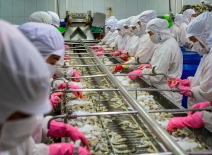
Process shrimp at factory in Vietnam. Photo credit: Shutterstock.

From Price Pressure to Partnership: Why it‘s time for retailers to rethink how shrimp is bought

1 August 2025
ETI's Purchasing Practices Programme lead examines research on how current purchasing is shaping risks of forced labour and exploitative conditions in shrimp supply chains, calling on retailers to to take collective action.

ETI, BRC, CJC and TUC welcome the Joint Human Rights Committee's call for mHREDD

24 July 2025
Business, civil society, trade unions unite to back JCHR's new recommendations for UK mandatory human rights and environmental due diligence.

How can businesses ensure circular supply chains uphold workers’ rights and human rights?

16 July 2025
Reflections from the latest ETI insights webinar, hosted in collaboration with The Centre for Child Rights and Business.
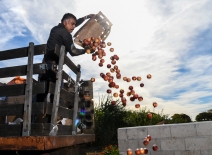
Man passes apples down from a truck. Photo cedit:“20181113-FPAC-LSC-0119” by U.S. Department of Agriculture, Public Domain Mark.

London Climate Action Week: Bringing labour rights to the heart of the green transition in food, farming & fisheries

11 July 2025
Reflections from our joint event aimed at catalysing business, trade union, civil society, academic and policy engagement on just transitions in food systems.

ReDress: Fashioning a fairer future

9 July 2025
Reflections from ETI and Oxfam's joint event on the intersection of circular fashion and human rights.
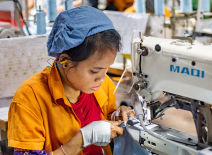
Female sewing machine operator, Chittagong, Bangladesh

Supporting suppliers on their gender data journey: Learnings from India

20 June 2025
Exploring how fashion brands and suppliers can work jointly to strengthen their understanding and use of gender-disaggregated data as part of effective human rights due diligence. 
ITUC Global Rights Index scale. Photo credit: ITUC.

The global assault on workers’ rights: A call for action and solidarity

17 June 2025
General Secretary of the International Trade Union Confederation sets out findings from its Global Rights Index which shows that workers’ rights are in free fall across every continent.
Shipping containers

Are your company practices supporting or undermining human rights?

11 June 2025
Module three of ETI’s Human Rights Essentials Course explores how buyer behaviour and commercial decisions can either support or undermine human rights – and what companies can do about it.
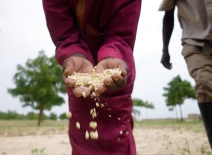
A pair of hands holding grain. Photo credit: Niyi Fagbemi, UNDP Nigeria via Flickr.

A Just Transition in Agriculture: Putting workers at the centre

5 June 2025
As global food companies push for “sustainable” or “regenerative” practices, there’s a critical question we must ask...
The Supreme Court of the United Kingdom building entrance. Photo credit: Shutterstock.

ETI responds to the UK Supreme Court ruling on the legal definition of "woman"

29 May 2025
ETI encourages companies to reflect carefully on the impact of any policy decisions and to engage with workers, trade unions and trans rights experts for their support.

Pagination

  • Previous page ‹‹
  • Page 7
  • Next page ››

Get the latest

Subscribe to our email newsletters and stay up to speed on responsible business.
Subscribe

ETI elsewhere

  • Twitter
  • LinkedIn
  • YouTube

Footer

  • ETI Community
  • Accessibility
  • Contact
  • FAQ
  • Jobs at ETI
  • Press resources
  • Security & privacy
Other ETIs: Bangladesh, Denmark, Norway, Sweden
Ethical Trading Initiative | Registered No. 3578127