Home

Main menu

  • About ETI
    • Our members
      • Public reporting performance
    • Who we are
      • ETI's origins
    • What we do
    • Global presence
    • Governance
    • Our team
      • ETI Board members
    • Our Strategy
  • Home
  • Why ETI
    • Why join ETI
  • ETI Base Code
    • Base Code overview
    • Base Code clause 1: Employment is freely chosen
    • Base Code clause 2: Freedom of association
    • Base Code clause 3: Working conditions are safe and hygienic
    • Base Code clause 4: Child labour shall not be used
    • Base Code clause 5: Living wages are paid
    • Base Code clause 6: Working hours are not excessive
    • Base Code clause 7: No discrimination is practiced
    • Base Code clause 8: Regular employment is provided
    • Base Code clause 9: No harsh or inhumane treatment is allowed
  • Our approach
    • Membership
    • Programmes
    • Transparency
    • Meaningful stakeholder engagement (MSE)
  • Our expertise
    • Climate change & Just transitions
    • Crisis response
    • Gender equity in supply chains
    • Worker representation
    • Forced labour & modern slavery
    • Responsible purchasing practices
      • RPP in manufacturing
    • Human rights due diligence
      • HRDD legislation tracker
  • Resources
    • Guidance & reports
    • Blog
      • Blog series: Extreme heat and risks to workers
      • Blog series: Tackling gender-based violence through GRACE
    • Issues
      • Human rights due diligence (HRDD): a complete guide for business
        • What is human rights due diligence?
        • Human rights due diligence legislation and regulatory requirements
        • How to implement human rights due diligence in your company
        • HRDD risk assessment for supply chains
        • Supplier engagement and human rights due diligence
      • Forced labour & modern slavery: a complete guide for business
        • What is modern slavery? Definitions, forms and scale
        • How to identify forced labour in your supply chain
        • Remediation: what to do when forced labour is found
        • Modern slavery legislation: what businesses need to know
        • EU Forced Labour Regulation: what it means for your business
        • How to write a modern slavery statement
        • High-risk sectors and sourcing regions for forced labour
        • Forced labour and migrant workers in supply chains
      • Responsible purchasing practices: what they are and why they matter
        • How to implement responsible purchasing practices
        • Responsible purchasing practices and legislation: what companies need to know
        • Responsible purchasing practices by sector
      • UK mandatory human rights due diligence: what businesses need to know
    • Case studies
    • Training
    • Events
      • ETI Insights series
    • Impact report 2024-25

Blog

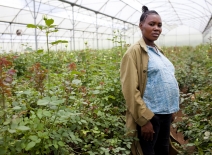
Miriam's story

4 May 2013
"I'm able to balance family responsibilities and work ok"

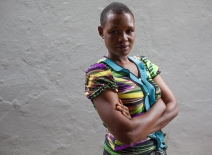
Fatuma's story

4 May 2013
"They refused to give me any other duties, and terminated my employment. I felt so sick I didn't really care." 

Sawuma's story

4 May 2013

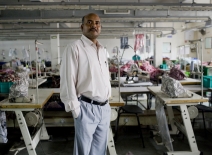
Kamlesh's story

4 May 2013
"In the old days there were too many hours"

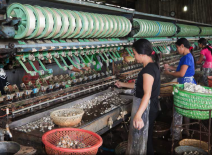
Vita's story

4 May 2013
"I'm really proud of what I've achieved. I'm saving money and looking forward to the future."
ETI announces its Bangladesh fire and building safety plan

ETI announces its Bangladesh fire and building safety plan

2 May 2013
How we're working with our members to tackle the chronic health and safety issues affecting Bangladesh’s garment sector. 
Responsibility Outsourced, report cover

Bangladesh factory collapse: unions essential to improve standards

29 April 2013
Events in Bangladesh last week illustrate the appalling consequences of trade unions not being able to speak up for workers' safety, says the TUC's Rosa Crawford. The collapse of Rana Plaza claimed an estimated 380 lives.
Bangladesh factory collapse: far from an 'accident'

Bangladesh factory collapse: far from an 'accident'

26 April 2013
On Thursday's edition of BBC Radio 4's The World Tonight Programme, ETI Director Peter McAllister gave his reaction to the Savar factory collapse near Dhaka, Bangladesh. The interview also featured the Bangladesh Home Minister, Muhiuddin Khan Alamgir, who described the collapse as an accident.

Horror at Bangladesh building collapse

24 April 2013
ETI was horrified to learn of the collapse of the nine-storied Rana Plaza in Savar, Bangladesh this morning. At least 80 people are dead and 800 injured and this count is expected to rise. 
Raw beef burgers

From the horse's mouth

16 April 2013
Peter Williams represents Home-Workers Worldwide and coordinates ETI's NGO Caucus. He hopes that ETI members are learning from the horse meat saga.
Agricultural worker, UK

Much more than just wages

15 April 2013
Sue Longley from the IUF rallies to save the UK's Agricultural Wages Board, ahead of the House of Commons debate.

British business and international development

11 March 2013
The positive role that business can play in international development made UK news headlines today.

Pagination

  • Previous page ‹‹
  • Page 79
  • Next page ››

Get the latest

Subscribe to our email newsletters and stay up to speed on responsible business.
Subscribe

ETI elsewhere

  • Twitter
  • LinkedIn
  • YouTube

Footer

  • ETI Community
  • Accessibility
  • Contact
  • FAQ
  • Jobs at ETI
  • Press resources
  • Security & privacy
Other ETIs: Bangladesh, Denmark, Norway, Sweden
Ethical Trading Initiative | Registered No. 3578127