Home

Main menu

  • Home
  • Why ETI
    • Why join ETI
  • ETI Base Code
    • Base Code overview
    • Base Code clause 1: Employment is freely chosen
    • Base Code clause 2: Freedom of association
    • Base Code clause 3: Working conditions are safe and hygienic
    • Base Code clause 4: Child labour shall not be used
    • Base Code clause 5: Living wages are paid
    • Base Code clause 6: Working hours are not excessive
    • Base Code clause 7: No discrimination is practiced
    • Base Code clause 8: Regular employment is provided
    • Base Code clause 9: No harsh or inhumane treatment is allowed
  • Our approach
    • Membership
    • Programmes
    • Transparency
    • Meaningful stakeholder engagement (MSE)
  • Our expertise
    • Climate change & Just transitions
    • Crisis response
    • Gender equality in supply chains
    • Worker representation
    • Forced labour & modern slavery
    • Responsible purchasing practices
      • RPP in manufacturing
    • Human rights due diligence
      • HRDD legislation tracker
  • Resources
    • Guidance & reports
    • Blog
      • Blog series: Tackling gender-based violence through GRACE
    • Case studies
    • Training
    • Events
      • ETI Insights series
    • Impact report 2024-25
  • About ETI
    • Who we are
      • ETI's origins
    • What we do
    • Our members
      • Public reporting performance
    • Global presence
    • Governance
    • Our team
      • ETI Board members

Breadcrumb

  1. Home
  2. events

Just transitions in manufacturing: integrating human rights and environmental sustainability

Insights webinar, Just transitions in manufacturing
Tuesday, 19 May, 2026 - 10:00 - Tuesday, 19 May, 2026 - 11:00
Register

The issue 

Environmental priorities and workers’ rights can no-longer be considered separately. Initiatives pursuing environmental aims, particularly those linked to green industries or emerging green supply chains, must work to uphold and support workers’ rights and decent work from the outset. 

Just transitions is a framing that brings environmental priorities and workers’ rights together. Momentum on just transitions is building rapidly: a key achievement of COP30 last year was the agreement to establish a just transition mechanism to accelerate action and ensure consistent implementation.

The webinar

If you are a business, NGO or donor looking to better understand how to integrate human rights into environmental work or programmes, this webinar will offer practical examples and insights to support this in practice.

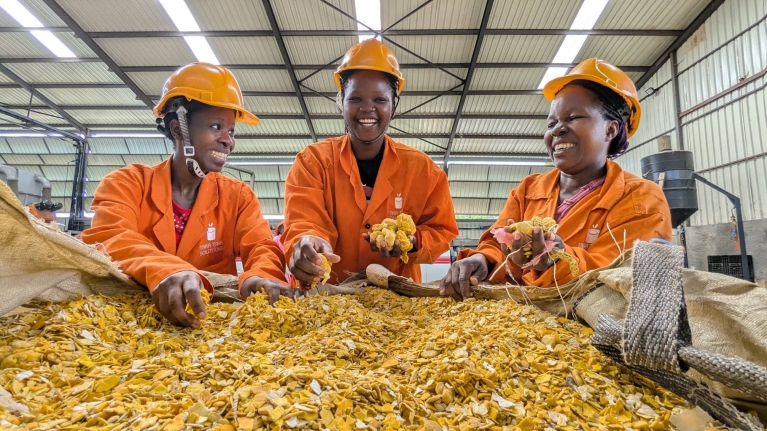
Drawing on lessons from the Sustainable Manufacturing and Environmental Pollution (SMEP) Programme, a programme that supports research and pilot projects to address the environmental and human health impacts of manufacturing in sub-Saharan Africa and South Asia, we will explore what it takes in practice to integrate decent work and occupational health and safety into environmental initiatives and emerging green supply chains. The session will highlight practical entry points, common challenges, and what works when translating just transition principles into action through real-world examples.

The SMEP Programme is funded by UK International Development and implemented in partnership with UN Trade and Development (UNCTAD), who provide technical assistance.

This event is part of our ETI Insights series.

Stay up to date

Stay up to date with the latest from ETI via the following channels:
  • Email
  • Twitter
  • LinkedIn
  • Blog RSS

Get the latest

Subscribe to our email newsletters and stay up to speed on responsible business.

Subscribe

ETI elsewhere

  • Twitter
  • LinkedIn
  • YouTube

Footer

  • ETI Community
  • Accessibility
  • Contact
  • FAQ
  • Jobs at ETI
  • Press resources
  • Security & privacy
Other ETIs: Bangladesh, Denmark, Norway, Sweden
Ethical Trading Initiative | Registered No. 3578127