Home

Main menu

  • About ETI
    • Our members
      • Public reporting performance
    • Who we are
      • ETI's origins
    • What we do
    • Global presence
    • Governance
    • Our team
      • ETI Board members
    • Our Strategy
  • Home
  • Why ETI
    • Why join ETI
  • ETI Base Code
    • Base Code overview
    • Base Code clause 1: Employment is freely chosen
    • Base Code clause 2: Freedom of association
    • Base Code clause 3: Working conditions are safe and hygienic
    • Base Code clause 4: Child labour shall not be used
    • Base Code clause 5: Living wages are paid
    • Base Code clause 6: Working hours are not excessive
    • Base Code clause 7: No discrimination is practiced
    • Base Code clause 8: Regular employment is provided
    • Base Code clause 9: No harsh or inhumane treatment is allowed
  • Our approach
    • Membership
    • Programmes
    • Transparency
    • Meaningful stakeholder engagement (MSE)
  • Our expertise
    • Climate change & Just transitions
    • Crisis response
    • Gender equity in supply chains
    • Worker representation
    • Forced labour & modern slavery
    • Responsible purchasing practices
      • RPP in manufacturing
    • Human rights due diligence
      • HRDD legislation tracker
  • Resources
    • Guidance & reports
    • Blog
      • Blog series: Tackling gender-based violence through GRACE
    • Issues
      • Human rights due diligence (HRDD): a complete guide for business
        • What is human rights due diligence?
        • Human rights due diligence legislation and regulatory requirements
        • How to implement human rights due diligence in your company
        • HRDD risk assessment for supply chains
        • Supplier engagement and human rights due diligence
      • Forced labour & modern slavery: a complete guide for business
        • What is modern slavery? Definitions, forms and scale
        • How to identify forced labour in your supply chain
        • Remediation: what to do when forced labour is found
        • Modern slavery legislation: what businesses need to know
        • EU Forced Labour Regulation: what it means for your business
        • How to write a modern slavery statement
        • High-risk sectors and sourcing regions for forced labour
        • Forced labour and migrant workers in supply chains
      • Responsible purchasing practices: what they are and why they matter
        • How to implement responsible purchasing practices
        • Responsible purchasing practices and legislation: what companies need to know
        • Responsible purchasing practices by sector
    • Case studies
    • Training
    • Events
      • ETI Insights series
    • Impact report 2024-25

Breadcrumb

  1. Home
  2. blog

Assessing the human rights impact of doing business in Myanmar

  • Share on Facebook
  • Share on Twitter
  • Share on LinkedIn
  • Cara Casey-Boyce - ETI
  • 10 August 2022
Photo credit: Wikimedia Commons/ MgHla (aka) Htin Linn Aye.

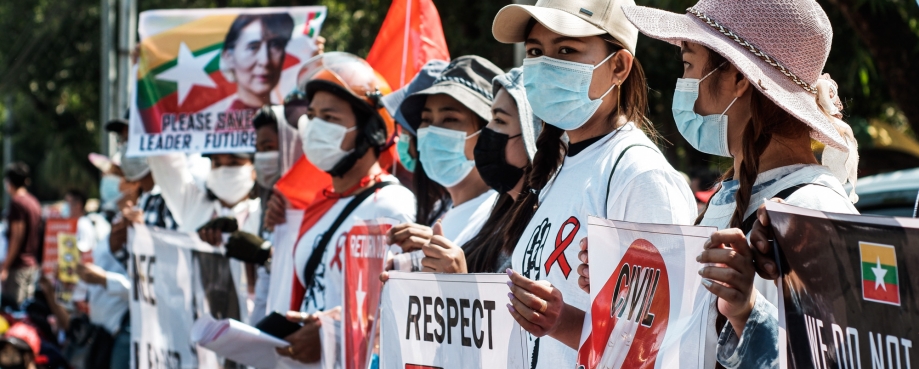
In 2021, ETI regularly convened its members around the deteriorating situation in Myanmar, under military rule. While the presence of responsible business in unstable contexts can offer crucial support, through the provision of decent work, ETI joined others in questioning whether continued presence had the potential to do more harm than good. In the coming weeks, the results of an independent human rights impact assessment will assist ETI and its members in answering this question.

Since the coup d’état in February 2021, protests have taken place across the country, each met with violent crackdowns and widespread human rights abuse. The most recent of examples of this, were last month’s executions which provoked condemnation from across the world, and country-wide horror. Almost a year and a half after the coup, civil unrest continues, with anti-junta protestors defiant in the face of state killings.

Outside of Myanmar, ETI alongside many of its members and allies, have deliberated the best course of action. To continue existing sourcing relationships with the country, or not? The notion of withdrawal may remove the risk of business presence underpinning military rule, but such a decision also poses huge risks to approximately 480,000 people employed in the country’s garment sector, many of whom are women.

ETI was able to commission an independent assessment for the garment sector, on business and human rights, in the current context of Myanmar. 

The assessment aimed to answer three key questions:

  • To what extent can companies in the sector monitor, prevent, mitigate and provide access to remedy (where appropriate) on severe human rights impacts that the sector may be involved with in Myanmar in the current and developing context? ​

     
  • What are the requirements of the UNGPS and OECD guidelines for companies when considering whether to continue sourcing or withdraw from Myanmar in the current context?​

     
  • What would constitute responsible exit?

For the last six months, Due Diligence Design have conducted the necessary research and analysis to answer these pertinent questions. This assessment has gone well beyond existing surveys. The analysis is based on more than 100 key informant interviews with international and local organisations, companies across the value chain including brands and manufacturers, global and national trade unions, international NGOs and experts; and a workers survey based on a sample of more than 3,000 workers. The assessment aligns with the UNGPs and OECD guidelines and includes technical expertise and contributions from research partners: Impactt, Shift and Luther Law Firm and consultation with OHCHR, OECD and ILO.

The results of this assessment will help inform ETI’s next course of action. The advice and recommendations it makes will not only be of value to the members currently sourcing from the country, but others such as trade unions and responsible business at large.

ETI will publish Due Diligence Design's independent assessment in late August 2022.

File(s)

Myanmar enhanced due diligence sectoral assessment

An ETI-commissioned independent assessment on human rights and responsible business conduct within Myanmar.
Read more
ETI's blog covers issues at the intersection of business and human rights. We feature posts by, for and from our members and allies; we do not accept or offer payment for posts or publish content outside of these criteria. We welcome a range of insights and opinions from our guest bloggers, though don't necessarily agree with everything they say.

Stay up to date

Stay up to date with the latest from ETI via the following channels:
  • Email
  • Twitter
  • LinkedIn
  • Blog RSS

Related content

  • Cambodia, Myanmar and the EU's 'Everything But Arms' trade deal
  • Cambodia crackdowns, Rohingya crisis: where business meets human rights
  • What does due diligence mean in Myanmar?
  • Ruggie advises caution over Burma/Myanmar
  • ETI Impact report 2021-23
  • Human rights due diligence in challenging contexts: Joint ETIs report

Get the latest

Subscribe to our email newsletters and stay up to speed on responsible business.

Subscribe

ETI elsewhere

  • Twitter
  • LinkedIn
  • YouTube

Footer

  • ETI Community
  • Accessibility
  • Contact
  • FAQ
  • Jobs at ETI
  • Press resources
  • Security & privacy
Other ETIs: Bangladesh, Denmark, Norway, Sweden
Ethical Trading Initiative | Registered No. 3578127