Get the latest
Subscribe to our email newsletters and stay up to speed on responsible business.


On 4 November 2026, the UK government announced that it will introduce mandatory human rights due diligence.
The new UK due diligence law will apply to UK businesses with a global turnover of over £350m, and non-UK businesses with a UK-generated turnover of over £350m. ETI, the alliance of businesses, trade unions and NGOs working to advance human rights in global supply chains, has welcomed it as an important step forward for workers.
The new regime will require in-scope businesses to identify, assess and address risks of human rights abuses and labour exploitation within their operations and supply chains. It will align with established international standards, including the OECD Guidelines for Responsible Business Conduct and the UN Guiding Principles on Business and Human Rights.
A regulator will be able to investigate businesses suspected of placing goods made with forced labour on the Great Britain market. Where due diligence obligations have not been met and forced labour is identified, it will be able to direct the withdrawal of those goods. The government will also set up a responsible business conduct guidance hub on GOV.UK.
The government says it will work with stakeholders on the design and introduce the measures as soon as parliamentary time allows. Read the government’s written statement (HCWS454).
The regime will cover services across the UK, and goods in Great Britain. In Northern Ireland, the EU Forced Labour Regulation will apply under the Windsor Framework.
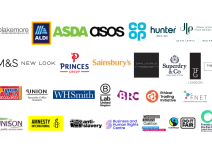
The announcement follows sustained calls from ETI’s business, trade union and NGO members, and many other partners. In October, ETI was among 33 organisations, including leading UK retailers and brands, that wrote to the Prime Minister calling for clearer regulation. Read the open letter.
The success of the new regime will depend on the detail. ETI is calling on government to ensure it:
We welcome the government’s commitment to work with stakeholders, and we look forward to contributing to the design of the new regime.
Mandatory human rights due diligence (mHRDD) requires businesses to identify, assess and address human rights risks in their operations and supply chains. This is what the UK government has announced.
Mandatory human rights and environmental due diligence (mHREDD) also covers environmental harms. ETI’s member-consulted position calls for mHREDD, because human rights and environmental harms are closely linked. Read ETI’s position on mHREDD.
ETI has supported businesses on human rights due diligence since 1998. Our members include many of Britain’s best-known supermarkets, high street retailers and brands, alongside international NGOs and global union federations representing 160 million workers.
We will be developing detailed guidance to help businesses understand and prepare for the new UK due diligence law. If your business is likely to be in scope, find out how ETI membership can help or get in touch.
Last updated: 04 November 2026