Home

Main menu

  • About ETI
    • Our members
      • Public reporting performance
    • Who we are
      • ETI's origins
    • What we do
    • Global presence
    • Governance
    • Our team
      • ETI Board members
    • Our Strategy
  • Home
  • Why ETI
    • Why join ETI
  • ETI Base Code
    • Base Code overview
    • Base Code clause 1: Employment is freely chosen
    • Base Code clause 2: Freedom of association
    • Base Code clause 3: Working conditions are safe and hygienic
    • Base Code clause 4: Child labour shall not be used
    • Base Code clause 5: Living wages are paid
    • Base Code clause 6: Working hours are not excessive
    • Base Code clause 7: No discrimination is practiced
    • Base Code clause 8: Regular employment is provided
    • Base Code clause 9: No harsh or inhumane treatment is allowed
  • Our approach
    • Membership
    • Programmes
    • Transparency
    • Meaningful stakeholder engagement (MSE)
  • Our expertise
    • Climate change & Just transitions
    • Crisis response
    • Gender equity in supply chains
    • Worker representation
    • Forced labour & modern slavery
    • Responsible purchasing practices
      • RPP in manufacturing
    • Human rights due diligence
      • HRDD legislation tracker
  • Resources
    • Guidance & reports
    • Blog
      • Blog series: Tackling gender-based violence through GRACE
    • Issues
      • Human rights due diligence (HRDD): a complete guide for business
        • What is human rights due diligence?
        • Human rights due diligence legislation and regulatory requirements
        • How to implement human rights due diligence in your company
        • HRDD risk assessment for supply chains
        • Supplier engagement and human rights due diligence
      • Forced labour & modern slavery: a complete guide for business
        • What is modern slavery? Definitions, forms and scale
        • How to identify forced labour in your supply chain
        • Remediation: what to do when forced labour is found
        • Modern slavery legislation: what businesses need to know
        • EU Forced Labour Regulation: what it means for your business
        • How to write a modern slavery statement
        • High-risk sectors and sourcing regions for forced labour
        • Forced labour and migrant workers in supply chains
      • Responsible purchasing practices: what they are and why they matter
        • How to implement responsible purchasing practices
        • Responsible purchasing practices and legislation: what companies need to know
        • Responsible purchasing practices by sector
    • Case studies
    • Training
    • Events
      • ETI Insights series
    • Impact report 2024-25

George Williams

Position
Just Transitions Advisor
Organisation
ETI

Blog posts from this author

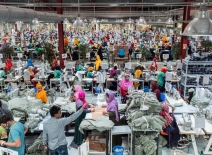
Garment factory, Bangladesh

Too hot to ignore: Why purchasing practices are critical to addressing extreme heat risks for workers

10 August 2026
Extreme heat is no longer a distant risk, it's a daily reality for garment workers and suppliers. As new NYU Stern research shows, purchasing practices must evolve to meet it.
Extreme heat, driven by climate change

Taking action on workplace heat

16 February 2026
As record-breaking heat pushes the planet toward the 1.5°C limit, this blog reveals how extreme temperatures are already affecting millions of workers and why businesses can’t afford to ignore the risk. Discover how one factory’s simple, low-cost changes cut heat stress and boosted productivity, proving that protecting workers isn’t just urgen, it’s smart.
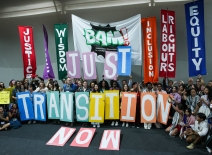
BAM activists hold up a sign calling for Just Transition. Photo by IISD/ENB | Mike Muzurakis

10 actions business can take on just transition now

14 November 2025
As COP30 takes place in Brazil this week, ETI's Just Transitions Advisor shares key actions responsible businesses can take before the gavel falls.
COP30 illustration, featuring the flag of Brazil

From Aims to Action: Why the Belém Action Mechanism matters for a just transition💥

30 October 2025
ETI welcomes the proposal from civil society for BAM on Just Transition, and calls upon Ed Miliband to put this at the centre of negotiations at COP30 in Brazil.
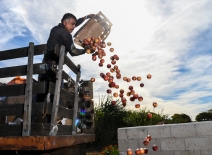
Man passes apples down from a truck. Photo cedit:“20181113-FPAC-LSC-0119” by U.S. Department of Agriculture, Public Domain Mark.

London Climate Action Week: Bringing labour rights to the heart of the green transition in food, farming & fisheries

11 July 2025
Reflections from our joint event aimed at catalysing business, trade union, civil society, academic and policy engagement on just transitions in food systems.

ReDress: Fashioning a fairer future

9 July 2025
Reflections from ETI and Oxfam's joint event on the intersection of circular fashion and human rights.

Pagination

  • Page 1
  • Next page ››

Stay up to date

Stay up to date with the latest from ETI via the following channels:
  • Email
  • Twitter
  • LinkedIn
  • Blog RSS

Get the latest

Subscribe to our email newsletters and stay up to speed on responsible business.

Subscribe

ETI elsewhere

  • Twitter
  • LinkedIn
  • YouTube

Footer

  • ETI Community
  • Accessibility
  • Contact
  • FAQ
  • Jobs at ETI
  • Press resources
  • Security & privacy
Other ETIs: Bangladesh, Denmark, Norway, Sweden
Ethical Trading Initiative | Registered No. 3578127