Get the latest
Subscribe to our email newsletters and stay up to speed on responsible business.

Climate impacts are already reshaping supply chains, and extreme heat is one of the clearest examples of this shift. It is no longer a distant climate risk. It is a daily operational reality for garment and textile suppliers and workers. New research reinforces a key message: companies need to rethink how responsibility is shared.
A new report, Too Hot to Ignore: Extreme Heat in Garment Supply Chains, Lucy Siers, Senior Research Scientist at NYU Stern’s Center for Business and Human Rights shows this clearly. Temperatures and humidity inside factories are rising to levels that undermine both worker safety and production stability. Workers are getting sick. Output is slowing. Defects are increasing. And yet, most brands still treat heat as something outside their commercial decision‑making.
Extreme heat is amplifying the limits of the current purchasing model. It is not the only gap in the system, but it is one of the most influential. And it is the one brands have the most direct control over.
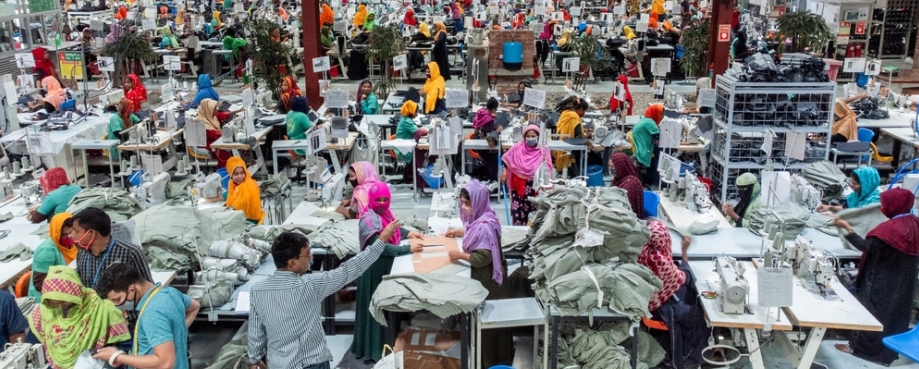
The research documents what many garment and textile suppliers have been signalling for years. Workers describe dizziness, fainting, dehydration, kidney pain, and exhaustion. Managers report slower production, higher defect rates, more rework, and rising absenteeism. Power outages and generator failures are becoming more common as temperatures climb.
Indoor conditions often exceed safe physiological thresholds. Metal roofs trap heat. Machinery emits heat. Ventilation is limited. Humidity is rising. Even without direct sunlight, factories can reach Wet Bulb Globe Temperature (WBGT) levels where continuous work becomes unsafe.
The effects are visible on the production floor: slower output, higher defect rates, and pressure on delivery schedules.
The research identifies several gaps that, together, leave factories exposed:
These gaps matter. But even if they were addressed, factories would still struggle to adapt without one essential ingredient: commercial stability.
And that is where purchasing practices become central.
Extreme heat is a technical challenge, a health challenge, and a climate challenge. But it is also a purchasing challenge. Factories cannot adapt if the commercial conditions they operate under make adaptation impossible.
The research highlights several pressure points:
These dynamics are familiar. They mirror the same purchasing practices challenges that drive excessive overtime, subcontracting, and other labour risks. Extreme heat highlights how these pressures interact.
Purchasing practices are not the only missing link, but they are the one that enables suppliers to plan, invest, and act. This is emphasised in ETI’s detailed Extreme heat briefing available to members, and in our publicly available snapshot summary.
The research sets out clear recommendations for how brands can support suppliers to adapt to extreme heat. Importantly, these align closely with the Common Framework for Responsible Purchasing Practices for apparel and textiles, showing that the industry already has a shared foundation for many of the changes needed.
These practices should be underpinned by open and honest communication between buyers and suppliers, as the foundation for equal partnership. Many suppliers have been grappling with rising workplace temperatures for years and already have effective practices in place, along with clear ideas about what support they need from their business partners. Building this dialogue into purchasing decisions ensures that adaptation measures are grounded in real operational experience and shaped collaboratively rather than imposed.
These are not new ideas. They are already reflected in the Common Framework, and the research shows why applying them consistently is becoming essential as global temperatures continue to climb. They are practical, achievable changes that directly reduce heat exposure, stabilise production, and protect workers.
In addition, research shows that worker voice, agency and representation is the other critical component in keeping workplaces safe as temperatures rise. Workers know when they are working at unsafe temperatures: collective bargaining and social dialogue between employers and independent trade unions enable adjustments to working conditions that keep workers safe. ETI member Ethical Apparel Africa demonstrates the value of social dialogue with worker representatives at their model factory in Ghana.
Through their sourcing strategies and supply chain management practices, brands can enable and support freedom of association, collective bargaining, and social dialogue as enabling rights, as set out in action #7 of ETI's 10 actions for a just transition..
Extreme heat is already affecting workers, factories, and production timelines. Existing systems were not designed for the temperatures we are now seeing. Several missing links contribute to the problem, weak regulation, limited monitoring, and internal silos, but purchasing practices remain the lever brands control directly, and the one that enables suppliers to act.
If brands want stable production and safe working conditions in a warming world, purchasing practices must evolve. Extreme heat is not going away. The way we buy and plan production has to catch up.