Home

Main menu

  • About ETI
    • Our members
      • Public reporting performance
    • Who we are
      • ETI's origins
    • What we do
    • Global presence
    • Governance
    • Our team
      • ETI Board members
    • Our Strategy
  • Home
  • Why ETI
    • Why join ETI
  • ETI Base Code
    • Base Code overview
    • Base Code clause 1: Employment is freely chosen
    • Base Code clause 2: Freedom of association
    • Base Code clause 3: Working conditions are safe and hygienic
    • Base Code clause 4: Child labour shall not be used
    • Base Code clause 5: Living wages are paid
    • Base Code clause 6: Working hours are not excessive
    • Base Code clause 7: No discrimination is practiced
    • Base Code clause 8: Regular employment is provided
    • Base Code clause 9: No harsh or inhumane treatment is allowed
  • Our approach
    • Membership
    • Programmes
    • Transparency
    • Meaningful stakeholder engagement (MSE)
  • Our expertise
    • Climate change & Just transitions
    • Crisis response
    • Gender equity in supply chains
    • Worker representation
    • Forced labour & modern slavery
    • Responsible purchasing practices
      • RPP in manufacturing
    • Human rights due diligence
      • HRDD legislation tracker
  • Resources
    • Guidance & reports
    • Blog
      • Blog series: Extreme heat and risks to workers
      • Blog series: Tackling gender-based violence through GRACE
    • Issues
      • Human rights due diligence (HRDD): a complete guide for business
        • What is human rights due diligence?
        • Human rights due diligence legislation and regulatory requirements
        • How to implement human rights due diligence in your company
        • HRDD risk assessment for supply chains
        • Supplier engagement and human rights due diligence
      • Forced labour & modern slavery: a complete guide for business
        • What is modern slavery? Definitions, forms and scale
        • How to identify forced labour in your supply chain
        • Remediation: what to do when forced labour is found
        • Modern slavery legislation: what businesses need to know
        • EU Forced Labour Regulation: what it means for your business
        • How to write a modern slavery statement
        • High-risk sectors and sourcing regions for forced labour
        • Forced labour and migrant workers in supply chains
      • Responsible purchasing practices: what they are and why they matter
        • How to implement responsible purchasing practices
        • Responsible purchasing practices and legislation: what companies need to know
        • Responsible purchasing practices by sector
    • Case studies
    • Training
    • Events
      • ETI Insights series
    • Impact report 2024-25

Breadcrumb

  1. Home
  2. blog

Achieving a living income for small-scale farmers requires changes at all points of the food supply chain (and beyond)

  • Share on Facebook
  • Share on Twitter
  • Share on LinkedIn
  • Uwe Gneiting - Oxfam
  • 19 October 2021
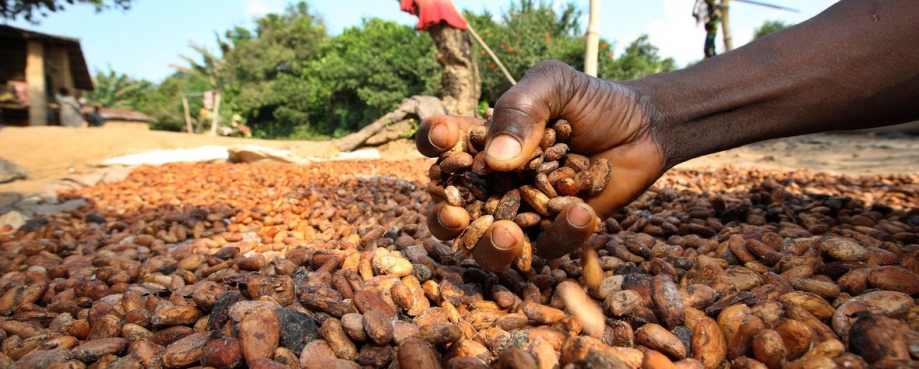
Photo: George Osodi/Panos.

As global food supply chains span across the world, it’s incumbent on food and agriculture companies to ensure that people who produce the food we eat are able to earn a living income. A new report from Oxfam explores how companies can do better to support farmers and their families.

October 1, 2021 was an important day for the 800,000 cocoa farmers in Ghana: the government announced the price farmers will receive for their cocoa beans during this year’s harvesting season. Cocoa prices are a big deal, especially since the typical cocoa family in Ghana only earns around half of what it would need to afford a decent standard of living.

Despite a slump in the global cocoa market (due to the COVID-19 pandemic), the government is maintaining a 28% price hike from last year, which was the first time the government added a Living Income Differential (LID) to all cocoa exported from Ghana and Cote d’Ivoire.

While the implementation of the LID has been plagued by complications (from a lack of transparency to companies trying to circumvent paying the LID), it remains an important stepping stone in the journey toward securing a living income for cocoa farmers.

However, it is only one of several levers that need to be activated. Cocoa traders, chocolate makers, and retailers also have responsibilities and important roles to play–but are they assuming those roles?

What is a living income?

Oxfam has accompanied and engaged food and agricultural companies on the issue of living income for several years. We have welcomed the growing interest companies have shown on the topic—including their efforts to learn about the concept and how it can be applied in practice. Some companies, such as Unilever and Olam, have made a commitment that farmers in their supply chain will earn a living income.

But here is the problem: Just because a company is engaging in or even committing to addressing an issue does not mean that it will actually do so in an effective and responsible manner. In fact, we have seen that the long journey—from awareness to commitment to implementation to impact—can be long and uncertain.

The challenges of addressing living income gaps

For example, the money coming in from companies’ buying a product accounts for only a portion of a farming household’s income; when income gaps are large, they often cannot be closed by companies’ local interventions alone.

In addition, there are risks that companies will water down the living-income concept, or apply it in an ineffective or even harmful way. For instance, there are indications that some companies are consolidating their supply chains and focusing living-income interventions on farmers who are better off and have narrow income gaps—which makes it easier to close the gap.

The consequence is that the most vulnerable farmers—those who should be a primary focus of companies’ sustainability efforts—are being pushed out of their supply chains.

In a similar vein, many companies’ living-income strategies ignore gender differences in income barriers (such as women’s unpaid care work or their limited access to land or finance), so they end up reproducing rather than mitigating gender inequalities.

How companies can responsibly implement the right to a living income

Our new briefing—Living Income: From Right to Reality—recognizes these challenges and risks, and outlines a set of recommendations for companies trying to ensure a living income. Some of the key messages and recommendations of the report include the following.

  • Living income is not just “nice to have.” Companies should consider living income a human right, and ensure their living-income strategies benefit the most vulnerable farmers in their supply chains.
  • Living income is not determined at the farm level. Companies should look at how their own business practices and supply chain practices affect farmers’ ability to earn a living income and move beyond a procurement model that is primarily concerned with short-term efficiency and cost reduction.
  • Farmers need to have more control and autonomy. Companies should ensure that farmers have greater bargaining power when it comes to defining and implementing living-income strategies, and that women farmers are a primary target beneficiary group.
  • Companies can’t do it alone. They should be sharing data and insights with other stakeholders, and supporting strong government and sector-level action on living income.

For living income to evolve from concept to reality, actions and changes need to match the urgency of the problem. A true commitment to living income has the potential to slow the shocking growth in inequality that was fueled by the COVID-19 pandemic, and to rebalance the economic scales to benefit farmers worldwide.


Living Income: From Right to Reality is the first in a new series from Oxfam called Briefings for Business on Inequality in Food Value Chains. The report was co-authored by Uwe Gneiting and Chloe Christman.

Each briefing will focus on an issue relevant to inequality in food value chains. Our aim is to be a “critical friend” to businesses. We set out key considerations, provide examples of companies doing well or poorly, and offer recommendations for what companies can do to address inequality in a way that will drive real impact.

This blog was originally published on Oxfam America’s Politics of Poverty blog site.

ETI's blog covers issues at the intersection of business and human rights. We feature posts by, for and from our members and allies; we do not accept or offer payment for posts or publish content outside of these criteria. We welcome a range of insights and opinions from our guest bloggers, though don't necessarily agree with everything they say.

Stay up to date

Stay up to date with the latest from ETI via the following channels:
  • Email
  • Twitter
  • LinkedIn
  • Blog RSS

Get the latest

Subscribe to our email newsletters and stay up to speed on responsible business.

Subscribe

ETI elsewhere

  • Twitter
  • LinkedIn
  • YouTube

Footer

  • ETI Community
  • Accessibility
  • Contact
  • FAQ
  • Jobs at ETI
  • Press resources
  • Security & privacy
Other ETIs: Bangladesh, Denmark, Norway, Sweden
Ethical Trading Initiative | Registered No. 3578127