Home

Main menu

  • About ETI
    • Our members
      • Public reporting performance
    • Who we are
      • ETI's origins
    • What we do
    • Global presence
    • Governance
    • Our team
      • ETI Board members
    • Our Strategy
  • Home
  • Why ETI
    • Why join ETI
  • ETI Base Code
    • Base Code overview
    • Base Code clause 1: Employment is freely chosen
    • Base Code clause 2: Freedom of association
    • Base Code clause 3: Working conditions are safe and hygienic
    • Base Code clause 4: Child labour shall not be used
    • Base Code clause 5: Living wages are paid
    • Base Code clause 6: Working hours are not excessive
    • Base Code clause 7: No discrimination is practiced
    • Base Code clause 8: Regular employment is provided
    • Base Code clause 9: No harsh or inhumane treatment is allowed
  • Our approach
    • Membership
    • Programmes
    • Transparency
    • Meaningful stakeholder engagement (MSE)
  • Our expertise
    • Climate change & Just transitions
    • Crisis response
    • Gender equity in supply chains
    • Worker representation
    • Forced labour & modern slavery
    • Responsible purchasing practices
      • RPP in manufacturing
    • Human rights due diligence
      • HRDD legislation tracker
  • Resources
    • Guidance & reports
    • Blog
      • Blog series: Tackling gender-based violence through GRACE
    • Issues
      • Human rights due diligence (HRDD): a complete guide for business
        • What is human rights due diligence?
        • Human rights due diligence legislation and regulatory requirements
        • How to implement human rights due diligence in your company
        • HRDD risk assessment for supply chains
        • Supplier engagement and human rights due diligence
      • Forced labour & modern slavery: a complete guide for business
        • What is modern slavery? Definitions, forms and scale
        • How to identify forced labour in your supply chain
        • Remediation: what to do when forced labour is found
        • Modern slavery legislation: what businesses need to know
        • EU Forced Labour Regulation: what it means for your business
        • How to write a modern slavery statement
        • High-risk sectors and sourcing regions for forced labour
        • Forced labour and migrant workers in supply chains
      • Responsible purchasing practices: what they are and why they matter
        • How to implement responsible purchasing practices
        • Responsible purchasing practices and legislation: what companies need to know
        • Responsible purchasing practices by sector
    • Case studies
    • Training
    • Events
      • ETI Insights series
    • Impact report 2024-25

Breadcrumb

  1. Home
  2. blog

Defending migrant workers in Thailand: lessons for companies

  • Share on Facebook
  • Share on Twitter
  • Share on LinkedIn
  • Nick Kightley - ETI
  • 28 February 2019

In February, I signed ETI up to an open letter to the Thai government. It asked the government to dismiss legal action brought by a local poultry company against several human rights defenders, including ex-employees.

The letter points out that lawsuits being brought by Thammakaset Company Ltd run counter to Thailand’s declared support for business and human rights.

But the letter also has wider implications. While it is specific to migrant workers’ rights in Thailand, it makes some more generic points. And these are points that all people working in ethical trade will find useful to consider.

Report and respond

Here’s the first point. Being able to openly report and respond to labour exploitation is fundamental to much of what we all do. I’m also including corporate CSR and ethical trade teams in this thinking.

In the Thailand case, freedom of expression has been denied. Instead, we have seen legal retaliation by a business under threat of exposure.

It provides a sorry but key example of exactly why all companies need an effective mechanism for grievance and remedy.

Industry and national level commitment

At ETI we’d go further. So, here’s my second point. Industry level commitments should underpin individual corporate level mechanisms. These should oversee effective working.

Third, there needs to be national government buy-in. And an independent human rights authority to police industries. It’s interesting to note that in Thailand, the human rights authority is not currently independent and is limited in its powers.

Recognise a trade union

The ideal answer would of course be for a company to recognise a trade union for workers.

A responsible union will ensure that any grievance mechanism works. This would avoid the risks of damaging legal costs. It would also avoid the disruption to business activities. Not to mention the negative publicity that might threaten future business contracts.

Wide support

When you read the letter, you will see the very wide support it has gathered – 89 signatories.

It’s important to note that the letter was sent in the run-up to a very sensitive election in Thailand. So, I’m not sure what response will follow. But this I do know. It’s a useful benchmark for all those working in the ethical trade arena.

Download ETI’s latest guidance on access to remedy.

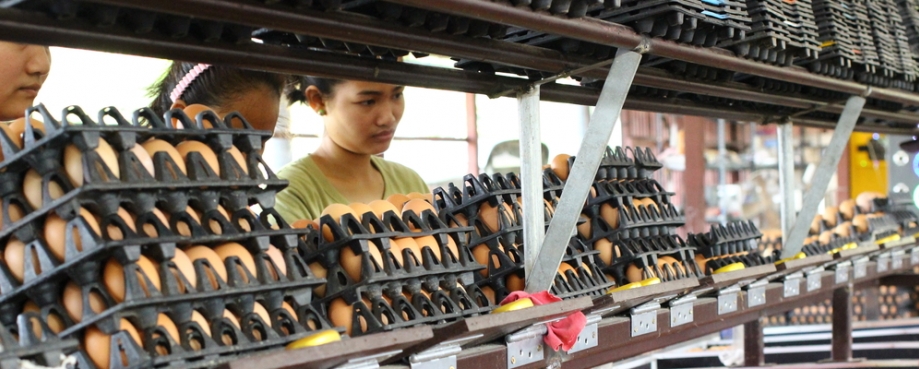
The image above is of an egg production line in Thailand. It is courtesy of Shutterstock and is for illustrative purposes only.

ETI's blog covers issues at the intersection of business and human rights. We feature posts by, for and from our members and allies; we do not accept or offer payment for posts or publish content outside of these criteria. We welcome a range of insights and opinions from our guest bloggers, though don't necessarily agree with everything they say.

Stay up to date

Stay up to date with the latest from ETI via the following channels:
  • Email
  • Twitter
  • LinkedIn
  • Blog RSS

Related content

  • New fishers’ union should be watershed for workers in Thai fishing industry
  • Damaging ‘Brand Thailand’: Reaction to court ruling against labour rights advocate, Andy Hall
  • Why migrant workers in Thailand and their defenders need support
  • Four ethical trade issues forcing their way onto the 2016 public agenda
  • Thailand, a state on a journey: ending human rights abuses in fishing and farming
  • Thailand’s improved human trafficking status: a springboard for change?

Get the latest

Subscribe to our email newsletters and stay up to speed on responsible business.

Subscribe

ETI elsewhere

  • Twitter
  • LinkedIn
  • YouTube

Footer

  • ETI Community
  • Accessibility
  • Contact
  • FAQ
  • Jobs at ETI
  • Press resources
  • Security & privacy
Other ETIs: Bangladesh, Denmark, Norway, Sweden
Ethical Trading Initiative | Registered No. 3578127