Home

Main menu

  • About ETI
    • Our members
      • Public reporting performance
    • Who we are
      • ETI's origins
    • What we do
    • Global presence
    • Governance
    • Our team
      • ETI Board members
    • Our Strategy
  • Home
  • Why ETI
    • Why join ETI
  • ETI Base Code
    • Base Code overview
    • Base Code clause 1: Employment is freely chosen
    • Base Code clause 2: Freedom of association
    • Base Code clause 3: Working conditions are safe and hygienic
    • Base Code clause 4: Child labour shall not be used
    • Base Code clause 5: Living wages are paid
    • Base Code clause 6: Working hours are not excessive
    • Base Code clause 7: No discrimination is practiced
    • Base Code clause 8: Regular employment is provided
    • Base Code clause 9: No harsh or inhumane treatment is allowed
  • Our approach
    • Membership
    • Programmes
    • Transparency
    • Meaningful stakeholder engagement (MSE)
  • Our expertise
    • Climate change & Just transitions
    • Crisis response
    • Gender equity in supply chains
    • Worker representation
    • Forced labour & modern slavery
    • Responsible purchasing practices
      • RPP in manufacturing
    • Human rights due diligence
      • HRDD legislation tracker
  • Resources
    • Guidance & reports
    • Blog
      • Blog series: Tackling gender-based violence through GRACE
    • Issues
      • Human rights due diligence (HRDD): a complete guide for business
        • What is human rights due diligence?
        • Human rights due diligence legislation and regulatory requirements
        • How to implement human rights due diligence in your company
        • HRDD risk assessment for supply chains
        • Supplier engagement and human rights due diligence
      • Forced labour & modern slavery: a complete guide for business
        • What is modern slavery? Definitions, forms and scale
        • How to identify forced labour in your supply chain
        • Remediation: what to do when forced labour is found
        • Modern slavery legislation: what businesses need to know
        • EU Forced Labour Regulation: what it means for your business
        • How to write a modern slavery statement
        • High-risk sectors and sourcing regions for forced labour
        • Forced labour and migrant workers in supply chains
      • Responsible purchasing practices: what they are and why they matter
        • How to implement responsible purchasing practices
        • Responsible purchasing practices and legislation: what companies need to know
        • Responsible purchasing practices by sector
    • Case studies
    • Training
    • Events
      • ETI Insights series
    • Impact report 2024-25

Breadcrumb

  1. Home
  2. blog

Defensiveness will not address the Syrian refugee issue in Turkey’s garment sector

  • Share on Facebook
  • Share on Twitter
  • Share on LinkedIn
  • Dr. Emre Eren Korkmaz - ETI
  • 4 October 2016
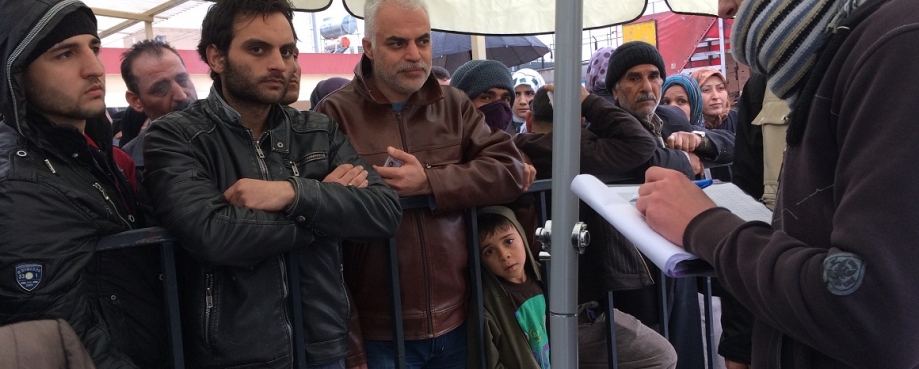
Photograph courtesy of European Union ECHO/Caroline Gluck under creative commons

In Turkey, debates continue over Syrian refugees’ participation in the labour market, writes Dr Emre Eren Korkmaz, before outlining what he believes is the best approach to building a fair and functional garment sector where both Syrian and Turkish workers can find decent employment.

Turkey’s debate over Syrians and work is nothing new. It’s been vigorously discussed from different perspectives since 2011 when refugees first started moving into Turkey in large numbers.

Yet, we’re now talking about three million people, almost half of them of working age, and we’re seeing a growing problem around child labour. This is not something that is going to go away anytime soon.

The good news is that there is increasing interest in finding solutions. We’re seeing new projects, initiatives and programmes, including the current ETI Turkey Programme.

Another positive development is that all institutions and organisations working with refugees want to cooperate – to take further steps to change the difficult conditions in which many refugees find themselves.

However, technical and practical cooperation is not enough. What is needed is a common, truly collaborative approach.

Defensiveness does not solve problems…

In this blog, I would like to discuss one aspect of existing attitudes, which if not addressed, may well stall progress.

It’s what I call a “defensive” approach, with stakeholders essentially raising barricades and being tempted to only pay attention to the workplaces from which they source, or are responsible for; concentrating on keeping those safe – and “clean” in the widest sense of the word – within international standards.

Such an attitude might have been acceptable pre-January 2016, when it was illegal to employ Syrian refugees. Consequently, it was not officially possible for an authorized supplier to employ a Syrian refugee or for any union to recruit Syrian members.

Yet now, Syrian refugees can be formally employed in all tiers of the supply chain and temporary work permits received via the application of an employer to the e-state portal.

…meanwhile in the real world refugees are desperate…

The complexity of real life supply chains means that no stakeholder can free themselves from the general problems of the sector.

Long-term permanent work is a necessity; it is clear that Syrian refugees cannot rely on philanthropy or charitable donations as this is not sustainable.

But as of September 2016, research shows that that only 5,500 temporary work permits have been granted. So why isn't there much interest in employing Syrian refugees via legal means?

The “defensive” approach coalesces around a couple of broad theories:

  • Some argue that Syrian refugees are only in the country temporarily. That refugees are planning to leave Turkey for Europe and don't want to be legally employed for fear of losing legal ways to move to Europe. (“If you have a formal job, why are you changing country?”). While this might be true for some refugees, studies show that the majority prefer to reside in Turkey due to ethnic, religious and cultural ties.
  • Other arguments focus on the business logic. Most Syrian refugees are unskilled workers so the argument goes; they are not familiar with the industry and industrial concepts, they don't know the Turkish language; employing Syrian refugees would necessitate the employment of Arabic speaking staff and the provision of extra training, leading to an additional financial burden. Despite having some validity, these too are only partial truths.

Three million refugees have not suddenly descended on the Turkish labour market en masse desperately searching for work.

We are talking about hundreds of thousands of refugees who are already being employed in the Turkish textile sector, but under informal and often exploitative conditions of employment.

Even if they are being exploited, refugees have already gained requisite employment skills and knowledge of the garment sector. And let’s not forget that there are many sections in textile plants that employ unskilled workers anyway.

The reality is that refugee workers are desperate for jobs at any cost and even if “defensive” arguments are delivered from real experiences, they are not leading to concrete solutions.

… so a new approach is necessary

A large informal sector, child labour, long working hours and problems over freedom of association are endemic within Turkey’s garment industry.

And have been for decades.

In the meantime, the influx of Syrian refugees has made these problems much worse and much more complex.

Another approach is therefore desperately needed, and one that will not only benefit Syrian refugees but also Turkish workers, leading to decent, formal jobs for all.

It’s an approach that should allow brands and suppliers to employ Syrian refugees with the necessary skills and for unions to recruit Syrian members to represent their interests.

Pro-active, forward-looking close collaboration must be the way forward around which all stakeholders can unite:

  • If there are bureaucratic problems over re-registration of residence for refugees or around receiving work permits, we may look to work with government agencies.
  • If there are skills and language gaps, we can collaborate with business associations, unions and government agencies to intensify training and language programmes. Such programmes work well in Germany and there are many vocational schools and training centres in Turkey.
  • If the labour networks currently facilitating jobs for refugees’ act as blocks to Syrians working under formal conditions, we should focus on opening new channels to legal employment.
  • If Syrian refugees cannot represent themselves in the workplace, let’s work with unions and add new aspects to current social dialogue programmes to form the necessary mechanisms that allow Syrian refugee workers to represent themselves.
  • While this is clearly not an easy task, it is possible.

But the emphasis must be on the long-term and on addressing the links between the endemic general problems that beset the industry and the refugee crisis. 

That’s why ETI’s Turkey programme aims to collaborate with all institutions and organisations and determine basic, concrete tasks together with all stakeholders to achieve progress in promoting decent work for all workers.

Follow Eren on twitter here

ETI's blog covers issues at the intersection of business and human rights. We feature posts by, for and from our members and allies; we do not accept or offer payment for posts or publish content outside of these criteria. We welcome a range of insights and opinions from our guest bloggers, though don't necessarily agree with everything they say.

Stay up to date

Stay up to date with the latest from ETI via the following channels:
  • Email
  • Twitter
  • LinkedIn
  • Blog RSS

Related content

  • Giving everyone in Turkey’s garment industry a voice and a platform
  • Do you think fast fashion can ever be ethical?
  • Industrial relations in Turkey: solving workplace disputes by social dialogue
  • Four ethical trade issues forcing their way onto the 2016 public agenda
  • A labour market crisis or opportunity: Syrian refugees in Turkey
  • Doing more to stop exploitation in Turkey's garment supply chains

Get the latest

Subscribe to our email newsletters and stay up to speed on responsible business.

Subscribe

ETI elsewhere

  • Twitter
  • LinkedIn
  • YouTube

Footer

  • ETI Community
  • Accessibility
  • Contact
  • FAQ
  • Jobs at ETI
  • Press resources
  • Security & privacy
Other ETIs: Bangladesh, Denmark, Norway, Sweden
Ethical Trading Initiative | Registered No. 3578127