Home

Main menu

  • About ETI
    • Our members
      • Public reporting performance
    • Who we are
      • ETI's origins
    • What we do
    • Global presence
    • Governance
    • Our team
      • ETI Board members
    • Our Strategy
  • Home
  • Why ETI
    • Why join ETI
  • ETI Base Code
    • Base Code overview
    • Base Code clause 1: Employment is freely chosen
    • Base Code clause 2: Freedom of association
    • Base Code clause 3: Working conditions are safe and hygienic
    • Base Code clause 4: Child labour shall not be used
    • Base Code clause 5: Living wages are paid
    • Base Code clause 6: Working hours are not excessive
    • Base Code clause 7: No discrimination is practiced
    • Base Code clause 8: Regular employment is provided
    • Base Code clause 9: No harsh or inhumane treatment is allowed
  • Our approach
    • Membership
    • Programmes
    • Transparency
    • Meaningful stakeholder engagement (MSE)
  • Our expertise
    • Climate change & Just transitions
    • Crisis response
    • Gender equity in supply chains
    • Worker representation
    • Forced labour & modern slavery
    • Responsible purchasing practices
      • RPP in manufacturing
    • Human rights due diligence
      • HRDD legislation tracker
  • Resources
    • Guidance & reports
    • Blog
      • Blog series: Tackling gender-based violence through GRACE
    • Issues
      • Human rights due diligence (HRDD): a complete guide for business
        • What is human rights due diligence?
        • Human rights due diligence legislation and regulatory requirements
        • How to implement human rights due diligence in your company
        • HRDD risk assessment for supply chains
        • Supplier engagement and human rights due diligence
      • Forced labour & modern slavery: a complete guide for business
        • What is modern slavery? Definitions, forms and scale
        • How to identify forced labour in your supply chain
        • Remediation: what to do when forced labour is found
        • Modern slavery legislation: what businesses need to know
        • EU Forced Labour Regulation: what it means for your business
        • How to write a modern slavery statement
        • High-risk sectors and sourcing regions for forced labour
        • Forced labour and migrant workers in supply chains
      • Responsible purchasing practices: what they are and why they matter
        • How to implement responsible purchasing practices
        • Responsible purchasing practices and legislation: what companies need to know
        • Responsible purchasing practices by sector
    • Case studies
    • Training
    • Events
      • ETI Insights series
    • Impact report 2024-25

Breadcrumb

  1. Home
  2. blog

Ethical business network launches in Pakistan

  • Share on Facebook
  • Share on Twitter
  • Share on LinkedIn
  • Cindy Berman - ETI
  • 6 June 2016
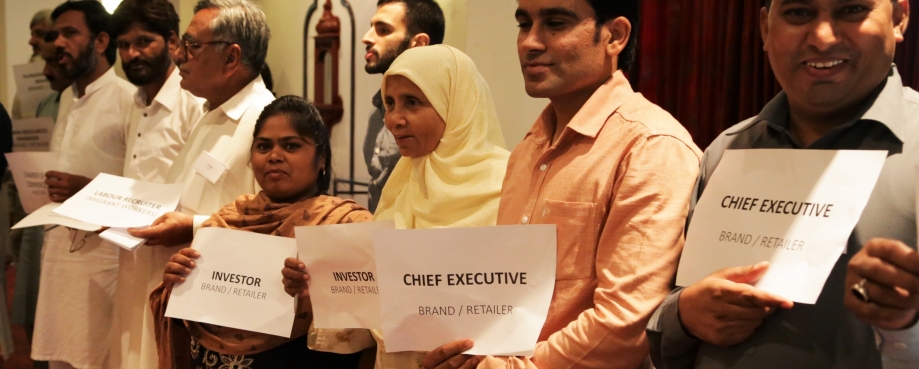
LRN workshop in Lahore, Pakistan photograph courtesy of Marcus Borley

The Local Resources Network (LRN) is a business networking platform set up by the three European Ethical Trading Initiatives – Norway, Denmark and the UK –  to provide opportunities for sharing local knowledge and expertise on ethical trade issues in countries around the world. Its aim is to link local stakeholders and companies with global brands and trade unions and it has just formally launched in Pakistan.

I have just returned from Lahore in Pakistan where the joint ETI’s partnered with the Pakistan Institute of Labour Education and Research (PILER) and GIZ (Germany’s international development agency) to launch the Pakistan section of the LRN.

The workshop’s 86 participants ranged from High Court judges, government officials, trade unionists and home based workers to academics, business consultants and local factory owners.

The aims were seemingly simple:

  • Agree a common understanding of supply chain issues with regard to labour rights.
  • Suggest how to better implement international labour laws to which Pakistan is a signatory.
  • Discuss ways in which multiple stakeholders can work collectively to improve working conditions.

But Pakistan can present multiple challenges when addressing business and human rights.

GSP+ and Pakistan’s compliance with human rights standards

The EU’s General Scheme of Preferences (GSP+) programme (a preferential trading deal aiming to support sustainable development and good governance) has made a huge difference to Pakistan’s ability to export its apparel and textiles products.

Yet the country is barely managing to comply with the 27 international human rights standards that are conditional to accessing the EU programme, including women’s rights, the environment, corruption and narcotics.

Pakistan has to do business against a backdrop of weak governance, limited space for civil society and trade unions and terrorist attacks.

Consequently, many global brands are now unwilling to allow staff to travel to Pakistan and local companies miss the engagement, mutual learning and listening that is so important in driving change.

Furthermore, of the 61 million people in the labour force around 73 per cent work in the informal economy.

Most workers do not get paid a minimum wage (13,000 rupees – around £84 per month), and even if they do, it is not enough to live on or feed a family.

The position of women in the workplace is even more precarious.

There is potential – even in Pakistan’s informal economy

Pakistan is a young country – most men and women in its workforce are under 25. They are dynamic and enterprising.

With the right enabling environment for decent job creation and improvements in health and education, opportunities are there to be grasped.

In 2015, Pakistan achieved an overall growth rate of 4.2%, and an all-time low inflation rate of 4.5 per cent.

Despite reduced export demand from the West in the textile sector, mainly due to the security situation, there was still a growth rate of 3.6% in manufacturing.

This was largely due to the resilience of small enterprises operating mostly in the informal economy.

Even though there is widespread suspicion around freedom of association and collective bargaining in the informal sector and elsewhere, there also seems to be some recognition that compliance with labour legislation can make a difference to investment.

This is new and is welcome.

How the LRN will help

There was a clear sense of momentum at the workshop.

Those attending shared their different perspectives on decent work, responsible business and the challenges of attracting investment and market opportunities.

  • Justice Ali Nawaz Chowhan, chair of the relatively new Human Rights Commission in Pakistan, was excited by the idea of spearheading a National Action Plan on Business and Human Rights.
  • Rizwan Mushtaq is the manager of a local textile company that has committed itself to ethical trade practices. He was open about the challenges. He recognised that local companies have a long way to go to improve the way workers are treated and he also recognised the limited bargaining power local factories have with global brands. But he has a desire to establish more of a partnership with brands and retailers, rather than simply having to meet their compliance requirements.
  • Dr Karamat Ali of PILER spoke of his vision to organise 15,000 textile workers under a single, powerful industrial union with the capacity to negotiate collective bargaining agreements and uniting the industry across all provinces of the country.
  • Khursheed Ahmed, General Secretary of the Pakistan Workers Federation, spoke of the tireless efforts of the trade union movement to challenge exploitative practices and poor wages.
  • And, Justice Majida Razvi, Chair of the Sindh Human Rights Commission, a long-standing gender activist and Pakistan representative to the UN Commission on the Status of Women spoke of her vision for a multi-stakeholder forum that could help workers to have jobs that respected their dignity – particularly young people and women, who often make up the most vulnerable informal workers.

Developing a plan, building a platform

ETI and the LRN are ready to support the development of a National Action Plan on Business and Human Rights for Pakistan.

And the LRN – with its networking remit – is a valuable first step in building a local platform of diverse stakeholders.

Why? Because the platform enables local and global stakeholders to interact, to share examples of good practice and to identify expertise, good evidence and reports. 

All of this will help with human rights due diligence and can build locally owned and driven multi-stakeholder partnerships; to the ultimate benefit of workers, whether in global or local supply chains.

Sign up to the LRN here

Photograph of workshop participants taking part in a team exercise is courtesy of Marcus Borley

ETI's blog covers issues at the intersection of business and human rights. We feature posts by, for and from our members and allies; we do not accept or offer payment for posts or publish content outside of these criteria. We welcome a range of insights and opinions from our guest bloggers, though don't necessarily agree with everything they say.

Stay up to date

Stay up to date with the latest from ETI via the following channels:
  • Email
  • Twitter
  • LinkedIn
  • Blog RSS

Related content

  • Can Pakistan become a leader in creating decent work?
  • One year after Pakistan’s Baldia factory fire
  • Joint statement on minimum wage compliance in Sindh's garment and textile sector
  • Exploring the socio-economic impact of the living wage gap - case studies from Bangladesh, India & Pakistan
  • Labour standards in Pakistan’s surgical instruments sector
  • Human rights due diligence in Pakistan

Get the latest

Subscribe to our email newsletters and stay up to speed on responsible business.

Subscribe

ETI elsewhere

  • Twitter
  • LinkedIn
  • YouTube

Footer

  • ETI Community
  • Accessibility
  • Contact
  • FAQ
  • Jobs at ETI
  • Press resources
  • Security & privacy
Other ETIs: Bangladesh, Denmark, Norway, Sweden
Ethical Trading Initiative | Registered No. 3578127