Get the latest
Subscribe to our email newsletters and stay up to speed on responsible business.

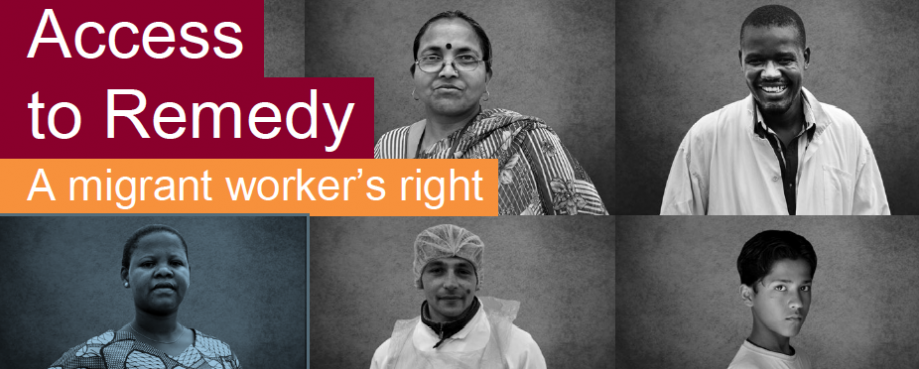
Following their launch in June 2021, ETI has been calling on businesses and other stakeholders to support new Access to Remedy Principles (A2RP) for migrant workers, and to roll them out in their global supply chains.
According to ILO estimates, there are 164 million migrant workers globally. Migrant workers often face barriers and vulnerabilities that prevent them from reporting workplace issues and abuses. They have often paid significant recruitment fees to obtain their jobs, are statistically far more likely than other workers to be trapped in debt bondage, unable to speak the local language and or lack a local support network.
. While the primary audience for the A2RP is brands and retailers at the head of supply chains, they also outline the roles and responsibilities of a range of supply chain stakeholders – buyers and suppliers of businesses, trade unions, local NGOs and governments – in facilitating effective access to remedy for migrant workers.
“ETI is asking businesses and other stakeholders to support the Principles and to put them into practice within their supply chains. By implementing Operational-level Grievance mechanisms that offer meaningful access to remedy, we can empower migrant workers to raise grievances, find resolve and enjoy decent work. Through collaboration and implementation, we can make a real difference to the lives of migrant workers.”
Bansari Somani, MSIF Programme Manager, ETI
The JustGoodWork Malaysia app
In 2019, ETI secured funding for a two-year project from the Home Office to develop migrant worker Access to Remedy Principles, and to pilot their implementation in Malaysia, which relies heavily on a large and diverse migrant worker population.
As part of this project, we have been working in collaboration with ETI members, the Malaysian NGO Our Journey, UK-based tech non-profit FiftyEight and two Malaysian companies in the rubber goods manufacturing sector.
In partnership with FiftyEight and Our Journey, we have designed the JustGoodWork Malaysia app, drawing on extensive surveys and interviews with workers in the two companies, and testing it with migrant workers in Malaysia. The app provides information on migrants’ legal rights, what to expect at work and how to raise an issue in the workplace. It also provides a confidential, third-party grievance reporting route.
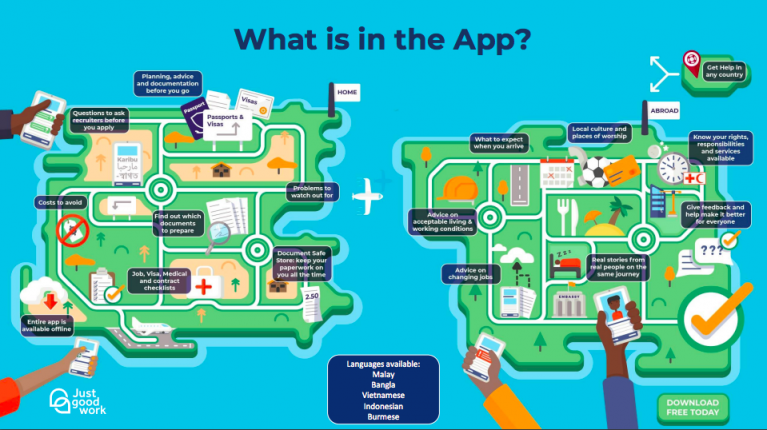
Unlike other apps that are owned and managed by the employer, this app is completely, confidential, free and fully owned by the worker once it is downloaded, and theirs to use as they want. By ensuring workers have easy access to comprehensive information on their rights in their own language, the app empowers them to raise and resolve issues. It also emphasises the importance of direct worker-management dialogue as the first and most important step, whilst also providing workers with the option to raise issues through the app directly with Our Journey, if other routes fail. Our Journey will advise the workers on queries and issues raised and where appropriate offer to communicate with the company directly to help resolve the issue. The benefits for companies, include improved dialogue with migrant workers and rapid identification and resolution of workplace issues, increased productivity and reduced employee turnover, workers feel valued and respected and better relationships with buyers, who have more confidence that in the handling of workplace issues.
Development of the AR2P has been an iterative process. We have had the opportunity to incorporate lessons learned throughout the project, from the Malaysia pilot as well as from input from a range of consultation events with stakeholders across several countries. Ultimately, the project has grown to reflect one of the key outcomes it aims to achieve: multi-stakeholder collaboration. To be effective, an OGM needs trust and shared ownership. Workers should be involved alongside other stakeholders in the design and implementation of an effective OGM, and all stakeholders need to be engaged.
Going forward we intend to build on the knowledge gained during the Malaysia pilot to expand the app to more businesses, industries, migrant workers and other stakeholders in Malaysia and migrant worker countries of origin.
We want as many businesses and other stakeholders as possible to benefit from the AR2P, publicly supporting them, as well as socialising and implementing them along their supply chain. ETI will continue to host and promote them, and we look forward to the collaborations we hope they inspire.
https://migrantworkerremedy.org/principles
Help spread the word by sharing the principles on social media, with the hashtag #AR2P – ETI will publish all supporting companies on its website and promote your support via social media channels.
In the meantime, if you have any questions about the AR2P do get in touch. We’d love to talk.