Home

Main menu

  • About ETI
    • Our members
      • Public reporting performance
    • Who we are
      • ETI's origins
    • What we do
    • Global presence
    • Governance
    • Our team
      • ETI Board members
    • Our Strategy
  • Home
  • Why ETI
    • Why join ETI
  • ETI Base Code
    • Base Code overview
    • Base Code clause 1: Employment is freely chosen
    • Base Code clause 2: Freedom of association
    • Base Code clause 3: Working conditions are safe and hygienic
    • Base Code clause 4: Child labour shall not be used
    • Base Code clause 5: Living wages are paid
    • Base Code clause 6: Working hours are not excessive
    • Base Code clause 7: No discrimination is practiced
    • Base Code clause 8: Regular employment is provided
    • Base Code clause 9: No harsh or inhumane treatment is allowed
  • Our approach
    • Membership
    • Programmes
    • Transparency
    • Meaningful stakeholder engagement (MSE)
  • Our expertise
    • Climate change & Just transitions
    • Crisis response
    • Gender equity in supply chains
    • Worker representation
    • Forced labour & modern slavery
    • Responsible purchasing practices
      • RPP in manufacturing
    • Human rights due diligence
      • HRDD legislation tracker
  • Resources
    • Guidance & reports
    • Blog
      • Blog series: Tackling gender-based violence through GRACE
    • Issues
      • Human rights due diligence (HRDD): a complete guide for business
        • What is human rights due diligence?
        • Human rights due diligence legislation and regulatory requirements
        • How to implement human rights due diligence in your company
        • HRDD risk assessment for supply chains
        • Supplier engagement and human rights due diligence
      • Forced labour & modern slavery: a complete guide for business
        • What is modern slavery? Definitions, forms and scale
        • How to identify forced labour in your supply chain
        • Remediation: what to do when forced labour is found
        • Modern slavery legislation: what businesses need to know
        • EU Forced Labour Regulation: what it means for your business
        • How to write a modern slavery statement
        • High-risk sectors and sourcing regions for forced labour
        • Forced labour and migrant workers in supply chains
      • Responsible purchasing practices: what they are and why they matter
        • How to implement responsible purchasing practices
        • Responsible purchasing practices and legislation: what companies need to know
        • Responsible purchasing practices by sector
    • Case studies
    • Training
    • Events
      • ETI Insights series
    • Impact report 2024-25

Breadcrumb

  1. Home
  2. blog

Garments and footwear: the OECD launches new due diligence guidelines

  • Share on Facebook
  • Share on Twitter
  • Share on LinkedIn
  • Jane Moyo - ETI
  • 13 February 2017
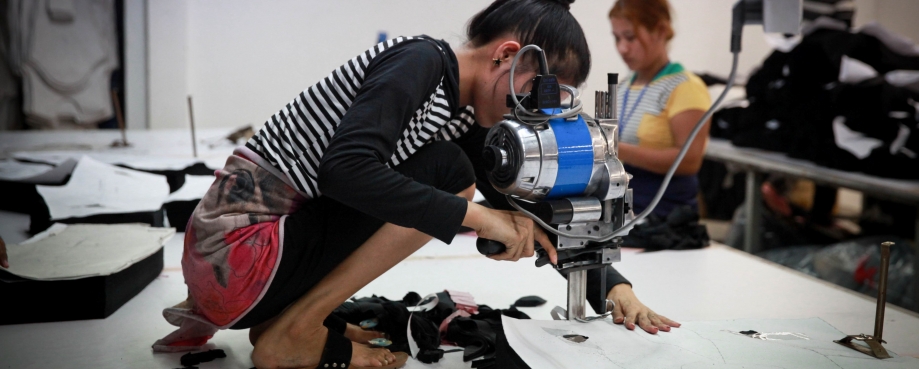
Cambodia garment factory ©ILO

The Organisation for Economic Co-operation and Development’s (OECD) purpose is to promote policies that will improve the economic and social well-being of people around the world. Three ETI colleagues, Martin Buttle our Apparel and Textiles Lead, Emre ‘Eren’ Korkmaz, our Turkey Programme Migrant and Refugee Specialist and Ben Rutledge our Senior Advisor on Business and Human Rights were invited to the launch of its latest Guidance on Due Diligence in the Garment and Footwear sector. Here’s why that’s so important.

New advanced training course: Human rights due diligence

Most of the OECD’s 46 members are high-income economies.

However, the common thread of its work, to quote the OECD's website, “is a shared commitment to market economies backed by democratic institutions and focused on the wellbeing of all citizens.”

As such, it’s hugely influential worldwide.

The launch

The launch roundtable attracted at least 200 participants from governments, business, trade unions and the voluntary sector. And not only from OECD nations, but other countries as well.

The guidance itself focuses on human rights although it also includes chapters on the environment and corruption.

Martin and Ben report that it's very detailed and will be endorsed by all OECD member countries.

They also say that it will, arguably, constitute the most comprehensive and authoritative text issued on due diligence in the garment and footwear sector to date, recognising the industry’s importance to the global economy and the work that is needed to ensure workers benefit.

They believe it’s a resource that businesses will want to use because it’s so wide-reaching. Consequently, they are recommending it to ETI members and non-members alike.

Additionally, activists and unionists will find it useful because it’s being promoted as a 'gold standard' [Editor: see bullets below].

At the launch, Martin and Ben discussed how companies can carry out risk-based due diligence in accordance with the guidance and Eren led a discussion on the Turkish context.

In Turkey, ETI has set up a garment sector platform that brings together local and international companies and employers associations, trade unions and civil society to address how Turkey’s garment sector can benefit both Turkish workers and Syrian refugees.

Roll out

While the OECD is at the very beginning of the roll out process, both Martin and Ben report that its plans look very promising, with four steps already being mapped out:

  • The guidance will be used to ensure policy coherence across member states. They hope it will set the gold standard for what due diligence is in the garments and footwear sector, and that governments will work with companies and develop public policies in line with it. While Martin and Ben acknowledge that this is an implementation tool and is therefore very unlikely to be a “formal commitment to meet” they still believe such commitment will be very useful.  
  • A repository for risk assessment tools is to be created. See also the OECD's Compare Your Country database which tracks trade flows in various commodities, which is helpful for tracking supply chains and mapping macro trends.
  • The 2017 pilot initiative will focus on assisting small and medium-sized enterprises (SME’s) to use and implement the guidelines.
  • Country programmes and grants will be developed to support implementation and their focus is currently being discussed. Martin and Ben were pleased to see that the Cambodian Ministry of Labour were present and requested support to trial implementation, as money and other resources are clearly available. China’s National Textile & Apparel Council were also present. They announced that they are establishing a Responsible Business Platform in China with the OECD. While the China platform is non-sector specific, mining and apparels will be the first priorities, and they will draft Chinese specific guidelines based on the OECD guidance.

For more information, this is the OECD’s blog on ‘How OECD’s new Due Diligence Instrument can transform the global garment industry’. And here’s a link to their web page which has lots more detail.

ETI's blog covers issues at the intersection of business and human rights. We feature posts by, for and from our members and allies; we do not accept or offer payment for posts or publish content outside of these criteria. We welcome a range of insights and opinions from our guest bloggers, though don't necessarily agree with everything they say.

Stay up to date

Stay up to date with the latest from ETI via the following channels:
  • Email
  • Twitter
  • LinkedIn
  • Blog RSS

Related content

  • A visit to Coimbatore
  • Giving everyone in Turkey’s garment industry a voice and a platform
  • OECD 2018 Forum on human rights due diligence in the garment and footwear sector
  • Women’s economic empowerment cannot be divorced from workers’ rights
  • Do you think fast fashion can ever be ethical?
  • The Sports Direct ‘how not to follow the ETI Base Code’ manual

Get the latest

Subscribe to our email newsletters and stay up to speed on responsible business.

Subscribe

ETI elsewhere

  • Twitter
  • LinkedIn
  • YouTube

Footer

  • ETI Community
  • Accessibility
  • Contact
  • FAQ
  • Jobs at ETI
  • Press resources
  • Security & privacy
Other ETIs: Bangladesh, Denmark, Norway, Sweden
Ethical Trading Initiative | Registered No. 3578127