Get the latest
Subscribe to our email newsletters and stay up to speed on responsible business.

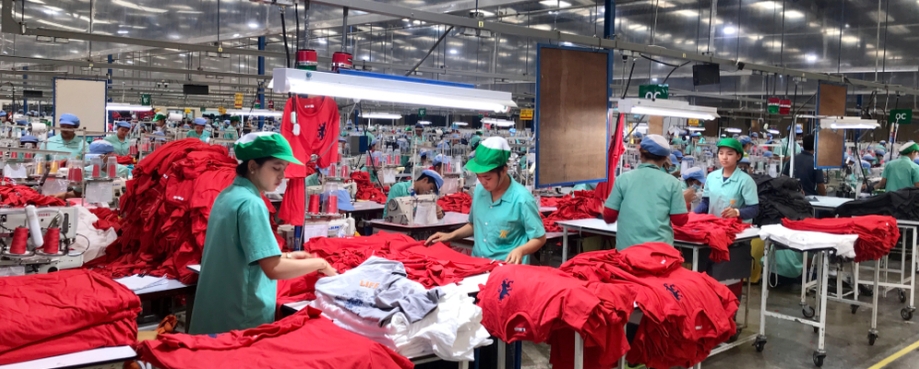
This summer, garment workers in Dhaka have been working through extreme heat compounded by power cuts that have forced factories to switch off fans and cooling equipment. New research published last week by IIED found that workers in Dhaka and Indian garment hubs are losing around 15 days of paid work a year to extreme heat. The climate crisis is not a future risk for the people who make our clothes. It is a daily reality.
Climate action and decent work are often treated as separate agendas. Discussions at our London Climate Action Week event in June highlighted how they can be brought together through just transition - and why centring workers and collaboration will be key to making it happen.
Many of the world’s most climate-vulnerable countries are also among the largest producers of apparel and textiles. The workers behind the sewing machines, and the communities surrounding the factories where they work, are already experiencing the impacts of climate change. Without adaptation, extreme heat and severe flooding will put 958,000 apparel jobs at risk by 2030 in Bangladesh, Pakistan, Cambodia and Vietnam alone.
At the same time, fashion remains one of the world's most polluting industries, responsible for up to 8% of global greenhouse gas emissions. The industry needs radical reform: reducing its environmental footprint while ensuring workers are not left behind. This must be done in a way that centres workers, in a just transition.
The ILO defines just transition as “Greening the economy in a way that is as fair and inclusive as possible to everyone concerned, creating decent work opportunities and leaving no one behind.” (ILO)
“A Just Transition is not a luxury; it is a necessity to ensure that environmental and technological progress does not come at the expense of human rights, decent work and gender equity” (Just Transition Manifesto for the Textile and Garment Supply Chain)
At its core, a just transition is about ensuring that the shift to a greener economy is fair, inclusive and creates decent work. To achieve this, workers and their representatives must have a meaningful role in shaping the decisions that affect their livelihoods, with social dialogue and collective bargaining at the heart of the process.
The launch of the Just Transition Manifesto for the Textile and Garment Supply Chain (2026)by the International Trade Union Confederation (ITUC), IndustriALL Global Union and IndustriALL Europe marks an important milestone for the sector. The manifesto sets out a worker-led vision for transforming global garment supply chains and raises the bar for what brands are expected to deliver.
To explore what this means in practice, ETI co-hosted an event during London Climate Action Week with the ITUC and the Business & Human Rights Centre, bringing together companies, trade unions, NGOs and other stakeholders to discuss how just transition can be implemented across global supply chains.
The key message throughout the morning was clear: workers must be at the centre of the transition. Without workers' voices, climate action risks creating unintended harm, forcing job displacement and deepening inequality, with women, migrants and informal workers especially at risk. Workers and their communities need to be involved from the outset, not consulted after decisions have already been made. This means strengthening social dialogue, supporting independent trade unions, embedding collective bargaining, and ensuring workers’ voices shape decisions on issues such as upskilling, occupational safety and health, and the introduction of new technologies.
“Workers have to be at the table in all the decisions that are taken ... and we need to include women in all the decisions that are taken. They are a key part of this sector.”
Diana Junquera Curiel, IndustriALL Global Union
Below: Hear from Boitumelo Molete, Congress of South African Trade Unions (COSATU).
Another important takeaway was that many of the principles underpinning a just transition are the same as the core principles of responsible business. Listening to workers, strengthening social dialogue, investing in long-term partnerships and embedding responsible purchasing practices have been recognised for years as essential to achieving decent work. Companies should not see just transition as a separate or new agenda, but a process of consolidating, integrating and strengthening existing responsible business practices for the era of climate crisis.
Accordingly, the frameworks businesses already use remain highly relevant. The ILO Core Conventions, occupational safety and health standards, and the UN Guiding Principles on Business and Human Rights (UNGPs) all provide strong foundations for delivering a just transition. Rather than creating a separate workstream, organisations should look at where their existing practices already contribute to just transition outcomes, identify where gaps exist, and ensure internal alignment across policy and implementation. For example, existing human rights due diligence (HRDD) processes can be adapted to support just transition.
Collaboration needed to implement a just transition
Just transition creates significant opportunities to accelerate progress on both climate action and decent work. The shift to greener production can create better-quality jobs, support the formalisation of informal work and help build a more resilient industry. While the moral case for a just transition is clear, there is also a compelling business case. Businesses that adapt effectively to climate change will be better placed to continue operating, deliver long-term value for investors, and provide secure, decent employment.
Realising these opportunities will require collaboration across the industry, and throughout the discussions, collaboration emerged as one of the biggest opportunities for progress. As emphasised by Diana Junquera Curiel in her presentation, “we are all in the same boat when it comes to just transition. This is not about the unions and workers vs brands, or fighting about salaries, this is something we are all fighting together”.
Below: Hear more from Diana Junquera Curiel, Director Industrial Policy, IndustriALL Global Union.
Between brands and workers: Brands have an important role to play in working closely with trade unions and workers, ensuring worker representatives shape transition plans through institutionalised social dialogue and joint decision-making. Participants also recognised that workers are often understandably concerned about how accelerating technological change could affect their jobs and livelihoods. Acknowledging those concerns and involving workers in planning for reskilling and upskilling will be critical to building trust. A practical first step for brands is mapping union representation and engaging with unions at site level on just transition topics.
Between brands and suppliers: The discussions highlighted the need for stronger partnerships between brands and suppliers. Suppliers are already investing in renewable energy, automation and climate adaptation, often with little financial support and only short-term purchasing commitments from buyers. Brands can support this by offering longer-term sourcing commitments, responsible purchasing practices and exploring shared financing models, such as co-financing solar installations, to give suppliers the confidence to invest in greener production.
Between brands: Participants highlighted opportunities for greater collaboration between brands, particularly SMEs with smaller sustainability teams. Sharing knowledge, resources and approaches could help accelerate progress and reduce duplication of effort. For example, through multi-stakeholder initiatives such as ETI, brands sourcing from shared suppliers or regions could engage collaboratively on transition plans.
With other sectors: Participants highlighted opportunities to collaborate beyond the garment sector, particularly with the financial sector. Innovative solutions, such as shared financing models, could help suppliers and workers better manage climate risks. While still an emerging area, these discussions highlighted the potential for cross-sector collaboration to support a more resilient and equitable transition. A practical step is connecting with investors, who increasingly recognise the financial risks that a just transition can help mitigate.
Within companies: Collaboration is equally important within companies. Participants shared that sustainability, human rights, sourcing and purchasing teams often operate in silos, despite making decisions that are deeply interconnected. While this may require compromise across functions, bringing these teams together is essential. A practical step is to establish cross-functional governance for climate and human rights, ensuring that sourcing and purchasing teams are involved early in transition planning rather than consulted after key decisions have been made.
Below: Hear from Barbara Bijelic, Head of Regulation and Standards at the OECD Centre for Responsible Business Conduct.
Multi-stakeholder initiatives have an important role to play. By convening brands, suppliers, trade unions and civil society - and ensuring that sourcing and commercial teams are part of the conversation - they can help break down silos and drive more coordinated action across the sector.
"[The event] started a dialogue on how we can better collaborate, how we can actually have workers in this discussion, and have them as co-leaders and co-creators of a just and equitable transition."
Boitumelo Molete, COSATU
Ultimately, just transition should not be seen as another sustainability initiative competing for attention. It is an opportunity to strengthen responsible business practice and supply chain resilience as the industry grapples with increasing volatility caused by climate and geopolitical crises. By building on existing frameworks, centring workers' voices and embracing greater collaboration, the apparel and textiles sector can ensure that the transition to a greener future is both fairer and more resilient.
And the urgency is not abstract. For workers on factory floors in Dhaka this summer, the question is not whether the sector will transition, but whether that transition will protect them or leave them behind.
Companies do not need to have all the answers to get started. Three practical next steps: