Home

Main menu

  • About ETI
    • Our members
      • Public reporting performance
    • Who we are
      • ETI's origins
    • What we do
    • Global presence
    • Governance
    • Our team
      • ETI Board members
    • Our Strategy
  • Home
  • Why ETI
    • Why join ETI
  • ETI Base Code
    • Base Code overview
    • Base Code clause 1: Employment is freely chosen
    • Base Code clause 2: Freedom of association
    • Base Code clause 3: Working conditions are safe and hygienic
    • Base Code clause 4: Child labour shall not be used
    • Base Code clause 5: Living wages are paid
    • Base Code clause 6: Working hours are not excessive
    • Base Code clause 7: No discrimination is practiced
    • Base Code clause 8: Regular employment is provided
    • Base Code clause 9: No harsh or inhumane treatment is allowed
  • Our approach
    • Membership
    • Programmes
    • Transparency
    • Meaningful stakeholder engagement (MSE)
  • Our expertise
    • Climate change & Just transitions
    • Crisis response
    • Gender equity in supply chains
    • Worker representation
    • Forced labour & modern slavery
    • Responsible purchasing practices
      • RPP in manufacturing
    • Human rights due diligence
      • HRDD legislation tracker
  • Resources
    • Guidance & reports
    • Blog
      • Blog series: Tackling gender-based violence through GRACE
    • Issues
      • Human rights due diligence (HRDD): a complete guide for business
        • What is human rights due diligence?
        • Human rights due diligence legislation and regulatory requirements
        • How to implement human rights due diligence in your company
        • HRDD risk assessment for supply chains
        • Supplier engagement and human rights due diligence
      • Forced labour & modern slavery: a complete guide for business
        • What is modern slavery? Definitions, forms and scale
        • How to identify forced labour in your supply chain
        • Remediation: what to do when forced labour is found
        • Modern slavery legislation: what businesses need to know
        • EU Forced Labour Regulation: what it means for your business
        • How to write a modern slavery statement
        • High-risk sectors and sourcing regions for forced labour
        • Forced labour and migrant workers in supply chains
      • Responsible purchasing practices: what they are and why they matter
        • How to implement responsible purchasing practices
        • Responsible purchasing practices and legislation: what companies need to know
        • Responsible purchasing practices by sector
    • Case studies
    • Training
    • Events
      • ETI Insights series
    • Impact report 2024-25

Breadcrumb

  1. Home
  2. blog

Kamlesh's story

  • Share on Facebook
  • Share on Twitter
  • Share on LinkedIn
  • Alan Sadler - ETI
  • 4 May 2013

"In the old days there were too many hours"

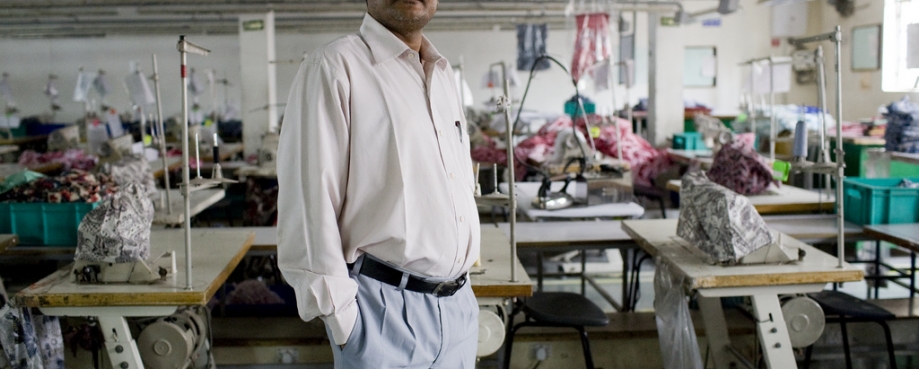
For the past 16 years, Kamlesh has worked in a bustling garment factory in a suburb of north Delhi.

The factory produces many of the latest fashion items soon to be winging their way to the UK high street, and the companies it supplies include ETI members.

In recent years the factory has made a number of improvements including workplace refurbishment, the introduction of bonuses and benefits, and the provision of in-house medical facilities. Worker's committees have been set up to address employee concerns, from a canteen tasting panel to a sexual harassment committee.

Now a floor manager, Kamlesh started out in the industry 25 years ago as a tailor. He says he has witnessed many changes since then, and that for him at least, conditions are getting better.

There is clean drinking water now, and the toilets are clean.

"In the old days there were too many excessive hours. Although it is sometimes necessary to do overtime here, it does not go on continuously for days and is much less of a strain. Where once there were no facilities, now we have doctors whenever we need them. There is clean drinking water, and the toilets are clean.

"Before, I would have to work day and night for 150 rupees. Today without much effort I can earn 6,000 rupees a day for half the amount of work I once did. This means I can continue to work and be productive for another 20 years, whereas under the old conditions I doubt if I would have lasted ten.

"All this means I can spend more time with my kids. Once I couldn't even drop them off on the way to school."

Kamlesh also believes improved conditions have boosted productivity and quality control among the workforce.

He says: "In the past the discipline wasn't there. Workers would make the piece and not have respect for the garment. There was a careless attitude to work, but since then there have been many advances in quality."

However, Kamlesh knows he and his co-workers are relatively fortunate. Many garment workers around the world continue to work long hours in extremely poor conditions, and for exploitative rates of pay.

ETI's blog covers issues at the intersection of business and human rights. We feature posts by, for and from our members and allies; we do not accept or offer payment for posts or publish content outside of these criteria. We welcome a range of insights and opinions from our guest bloggers, though don't necessarily agree with everything they say.

Stay up to date

Stay up to date with the latest from ETI via the following channels:
  • Email
  • Twitter
  • LinkedIn
  • Blog RSS

Related content

  • A visit to Coimbatore
  • Why are migrants vulnerable to exploitation?
  • Do you think fast fashion can ever be ethical?
  • The Sports Direct ‘how not to follow the ETI Base Code’ manual
  • Child labour: is it on the increase, or did it ever go away?
  • India’s new Child Labour law: forwards or backwards?

Get the latest

Subscribe to our email newsletters and stay up to speed on responsible business.

Subscribe

ETI elsewhere

  • Twitter
  • LinkedIn
  • YouTube

Footer

  • ETI Community
  • Accessibility
  • Contact
  • FAQ
  • Jobs at ETI
  • Press resources
  • Security & privacy
Other ETIs: Bangladesh, Denmark, Norway, Sweden
Ethical Trading Initiative | Registered No. 3578127