Home

Main menu

  • Home
  • Why ETI
    • Why join ETI
  • ETI Base Code
    • Base Code overview
    • Base Code clause 1: Employment is freely chosen
    • Base Code clause 2: Freedom of association
    • Base Code clause 3: Working conditions are safe and hygienic
    • Base Code clause 4: Child labour shall not be used
    • Base Code clause 5: Living wages are paid
    • Base Code clause 6: Working hours are not excessive
    • Base Code clause 7: No discrimination is practiced
    • Base Code clause 8: Regular employment is provided
    • Base Code clause 9: No harsh or inhumane treatment is allowed
  • Our approach
    • Membership
    • Programmes
    • Transparency
    • Meaningful stakeholder engagement (MSE)
  • Our expertise
    • Climate change & Just transitions
    • Crisis response
    • Gender equality in supply chains
    • Worker representation
    • Forced labour & modern slavery
    • Responsible purchasing practices
      • RPP in manufacturing
    • Human rights due diligence
      • HRDD legislation tracker
  • Resources
    • Guidance & reports
    • Blog
      • Blog series: Tackling gender-based violence through GRACE
    • Case studies
    • Training
    • Events
      • ETI Insights series
    • Impact report 2024-25
  • About ETI
    • Who we are
      • ETI's origins
    • What we do
    • Our members
      • Public reporting performance
    • Global presence
    • Governance
    • Our team
      • ETI Board members

Breadcrumb

  1. Home
  2. blog

Safer waters: why the ILO's new aquaculture safety code matters for workers

  • Share on Facebook
  • Share on Twitter
  • Share on LinkedIn
  • Ella Frankel
  • 30 April 2026
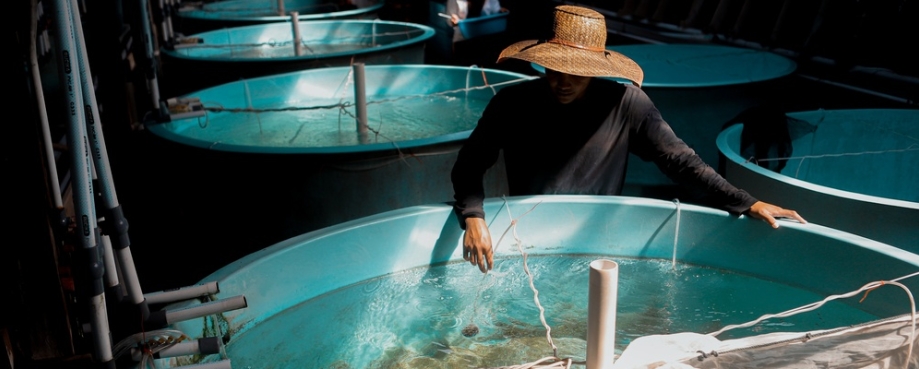
Fish hatchery worker, inspecting tanks

Aquaculture is one of the fastest-growing sectors in global food production, employing over 20 million people in primary production alone, with many more engaged throughout the supply chain. 

Yet evidence demonstrates workers in the sector face serious and under-reported operational safety and health (OSH) risks: high rates of injury, fatality and occupational disease, against a backdrop of fragmented regulation and weak enforcement. 
 
From 4-8 May 2026, the ILO will host the meeting of experts to agree a code of practice on occupational safety and health in aquaculture. The code will provide practical guidance on preventing accidents and disease, clarify responsibilities of different stakeholders, and set clear technical standards for specific hazards including diving safety, chemical handling, fish mass mortality response and thermal exposure.  

A sector that needs clearer standards 

The need is well evidenced. An FAO scoping exercise found that “OSH regulation, inspection and enforcement vary widely within countries and within and across regions and often suffer from serious weakness”. In a sector operating across all regions and at diverse scales, ETI welcomes the leadership taken by the ILO to progress much needed dialogue and to deliver a standardised and internationally agreed code. A framework that outlines expectations for the sector in realising a safe and healthy working environment, one of the five ILO fundamental principles and rights at work.  

The draft code rightly recognises that “improving working conditions in aquaculture operations should be approached in an inclusive and systematic way”, and that effective OSH systems depend on multistakeholder collaboration, “social dialogue, joint commitment and consultation between the competent authority, employers, workers and their representatives.”  

Freedom of association at the centre 

Worker participation is recognised in the draft as an essential element of OSH management. This matters. Freedom of association and collective bargaining are enabling rights. Without them, safety improvements risk remaining on paper rather than reaching workers on whom supply chains depend. The code’s grounding in ILO tripartite dialogue gives it the legitimacy and shared ownership needed to drive the implementation, enforcement and accountability the industry requires. 

ETI's commitment 

ETI stands ready to support the dissemination and application of the code. As part of our fisheries strategy, we will engage members in applying it as a practical tool to drive real improvements in working conditions across aquaculture supply chains. We will seek to embed the ILO outputs into our recently launched shrimp responsible purchasing practices initiative, which examines how the commercial decisions of international food buyers affect labour conditions in the shrimp supply chain, further reinforcing wider efforts to strengthen labour standards in the industry.  

ETI's blog covers issues at the intersection of business and human rights. We feature posts by, for and from our members and allies; we do not accept or offer payment for posts or publish content outside of these criteria. We welcome a range of insights and opinions from our guest bloggers, though don't necessarily agree with everything they say.

Stay up to date

Stay up to date with the latest from ETI via the following channels:
  • Email
  • Twitter
  • LinkedIn
  • Blog RSS

Related content

  • Buying food responsibly: Learning from fresh produce and ambient supply chains in Spain and Italy
  • Buying food responsibly
  • Grounded in International Labour Standards: why the ILO matters to ETI’s work
  • Why the ILO must sustain its mandate on decent work in agrifood systems 
  • Shrimp Supply Chains: Making the link between purchasing practices & human rights
  • ETI Insights: How purchasing practices shape human rights in shrimp supply chains

Get the latest

Subscribe to our email newsletters and stay up to speed on responsible business.

Subscribe

ETI elsewhere

  • Twitter
  • LinkedIn
  • YouTube

Footer

  • ETI Community
  • Accessibility
  • Contact
  • FAQ
  • Jobs at ETI
  • Press resources
  • Security & privacy
Other ETIs: Bangladesh, Denmark, Norway, Sweden
Ethical Trading Initiative | Registered No. 3578127